 by
by Populism in Latin America
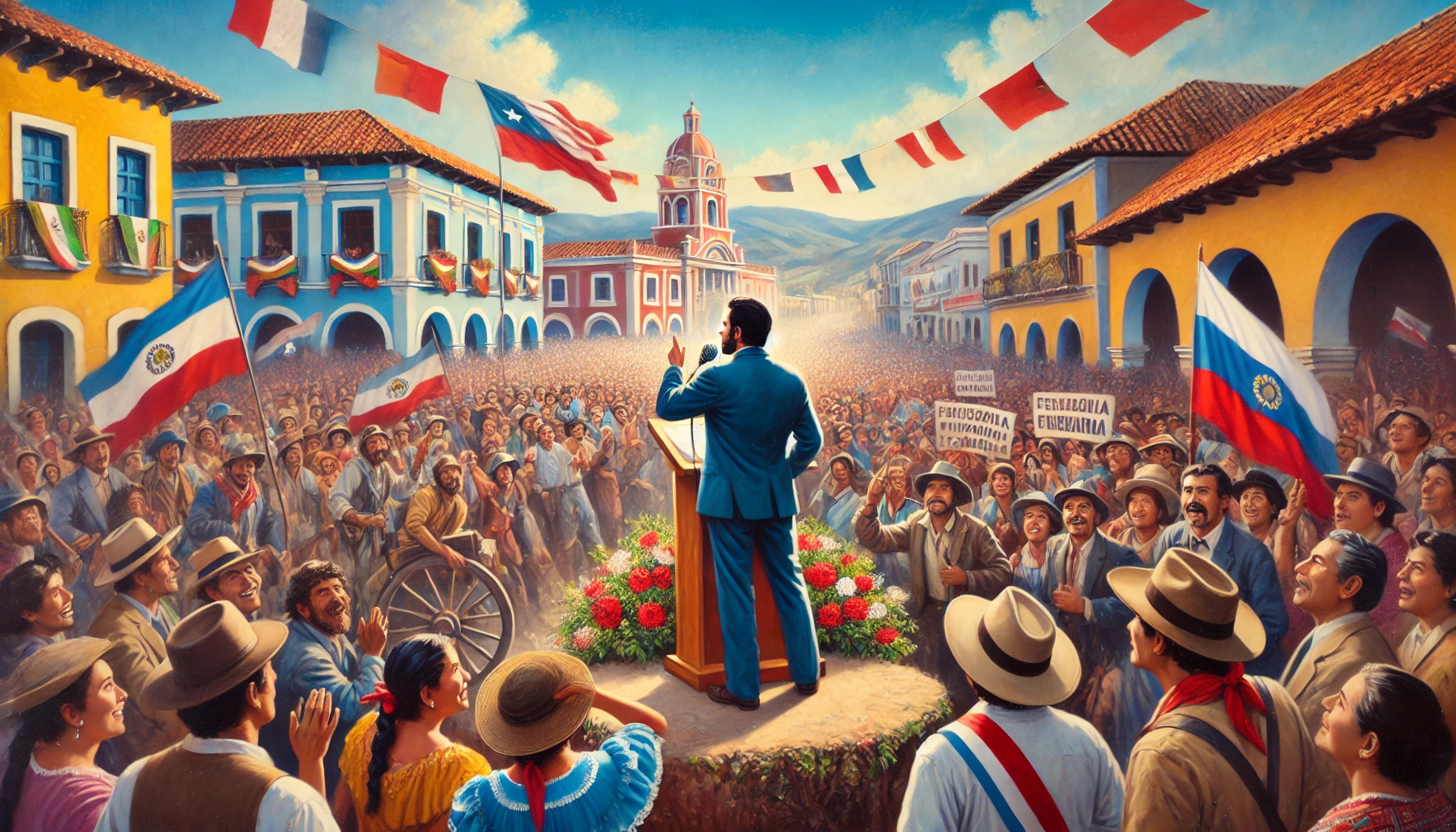
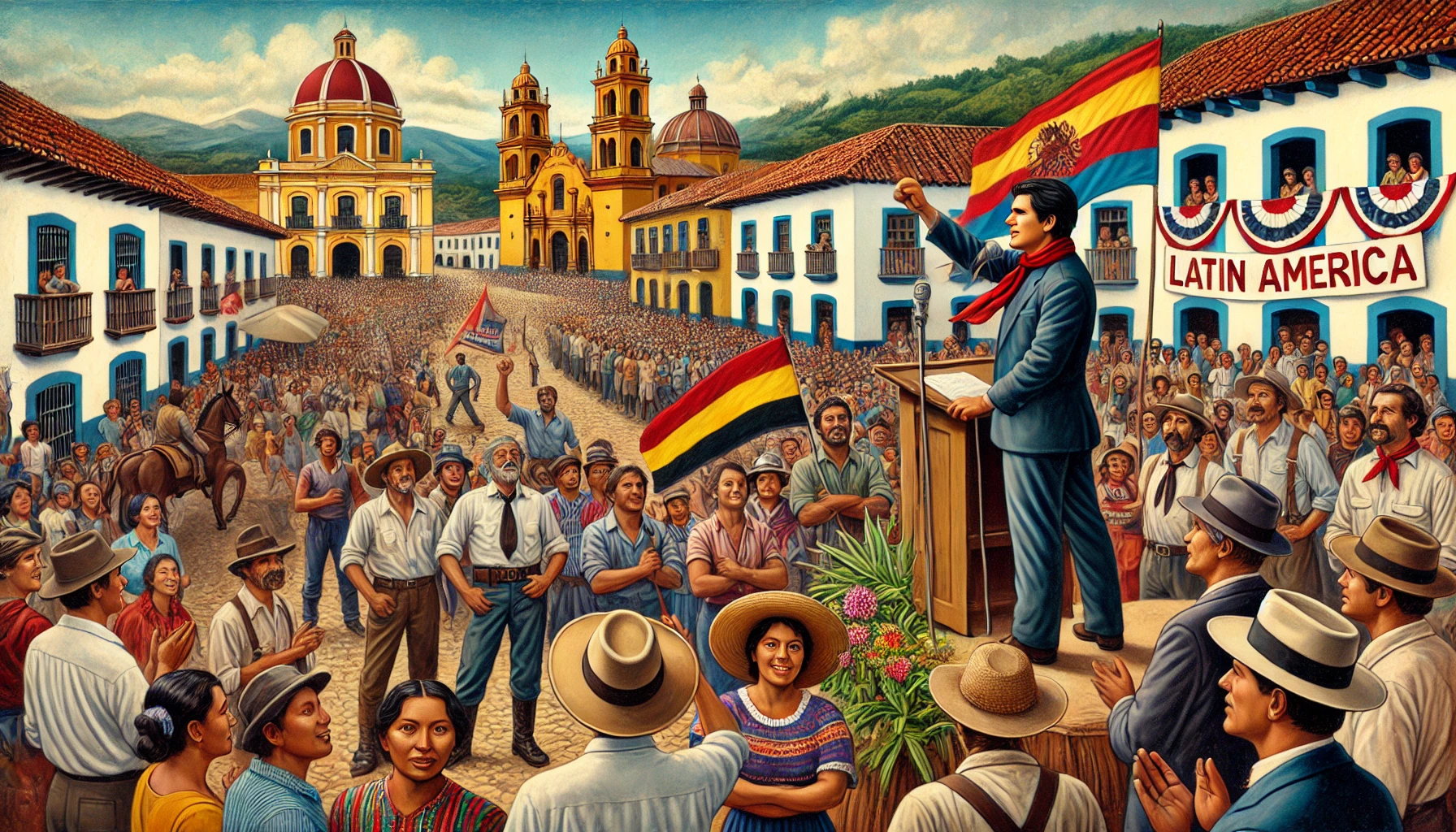
Latin America has long been the epicenter of populism. From the 1930s to the present day, populist leaders have repeatedly reshaped the region’s political landscape. These leaders emerged as champions of mass politics, challenging entrenched elites who often relied on fraud and patronage to maintain their grip on power. The struggle for free elections and the inclusion of marginalized groups is synonymous with the iconic figures of the first wave of populism: Juan and Eva Perón in Argentina, Getúlio Vargas in Brazil, Víctor Raúl Haya de la Torre in Peru, and José María Velasco Ibarra in Ecuador.
Populist movements across the continent have created lasting political identities and deep societal divides. From the “classical populism” of the mid-20th century to the “neoliberal populism” of the 1990s and the “radical populism” of the 21st century, Latin American populism has shown remarkable adaptability. While these leaders often rose to power with promises of inclusion and reform, their governance frequently undermined democratic institutions, neutralized civil society, and polarized societies. This article examines the three major waves of populism in the region, their impact on democracy, and the mechanisms that sustain the recurring populist phenomenon.
Defining Populism in the Latin American Context
Populism in Latin America can be understood as a Manichean political discourse that frames politics as a struggle between “the people” and “the elite.” This dualistic narrative enables leaders to claim they embody the true will of the people, often bypassing institutional frameworks to pursue their goals. Populism in the region has historically been rooted in moments of systemic crisis—whether political, economic, or social—and thrives on promises of transformation and empowerment for marginalized groups.
Populist leadership relies on top-down mobilization, mass communication, and clientelist networks. While populists often glorify “the people” and denounce elites, their governance style tends to centralize power in the executive, subordinating democratic institutions to the leader’s vision.
Capitalist and Right-Wing Populism in Latin America: The Cases of Argentina and Brazil
Capitalist and right-wing populism in Latin America represents a distinct approach that intertwines market-oriented policies with charismatic leadership and appeals to the “common people” against perceived elites or threats. Unlike leftist populism, which often emphasizes redistribution and anti-imperialism, capitalist and right-wing populism promotes economic liberalism, private enterprise, and national sovereignty. Leaders like Jair Bolsonaro in Brazil and, to a lesser extent, Mauricio Macri in Argentina exemplify this trend. Their political strategies blend neoliberal economic policies with populist rhetoric that targets cultural, political, and economic elites, while framing themselves as defenders of traditional values, national pride, and the middle class.
1. Right-Wing Populism in Brazil: Jair Bolsonaro
Economic Vision: Market Liberalism with Populist Rhetoric
Jair Bolsonaro, elected as President of Brazil in 2018, rose to prominence with a platform combining nationalist populism with a strong embrace of free-market policies. Although Bolsonaro himself lacked a deep understanding of economic intricacies, his alliance with Paulo Guedes, a University of Chicago-trained economist, provided a clear neoliberal direction. Guedes advocated for privatization, deregulation, and pension reform to revitalize Brazil’s stagnating economy.
Bolsonaro’s populist rhetoric framed these market-oriented reforms as a way to “liberate” the Brazilian economy from corruption, inefficiency, and the “leftist ideology” associated with previous administrations, especially those of Luiz Inácio Lula da Silva and Dilma Rousseff. For Bolsonaro, economic elites were less the enemy than “cultural elites” and “political bureaucrats” who, he argued, had sabotaged Brazil’s potential.
Cultural Populism and the “People’s President”
Bolsonaro’s right-wing populism extended beyond economics into cultural and social issues. He positioned himself as a defender of traditional family values, religious freedom (primarily for evangelical Christians), and national identity. His speeches often targeted progressive movements, accusing them of undermining Brazil’s moral fabric. This appeal resonated with Brazil’s conservative and evangelical base, which felt alienated by the progressive policies of previous leftist governments.
Populist Techniques: Social Media and Polarization
Bolsonaro’s campaign relied heavily on social media platforms, portraying himself as an outsider fighting against the establishment. Through platforms like WhatsApp and Twitter, he bypassed traditional media to connect directly with voters. His divisive rhetoric attacked perceived enemies, including the press, academics, and environmental activists, which solidified his image as a “man of the people” battling entrenched elites.
Economic and Political Implications
Bolsonaro’s populism complicated his market-oriented policies. While he supported privatization and fiscal austerity, these measures clashed with his need to maintain popular support. For instance, his handling of the COVID-19 pandemic, marked by skepticism about public health measures and aggressive support for keeping the economy open, highlighted tensions between economic pragmatism and populist performance.
Bolsonaro also faced challenges from the judiciary, media, and opposition politicians, whom he often accused of sabotaging his presidency. These confrontations underscored his populist narrative of an embattled leader representing the “true” Brazilian people against corrupt elites.
2. Libertarian Populism in Argentina: Mauricio Macri
Macri’s Rise: A Technocrat with Populist Overtones
Mauricio Macri, President of Argentina from 2015 to 2019, combined elements of technocracy with right-wing populism. As a former businessman and mayor of Buenos Aires, Macri cultivated an image of competence and pragmatism, appealing to middle-class voters frustrated with the populist excesses of Peronist governments under Néstor and Cristina Kirchner.
Macri’s campaign rhetoric often targeted the “populist elite” of the Kirchner era, whom he blamed for Argentina’s economic instability, high inflation, and corruption. His message appealed to voters yearning for modernization, fiscal responsibility, and a break from Argentina’s cyclical crises.
Economic Policies: Pro-Market Reforms
Macri’s administration pursued market-oriented reforms aimed at reintegrating Argentina into the global economy. These included lifting currency controls, negotiating with holdout creditors to resolve Argentina’s debt default, and reducing subsidies for utilities and transportation. Macri framed these measures as necessary sacrifices to stabilize the economy and attract foreign investment.
However, his policies faced significant backlash from working-class and lower-income Argentinians, who were disproportionately affected by rising costs and inflation. While Macri sought to present himself as a pragmatic reformer, his inability to deliver immediate economic relief undermined his populist appeal.
Populist Rhetoric and Identity
Unlike Bolsonaro, Macri’s populism was more subdued, emphasizing competence and moderation rather than polarizing rhetoric. Nevertheless, he occasionally employed populist tactics, portraying his administration as a bulwark against the “corrupt populism” of Peronism. His campaign slogans often emphasized unity, hope, and the promise of a “new Argentina,” appealing to middle-class aspirations.
Macri’s discourse also tapped into frustrations with Argentina’s history of economic mismanagement, presenting himself as a transformative figure who could break the cycle of instability. However, his inability to achieve significant economic growth or reduce poverty left him vulnerable to criticism and ultimately contributed to his electoral defeat in 2019.
3. Key Differences and Commonalities
Economic Vision
- Both Bolsonaro and Macri embraced neoliberal policies, but their approaches reflected differing levels of ideological commitment. Bolsonaro outsourced economic policy to Paulo Guedes, while Macri’s personal background as a businessman aligned with his pro-market agenda.
- Macri faced greater constraints due to Argentina’s chronic economic crises, whereas Bolsonaro benefited from a relatively stable economic environment during his early years.
Populist Appeals
- Bolsonaro’s populism was more explicit and polarizing, rooted in cultural conservatism and anti-progressive rhetoric. Macri’s populist appeal was subtler, focusing on technocratic competence and opposition to Peronist populism.
- Both leaders framed themselves as champions of the middle class and small businesses, contrasting themselves with corrupt political elites.
Challenges
- Both leaders struggled to reconcile their market-oriented reforms with the social demands of their populist bases. Bolsonaro faced resistance from unions and opposition parties, while Macri’s reforms alienated working-class voters.
- Both leaders also encountered institutional resistance. Bolsonaro clashed with Brazil’s judiciary and media, while Macri faced pushback from Peronist-controlled provincial governments and labor unions.
4. Impacts and Legacy
Argentina
Macri’s presidency revealed the limits of capitalist populism in a country with deep structural inequalities and a history of economic instability. His failure to deliver tangible improvements for most Argentinians paved the way for a return of Peronism under Alberto Fernández and Cristina Kirchner.
Brazil
Bolsonaro’s tenure demonstrated the durability of right-wing populism in Brazil’s polarized political landscape. His presidency reinforced divisions over cultural and economic issues, leaving a mixed legacy that continues to shape Brazil’s politics.
The Three Waves of Populism in Latin America
1. Classical Populism (1930s–1950s)
Historical Context
Classical populism emerged during the socioeconomic upheaval caused by urbanization, industrialization, and the decline of oligarchic rule. Predominantly agrarian societies with liberal constitutions but patrimonial practices faced increasing pressure from urban workers and the middle class. These changes allowed populist leaders to position themselves as champions of the marginalized.
Key Figures and Movements
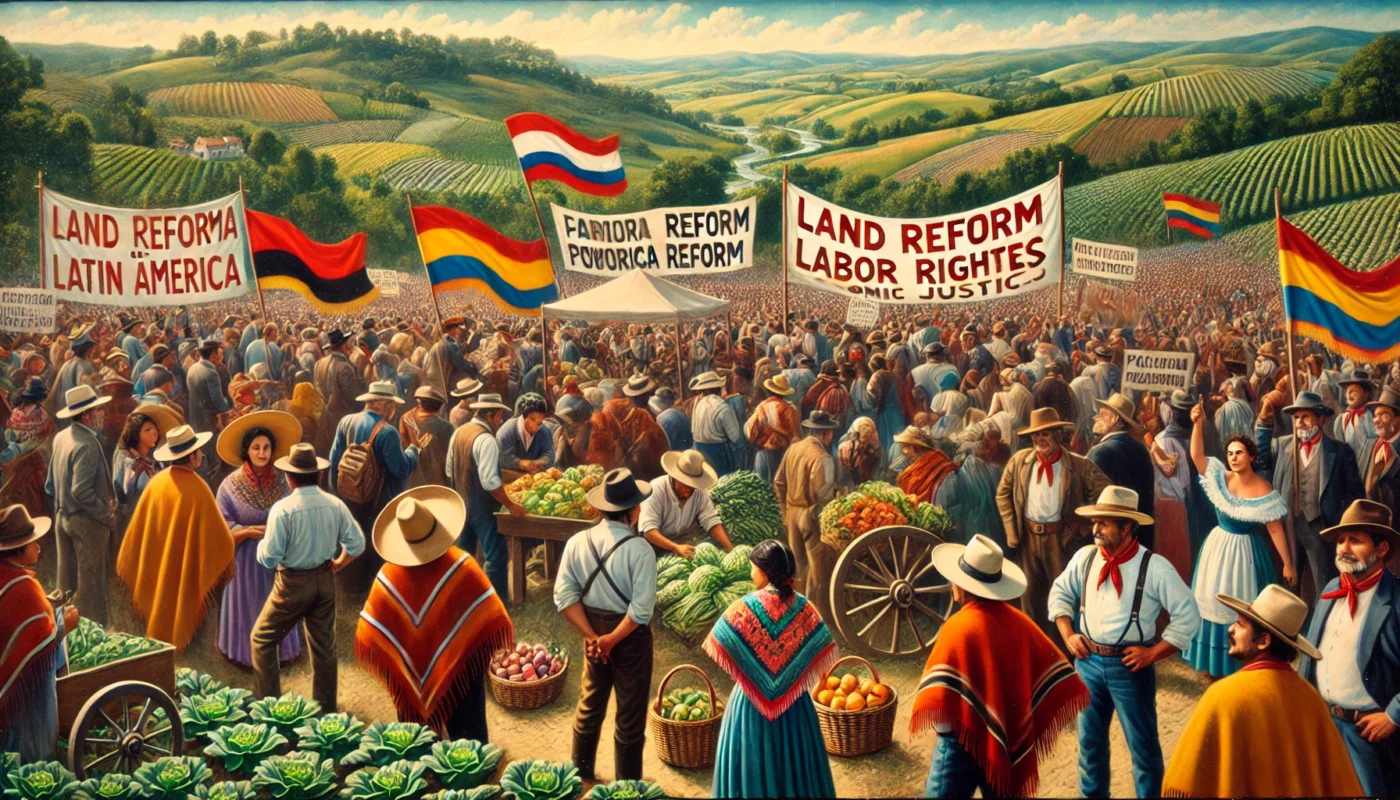
- Juan Perón (Argentina): Perón expanded the franchise, established welfare programs, and forged an enduring bond with workers. His wife, Eva Perón, played a central role in transforming stigmatized terms like cabecitas negras into symbols of pride. Under Perón, labor movements gained prominence, and real wages rose by 40% between 1946 and 1949.
- Getúlio Vargas (Brazil): Vargas’s policies centered on industrialization and the inclusion of workers, albeit through controlled unionization.
- Víctor Raúl Haya de la Torre (Peru): Haya de la Torre’s APRA (American Popular Revolutionary Alliance) sought to unite workers, indigenous people, and the middle class against oligarchic elites.
Impact on Democracy
Classical populism brought significant democratic advances by enfranchising new groups and expanding political participation. However, its emphasis on charismatic leadership and mass rallies over institutionalized processes often led to authoritarian tendencies. Leaders like Perón and Vargas used their popularity to justify the concentration of power, sidelining opposition and the judiciary.
2. Neoliberal Populism (1990s)
Historical Context
Neoliberal populism arose in the aftermath of the economic crises of the 1980s, when hyperinflation and debt spirals discredited traditional political parties. Leaders like Carlos Menem in Argentina and Alberto Fujimori in Peru positioned themselves as outsiders or reformers who could rescue their countries from chaos.
Key Features
- Economic Reform: Neoliberal populists dismantled state control of the economy, privatized industries, and implemented austerity measures. In Argentina, inflation fell from 3,079% to 8% between 1989 and 1994; in Peru, it dropped from 7,650% to under 40% by 1993.
- Anti-Elite Rhetoric: Leaders like Fujimori framed traditional parties as corrupt oligarchies disconnected from the people.
- Personalism: Fujimori famously bypassed Congress and governed by decree, while Menem used his charisma and connections to sports figures like Diego Maradona to maintain his popularity.
Impact on Democracy
While neoliberal populists stabilized economies and incorporated informal-sector workers, they often undermined democratic institutions. Fujimori’s autogolpe (self-coup) in 1992 suspended Peru’s Congress and judiciary, consolidating power in the executive. Similarly, Menem’s manipulation of constitutional reforms highlighted the fragility of democratic checks and balances.
3. Radical Populism (2000s–Present)
Historical Context
Radical populism emerged as a response to neoliberal policies that deepened inequality and eroded public trust in traditional institutions. Leaders like Hugo Chávez in Venezuela, Evo Morales in Bolivia, and Rafael Correa in Ecuador promised to challenge neoliberal orthodoxy, restore national sovereignty, and create participatory forms of democracy.
Key Features
- Constitutional Redesign: Leaders convened constituent assemblies to draft new constitutions that expanded rights while centralizing power in the presidency.
- Redistribution: High commodity prices allowed for expansive social programs that reduced poverty and inequality. In Venezuela, poverty fell from 50% in 1998 to 32% by 2013, though this progress reversed after oil prices collapsed.
- Anti-Imperialist Rhetoric: Chávez and Morales framed their policies as a rejection of U.S. imperialism and globalization.
Impact on Democracy
Radical populists claimed to deepen democracy through participatory mechanisms, but their governance often veered toward authoritarianism. In Venezuela, Chávez used state resources to suppress dissent and silence independent media. Morales, while more inclusive, faced criticism for attempting to extend his presidency despite constitutional limits.
Why Populism Persists in Latin America
Populism remains a recurring feature in Latin America due to several factors:
- Crisis of Representation: Weak party systems and disillusionment with traditional elites create openings for populist leaders.
- Economic Inequality: Widespread poverty and inequality make populist promises of redistribution and inclusion resonate deeply.
- Weak Institutions: Fragile rule of law and corruption erode public trust in liberal democracy, making charismatic leadership appealing.
- Cultural Resonance: Populists transform societal stigmas into symbols of pride, empowering marginalized groups.
In contrast, countries like Chile, Uruguay, and Costa Rica, with stronger institutions and more robust rule of law, have largely resisted populist temptations.
Conclusion
Populism in Latin America has taken diverse forms—classical, neoliberal, and radical—each reflecting the region’s evolving social, economic, and political challenges. While populism has often expanded participation and addressed inequalities, it has also undermined democratic institutions through authoritarian tendencies and polarization. Its persistence underscores the region’s ongoing struggle to reconcile demands for inclusion with the principles of liberal democracy. As Latin America continues to grapple with inequality and political instability, the populist allure remains ever-present, shaping the region’s political trajectory.
Originally posted 2022-07-09 17:16:38.