 by
by Was Lincoln a Populist?
The question of whether Abraham Lincoln, one of America’s most revered presidents, can be classified as a populist is both intriguing and complex. Populism is typically defined as a political approach that champions the common people, often in opposition to a perceived elite. While Lincoln shared characteristics with populists, such as his appeal to ordinary citizens and his opposition to certain entrenched powers, he cannot be neatly categorized as a populist. Instead, his leadership was marked by a nuanced and pragmatic vision that transcended the limitations of populist rhetoric.
Lincoln’s Populist Traits: The Champion of the Common Man
Lincoln’s personal narrative embodied the quintessential American “rags-to-riches” story, a hallmark of populist appeal. Born in a log cabin in rural Kentucky, Lincoln worked his way up from humble beginnings as a farm laborer, rail-splitter, and self-taught lawyer. This background allowed him to connect with ordinary Americans, particularly farmers, laborers, and small business owners who viewed him as one of their own. In speeches and writings, Lincoln often highlighted the dignity of hard work and the promise of upward mobility, themes that resonated deeply with the public.
For example, in his 1859 speech to the Wisconsin State Agricultural Society, Lincoln celebrated the independence and self-reliance of farmers, stating, “The strongest bond of human sympathy, outside the family relation, should be one uniting all working people, of all nations, and tongues, and kindreds.” Such rhetoric echoed populist ideals, emphasizing the shared struggles and values of the working class while implicitly criticizing the wealthy planter elite of the South.
Lincoln’s opposition to slavery also carried populist undertones. The institution of slavery, he argued, undermined the principle of free labor, which was central to the aspirations of ordinary Americans. His framing of slavery as a moral and economic threat to the Union appealed not only to abolitionists but also to Northern farmers and workers who feared competition from slave labor. In this sense, Lincoln positioned himself as a defender of the common man against a powerful and morally corrupt elite—the Southern plantation aristocracy.
Pragmatism Versus Populism
Despite these populist traits, Lincoln’s political style diverged significantly from the confrontational and anti-elitist tendencies that define populism. Rather than vilify all elites or institutions, Lincoln worked within the political system to achieve his goals. His presidency was characterized by a willingness to compromise and a keen understanding of political strategy. For instance, during the Civil War, Lincoln managed to hold together a fragile coalition of radical Republicans, moderate Unionists, and border-state Democrats, demonstrating his ability to balance competing interests.
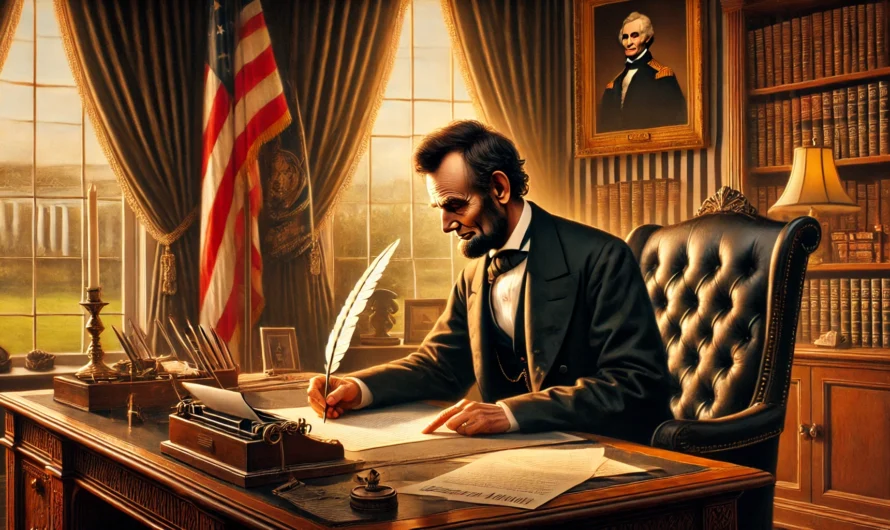
One of Lincoln’s most famous acts, the Emancipation Proclamation, illustrates this pragmatism. While it was a bold moral statement, it was also a calculated wartime measure designed to weaken the Confederacy and bolster support for the Union cause. This careful balance of moral conviction and political strategy distinguishes Lincoln from more ideologically rigid populist leaders.
Lincoln’s Vision of Unity
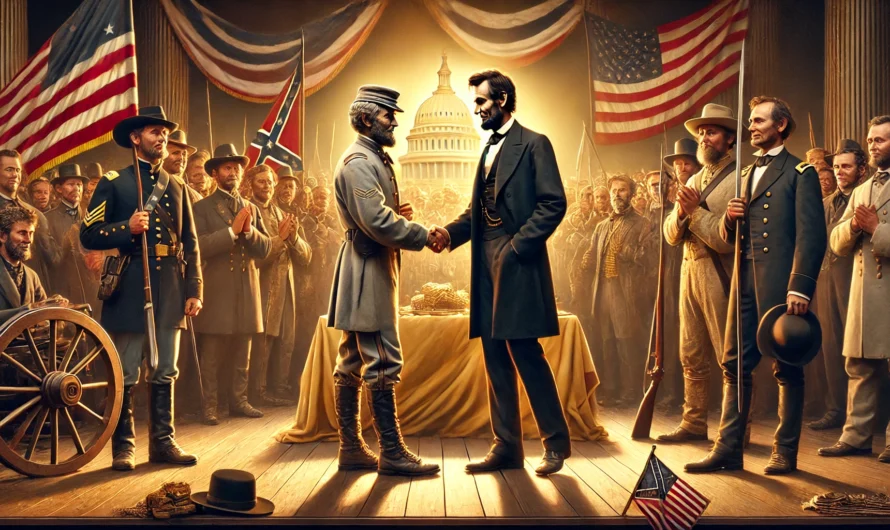
Populism often relies on divisive rhetoric that pits “the people” against a corrupt elite. While Lincoln occasionally used such language—particularly in his critiques of the Southern planter class—his overarching goal was national unity. In his first inaugural address, delivered on the eve of the Civil War, Lincoln appealed to the shared bonds between North and South, declaring, “We are not enemies, but friends. We must not be enemies.” Even as he prosecuted the war to preserve the Union, Lincoln consistently emphasized reconciliation, a vision that stands in stark contrast to the polarizing tendencies of populist politics.
Moreover, Lincoln’s ultimate legacy lies in his ability to rise above factionalism. His leadership during the Civil War was not about dividing the country into “us” versus “them,” but about preserving the Union and ensuring that America lived up to its founding ideals. His second inaugural address, delivered as the war was drawing to a close, exemplifies this vision: “With malice toward none, with charity for all… let us strive on to finish the work we are in, to bind up the nation’s wounds.”
Populism and Lincoln’s Limits
It is also worth noting that Lincoln’s policies, while grounded in principles of equality and justice, were not universally popular. For example, his suspension of habeas corpus during the Civil War drew sharp criticism from civil libertarians, who accused him of overreaching his executive authority. Similarly, the draft instituted under his administration sparked violent protests, including the infamous New York City Draft Riots of 1863. These actions suggest that Lincoln was willing to take politically unpopular measures when he believed they were necessary for the greater good—a stance that often puts him at odds with the populist ethos of deferring to the will of the people.
Historical Context: Comparing Lincoln to Modern Populists
To further explore whether Lincoln was a populist, it is helpful to compare him to modern populist leaders. Figures like Andrew Jackson and Donald Trump, often cited as quintessential populists, rely heavily on direct appeals to their base and are known for their distrust of established institutions. Lincoln, by contrast, demonstrated a deep respect for the Constitution and the rule of law, even as he stretched the limits of presidential power during wartime. His leadership style was inclusive rather than exclusionary, seeking to bridge divides rather than exacerbate them.
Conclusion
Abraham Lincoln was not a populist in the traditional sense, though his political philosophy and rhetoric occasionally aligned with populist ideals. He championed the interests of ordinary Americans, opposed entrenched elites like the Southern plantation class, and appealed to the values of hard work and equality. However, his commitment to national unity, constitutional governance, and pragmatic compromise sets him apart from the divisive and often anti-institutional tendencies of populism.
Lincoln’s legacy is that of a leader who transcended simple political labels. While he spoke for “the people,” he governed for the nation, navigating the complexities of a divided America with wisdom and foresight. To call him a populist is to understate the breadth and depth of his vision, which sought not only to represent the common man but to unify and elevate the entire country.