 by
by Populism in the Post-Soviet States
Improving and Expanding:
Introduction
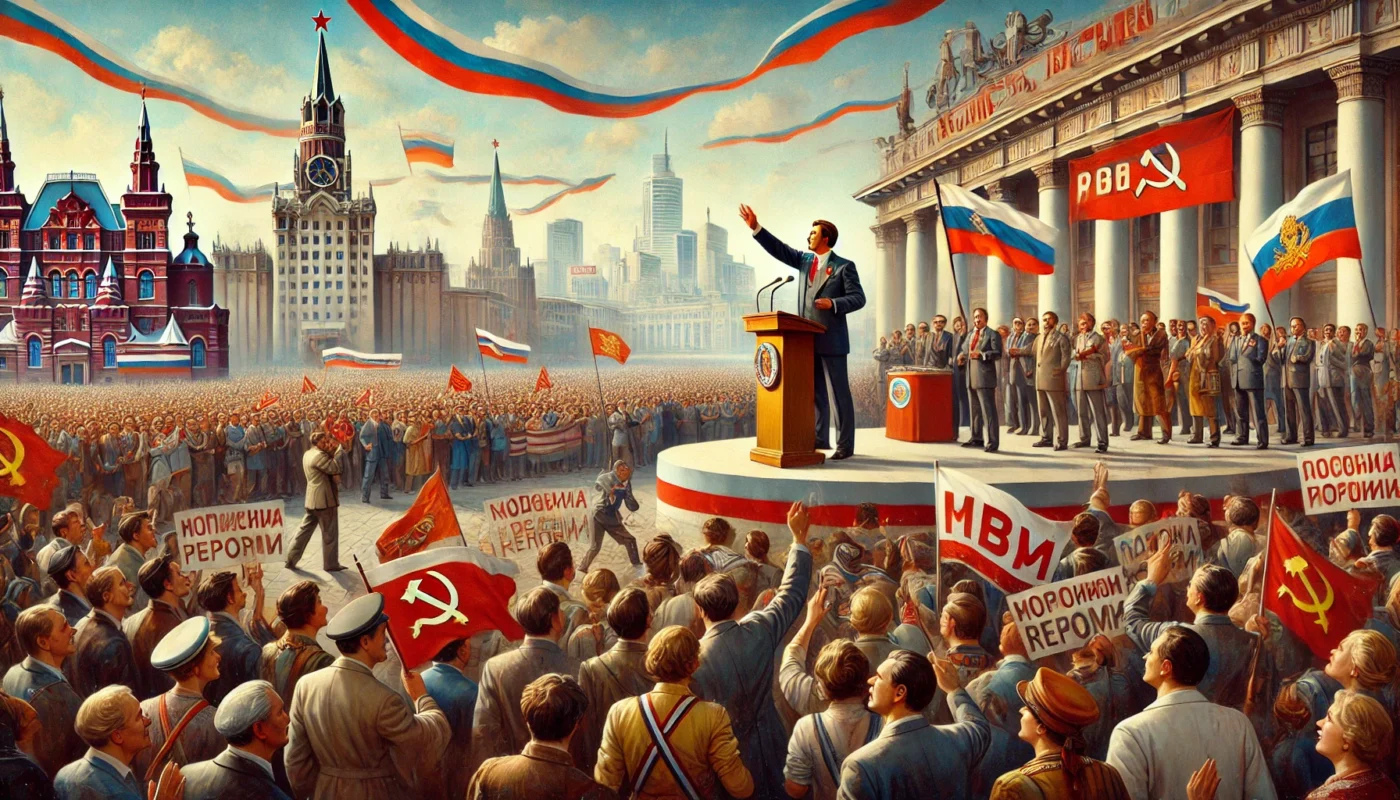
Populism in the post-Soviet states presents a unique case that diverges significantly from its counterparts in regions such as Latin America and Eastern Europe. Despite the abundance of populist rhetoric and widespread dissatisfaction with elites, sustained populist movements and ideologies have struggled to gain a foothold. This stems from a combination of authoritarian consolidation, weak pluralism, and the legacy of Soviet patrimonialism. This analysis explores the conditions that shape populism in the former Soviet Union (FSU), with a focus on definitions, the socio-political context, and examples of populist leaders and parties.
Defining Populism in the Post-Soviet Context
Populism in the FSU often manifests in two forms: vernacular populism, used as a political insult, and ideological populism, rooted in a consistent worldview that pits “the people” against “the elite.” The vernacular use dilutes the term, with leaders such as Viktor Yanukovych (Ukraine) labeling opponents “populists” to discredit them. In contrast, the ideological definition highlights consistent populist themes, such as anti-elitism, people-centrism, and appeals to popular sovereignty.
Scholars argue that ideological populism provides a clearer lens for identifying genuine populists. For example, while Vladimir Putin employs populist rhetoric, his governance is fundamentally elitist and anti-populist, focused on consolidating power and neutralizing dissent.
Context: The Soviet Legacy and Populist Preconditions
Communist Roots of Populist Rhetoric
The Soviet Union’s ideological framework left a lasting imprint on post-Soviet politics. While Marxism-Leninism emphasized proletarian leadership, its populist undercurrents, such as anti-bureaucratism and Manichean dichotomies (“wreckers” vs. “the people”), have been repurposed in modern political rhetoric. Stalin’s cultivation of a quasi-populist “national identity” further embedded the idea of a leader embodying the people’s will.
Socio-Economic Inequalities
Post-Soviet societies face high levels of inequality, weak rule of law, and fragmented civil societies—conditions that traditionally foster populism. However, these issues have not consistently translated into populist mobilization due to authoritarianism’s stifling effects and the legacy of collective passivity from the Soviet era.
Weak Party Systems and Institutional Fragility
Unlike Latin America, where populist movements often align with social organizations, the FSU lacks robust intermediary institutions. Political parties are often elite-driven, with minimal grassroots connections. This patrimonial model of governance hinders sustained populist mobilization and reinforces oligarchic control.
The Dominance of Anti-Populist Elitism
Patronal Presidentialism
The prevalent political model in the FSU is patronal presidentialism, where presidents act as brokers among elite factions. Leaders like Vladimir Putin in Russia and Emomali Rahmon in Tajikistan maintain stability by suppressing populist mobilization. While employing occasional populist rhetoric, these regimes fundamentally oppose the participatory ethos of genuine populism. For instance, Russia’s “sovereign democracy” doctrine emphasizes elite control rather than popular sovereignty.
Manipulative Use of Populist Themes
Anti-populist leaders in the FSU often co-opt populist rhetoric for strategic purposes. For example, Kazakhstan’s Nursultan Nazarbayev used referendums to extend his rule while framing himself as a leader attuned to the people’s needs. These “ersatz populist” tactics neutralize potential opposition while reinforcing authoritarian control.
Exceptions: Populist Leaders and Movements
Mobilizational Presidents
Periods of regime instability have occasionally allowed populist leaders to emerge. For example:
- Boris Yeltsin (Russia): During the transition from communism, Yeltsin championed anti-elitist rhetoric and popular sovereignty, aligning with nationalist sentiments. However, his populist phase ended with the consolidation of super-presidential power in 1993.
- Alyaksandr Lukashenka (Belarus): Elected in 1994 on an anti-corruption platform, Lukashenka maintained populist elements through plebiscitarian mechanisms, such as referenda. However, his regime evolved into a standard authoritarian model, with populist rhetoric serving primarily to reinforce his paternalistic image.
The Colored Revolutions
The early 2000s saw populist mobilizations during the Colored Revolutions:
- Georgia’s Rose Revolution (2003): Mikheil Saakashvili capitalized on anti-corruption and nationalist sentiments, blending populist rhetoric with aspirations for European integration.
- Ukraine’s Orange Revolution (2004): Leaders like Yulia Tymoshenko employed virulent anti-elite rhetoric, though sustained populist governance proved elusive.
- Euromaidan (2013–2014): While populist elements were evident, such as grassroots mobilization against oligarchic elites, the movement lacked a coherent ideological framework.
Populism in Party Systems
Right-Wing Populism
- Liberal-Democratic Party of Russia (LDPR): Led by Vladimir Zhirinovskii, the LDPR exemplifies radical right-wing populism. Its platform combines xenophobic nationalism with anti-elite rhetoric. However, its alignment with the Kremlin undermines its authenticity as a populist force.
- Svoboda (Ukraine): Initially a far-right nationalist party, Svoboda has moderated its image to resemble European populist movements. Despite this, its regional appeal and ideological extremism limit its broader resonance.
Left-Wing and Social Populism
- Communist Parties: Post-Soviet communist parties often blend Marxist ideology with populist appeals. For example, the Communist Party of the Russian Federation (KPRF) emphasizes “state patriotism” and anti-oligarchic rhetoric while retaining its Soviet-era ideological core.
- Just Russia (Russia): A social-democratic party with populist elements, Just Russia campaigns on anti-corruption and social justice platforms. However, its ties to the Kremlin limit its oppositional potential.
Obstacles to Sustained Populism
- Authoritarian Constraints: Most FSU states lack the pluralism necessary for populist movements to thrive.
- Weak Civil Society: The absence of strong social movements and grassroots organizations undermines populist mobilization.
- Public Apathy: Post-Soviet publics often prioritize stability over democratic reform, limiting demand for populist alternatives.
Conclusion
Populism in the post-Soviet states is a paradox: while populist rhetoric is pervasive, genuine ideological populism remains marginal. This is largely due to the dominance of patronal presidentialism, which stifles pluralism and co-opts populist themes for authoritarian ends. The few instances of populist mobilization have been transient, emerging during periods of elite fragmentation or regime breakdown. Without greater democratization and civil society development, populism in the FSU is unlikely to move beyond its rhetorical and marginal status.
Originally posted 2022-10-23 04:24:49.