 by
by Restricting Chinese Ownership of American Farmland and Critical Industries
Introduction: Protecting U.S. Sovereignty and Security
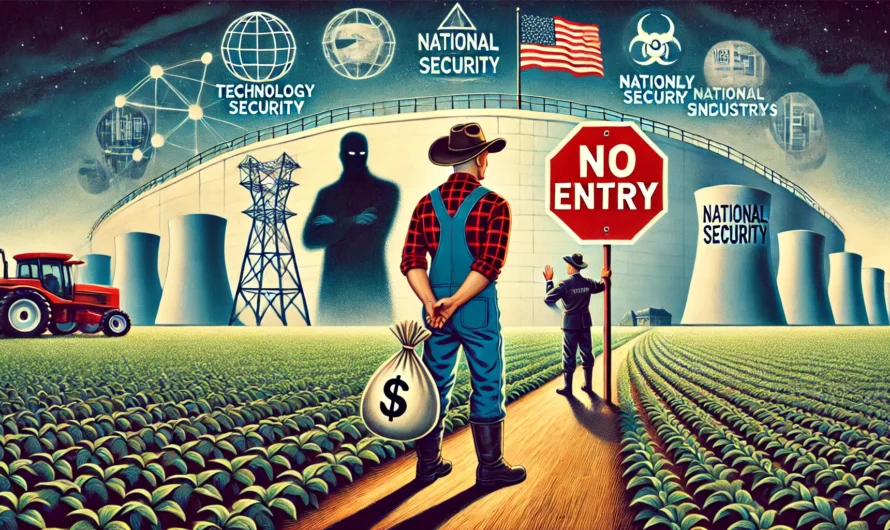
The growing trend of Chinese companies acquiring American farmland and investing in critical industries poses a direct threat to U.S. national security and economic stability. Many of these companies are either state-controlled or heavily influenced by the Chinese Communist Party (CCP), raising concerns about espionage, food security, and foreign control over essential technologies. President Trump should prioritize enacting legislation to limit Chinese ownership of U.S. agricultural land and strategic sectors. By taking decisive action, the U.S. can protect its sovereignty, safeguard critical resources, and maintain control over industries vital to its national interest.
The Scope of the Problem
Chinese Ownership of American Farmland
Chinese companies and individuals have been buying significant amounts of agricultural land in the United States.
- Scale of Ownership:
- As of 2021, Chinese entities owned over 384,000 acres of U.S. farmland, valued at approximately $1.9 billion. This represents a sharp increase compared to previous years.
- Strategic Acquisitions:
- Some purchases are near sensitive areas, such as military bases, raising concerns about surveillance and espionage.
- Food Security Risks:
- Foreign control over farmland could jeopardize U.S. food supplies, especially during geopolitical conflicts or supply chain disruptions.
Investments in Critical Industries
Chinese firms have made significant inroads into industries vital to U.S. security and technological leadership.
- Key Sectors:
- Advanced technologies like semiconductors, artificial intelligence, and renewable energy.
- Critical infrastructure such as telecommunications and power grids.
- Risks of Foreign Influence:
- Chinese investments often come with requirements to share technology and data, potentially compromising U.S. innovation and security.
The Strategic Risks of Chinese Ownership
Threats to National Security
Chinese ownership of farmland and critical industries can be exploited for strategic purposes.
- Espionage:
- Land purchases near military installations could facilitate surveillance activities.
- Economic Leverage:
- Control over key industries gives China potential leverage to disrupt supply chains or manipulate markets.
- Data Access:
- Investments in high-tech sectors could enable access to sensitive data or intellectual property.
Impact on Economic Independence
Allowing Chinese entities to control critical resources undermines U.S. economic resilience.
- Food Supply Vulnerabilities:
- Foreign ownership of farmland could lead to export restrictions or price manipulation, affecting domestic food security.
- Technological Dependence:
- Over-reliance on Chinese-owned firms for essential technologies increases U.S. exposure to geopolitical risks.
Proposed Measures to Limit Chinese Ownership
Legislation to Restrict Foreign Ownership
Enacting legislation to limit foreign ownership, particularly by Chinese entities, is essential to protecting U.S. resources and industries.
- Farmland Restrictions:
- Ban or cap Chinese ownership of U.S. agricultural land, especially near critical infrastructure or military installations.
- Require existing owners to divest properties in sensitive areas.
- Industry-Specific Limits:
- Prohibit Chinese investments in industries deemed critical to national security, such as semiconductors, defense, and telecommunications.
Strengthen CFIUS Oversight
The Committee on Foreign Investment in the United States (CFIUS) should be empowered to scrutinize and block transactions involving Chinese entities.
- Expanded Mandate:
- Include smaller-scale acquisitions and real estate purchases near sensitive locations under CFIUS review.
- Rigorous Screening:
- Increase scrutiny of Chinese companies with opaque ownership structures or ties to the CCP.
Enforce Transparency Requirements
Require foreign investors to disclose their ownership structures and affiliations with foreign governments.
- Public Accountability:
- Mandate regular reporting on foreign ownership of U.S. farmland and strategic assets.
- Sanctions for Non-Compliance:
- Impose penalties on entities that fail to disclose relevant information.
Addressing Criticisms of Ownership Restrictions
Critics argue that limiting Chinese ownership may strain U.S.-China relations or hurt the American economy. However, these concerns are outweighed by the need to protect national interests.
Diplomatic Implications
- Mitigating Escalation:
- Emphasize the importance of reciprocity, as China already imposes strict limits on foreign ownership within its borders.
- Strengthening Alliances:
- Work with allied nations to adopt similar restrictions, creating a unified stance against coercive practices.
Economic Impact
- Preserving Local Interests:
- Restricting foreign ownership protects American farmers and businesses from foreign exploitation.
- Promoting Domestic Investment:
- Encourage American companies and individuals to invest in critical industries, reducing reliance on foreign capital.
Complementary Actions
Supporting Domestic Agriculture and Industry
- Incentivize Domestic Ownership:
- Provide grants and tax breaks to U.S. farmers and companies to encourage domestic investment in strategic sectors.
- Promote Innovation:
- Increase funding for research and development in critical industries like AI, renewable energy, and biotechnology.
Strengthening International Coordination
- Global Standards:
- Advocate for international agreements to limit foreign ownership of sensitive resources and technologies.
- Allied Collaboration:
- Coordinate with partners like the EU, Japan, and Australia to counter Chinese influence in global markets.
Conclusion: Safeguarding America’s Future
The unchecked acquisition of American farmland and critical industries by Chinese entities poses significant risks to U.S. national security and economic independence. By enacting legislation to restrict foreign ownership, strengthening CFIUS oversight, and promoting domestic investment, the U.S. can protect its critical resources and technologies. President Trump’s leadership is essential to addressing this growing threat and ensuring that America’s strategic assets remain under American control. The time to act is now to safeguard the nation’s sovereignty and resilience.