 by
by Tit-for-Tat Lawfare and the End of Democracy
The Rise of Legal Warfare as a Political Weapon and Its Dire Consequences
In the years following the contentious political battles of the early 21st century, the United States crossed a dangerous threshold where courts replaced elections as the ultimate arbiters of political power. What began as partisan maneuvering escalated into a full-blown legal arms race, with Marxist operatives openly using biased legal proceedings against political opponents, most notably Donald Trump. This weaponization of law signaled the beginning of the end for democracy as we know it, pushing the United States into a dystopian era where judges and juries decide the presidency, Congress, and the fate of the republic itself.
Judge Marchon effectively wrote out “future History” in the Trump sentencing!
This essay argues that the limited-government and populist movement must retaliate against this lawfare with equal vigor. To cede this battlefield is to surrender not only political power but also the principles of self-governance and liberty that define America. History from 2025 onward reveals a grim trajectory: unchecked Marxist lawfare dismantled democratic norms, and only a forceful populist counteroffensive can restore balance.
2025: The Year Democracy Was Subpoenaed
The first shots in the legal war were fired when Marxist-aligned prosecutors targeted Donald Trump, using dubious charges and selective enforcement to derail his campaign. Trump’s supporters decried these actions as nakedly political, but the courts pressed on, sending a chilling message: no political figure was safe from weaponized prosecution. Juan Marchon, a Marxist firebrand, declared openly in a televised interview, “The courts are our ultimate tool for revolution.” His words became the rallying cry for those seeking to upend the republic through judicial fiat.
The populist backlash was immediate but disorganized. Legal scholars warned that allowing this precedent to stand would lead to a future where elections were irrelevant, replaced by courtroom dramas that decided who could and could not run for office. Polls showed deepening public distrust in the judiciary, with 62% of Americans believing that the courts were no longer impartial.
The Era of Tit-for-Tax Lawfare
By 2026, both sides had embraced lawfare as the new political battleground. The Marxists filed 535 criminal indictments against populist politicians, targeting everyone from sitting senators to small-town mayors. In response, the populists launched 536 retaliatory lawsuits, each designed to highlight corruption, hypocrisy, and the double standards of their opponents.
One particularly symbolic case involved Senator Maxine Marx, a close ally of Juan Marchon, who was sued for funneling campaign funds into a chain of “revolutionary coffee shops” that mysteriously served only government officials. The case became a media sensation, with populist leaders framing it as a stand against the elites who weaponized public trust for personal gain.
Observers noted that these legal battles were not about justice but about survival. Political commentators compared the era to a gladiatorial arena, where the last litigant standing claimed power. One historian remarked, “This isn’t politics anymore; it’s football without helmets, and the referees are wearing team colors.”
The Decline of Electoral Relevance
As lawfare intensified, elections became an afterthought. By 2030, voter turnout had plummeted to historic lows, with many Americans believing that their votes no longer mattered. Why bother voting when the outcome would inevitably be challenged in court? Judges and juries, often selected for their political loyalties, became the true kingmakers.
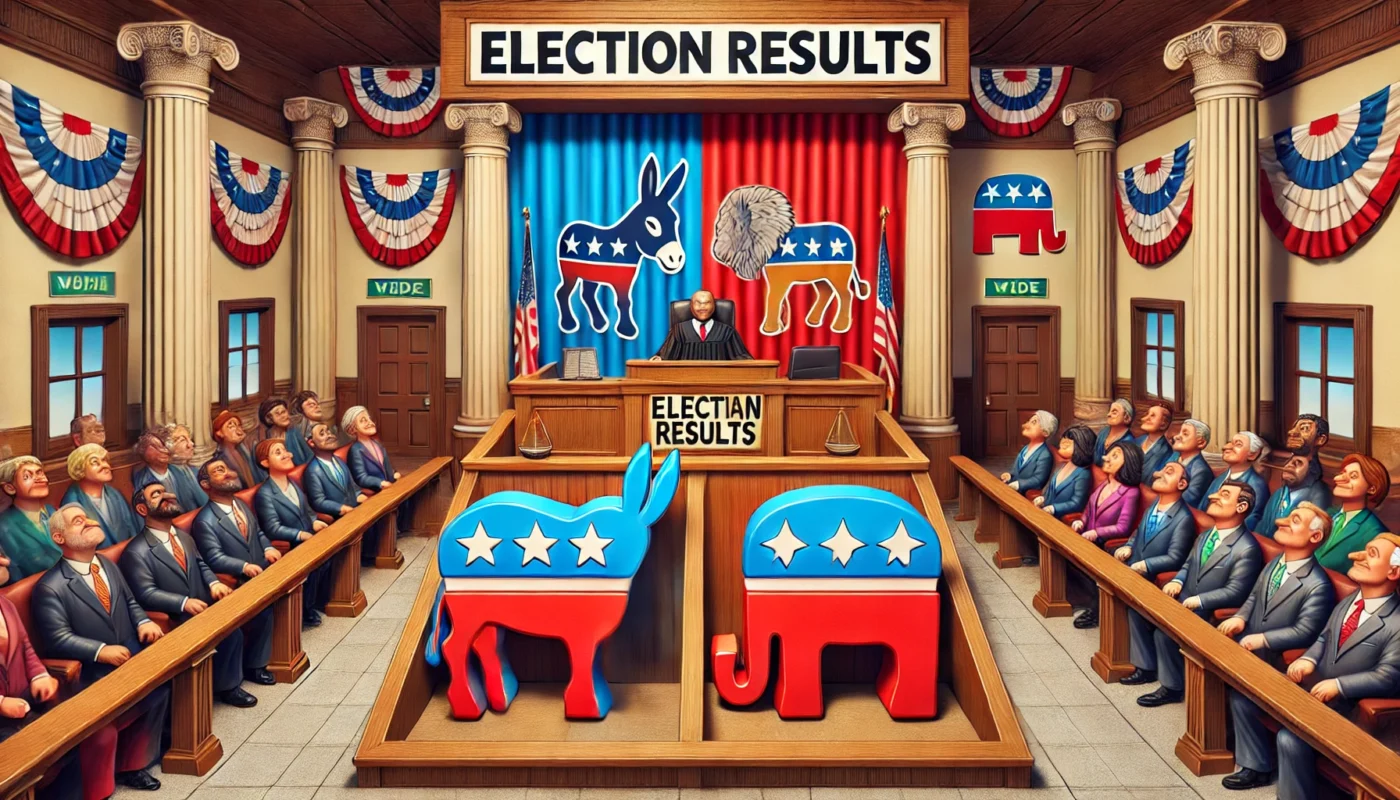
A pivotal moment came during the 2036 presidential election when both major candidates were simultaneously indicted. The election results were rendered meaningless as court rulings determined who could actually take office. The spectacle culminated in the Supreme Court selecting the president, a decision so divisive that it sparked mass protests across the country.
Populists argued that this was the inevitable result of failing to retaliate decisively against Marxist lawfare. “We warned them,” said one populist leader. “If you let one side use the courts as a weapon, it’s only a matter of time before the other side is forced to do the same. And when that happens, the people lose.”
2045–2100: The Era of Legal Tyranny
In the decades following the initial outbreak of tit-for-tax lawfare, the United States transitioned fully into a judicial oligarchy. Political campaigns were replaced by legal campaigns, with candidates raising funds not for advertisements but for legal defenses. By 2050, the average politician faced five lawsuits per year, and the legal industry accounted for 20% of GDP.
Judges, once revered as impartial arbiters, became political celebrities. High-profile trials were broadcast live, drawing Super Bowl-level audiences. One particularly infamous case involved the indictment of an entire state legislature for passing a bill deemed “too populist” by Marxist prosecutors. The resulting trial lasted three years and ended with the dissolution of the legislature—a chilling reminder of how far lawfare had gone.
Public opinion during this period revealed widespread disillusionment. Polls consistently showed that over 70% of Americans believed the country was no longer a democracy. Grassroots movements calling for judicial reform gained traction, but their efforts were stymied by entrenched interests.
2101–3000: The Death of the Republic
By the 22nd century, the United States had become unrecognizable. Elections were entirely ceremonial, with judges and juries openly deciding who could hold office. The term “banana republic” was often used to describe the country, though some commentators joked that bananas were at least nutritious.
One dystopian historian noted, “America’s decline wasn’t caused by external enemies or economic collapse. It was the courts that did us in. We let them decide everything, and in doing so, we decided nothing.”
Populist leaders in exile continued to advocate for a return to democratic principles, but their efforts were undermined by Marxist control of the legal system. The once-vibrant republic became a hollow shell, a nation where freedom was a relic of the past.
The Case for Retaliation
Given this grim future, the case for populist retaliation against Marxist lawfare becomes clear. To allow one side to weaponize the courts without response is to surrender the republic. Retaliation is not about revenge; it is about restoring balance and deterring future abuses.
Populist leaders argue that this is not just a fight for political power but a fight for the soul of the nation. “We don’t want to fight fire with fire,” one leader stated, “but when your house is burning down, you can’t afford to just watch.”
The solution lies in a two-pronged approach. First, populists must match Marxist lawfare with equal force, ensuring that no attack goes unanswered. Second, they must advocate for judicial reforms that limit the scope of legal interference in politics. Proposals include term limits for judges, stricter guidelines for prosecutorial conduct, and greater transparency in judicial appointments.
Conclusion: The Fight for America’s Future
The story of tit-for-tax lawfare is not just a cautionary tale; it is a call to action. The populist movement must rise to the challenge, fighting not only to defend their leaders but to protect the very foundation of American democracy. The alternative is a future where judges and juries determine the presidency, and the people are nothing more than spectators in a theater of injustice.
History has shown that when one side abuses power, the other must respond or risk annihilation. The populist movement understands this truth, and their fight against Marxist lawfare is a fight for the survival of the republic itself.
As America stands on the brink of this legal abyss, one thing is certain: the people must decide whether to reclaim their democracy or allow it to be buried under an avalanche of subpoenas.
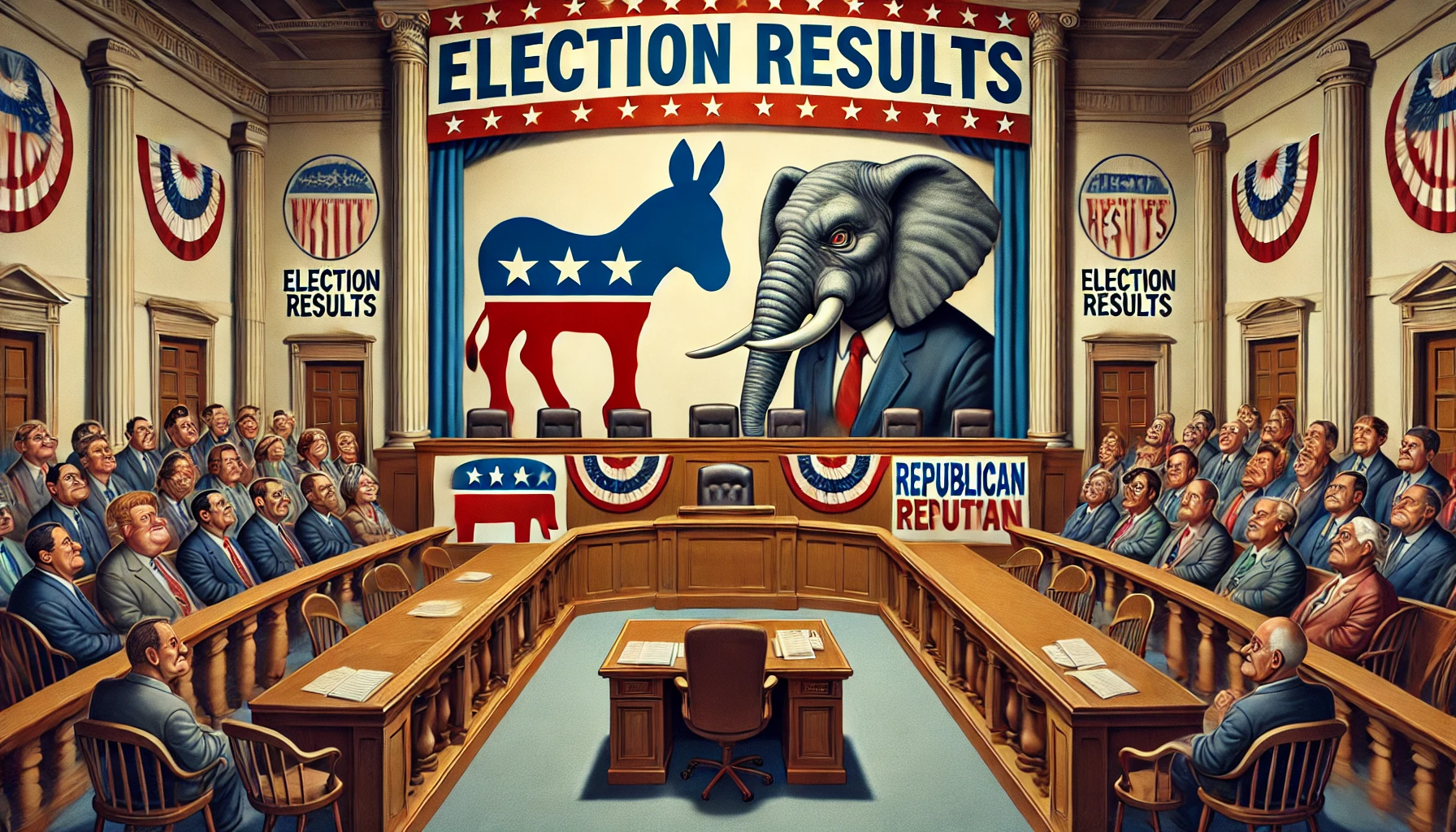
Judge Marchon Writes History in Trump Sentencing
USA Rules Now and Forever a Third World Nation!
Historical and Geographic Overview of Tit-for-Tat Lawfare in Third-World Politics
Tit-for-tat lawfare, where a sitting president or ruling party accuses challengers of crimes to consolidate power, has been a recurring theme in the political histories of Asia, the Middle East, Africa, and Latin America. This tactic undermines democratic norms, fosters political instability, and often propels nations into authoritarianism or prolonged conflict. Below is an examination of lawfare across these regions, highlighting prominent cases and patterns.
Asia: Lawfare in Fragile Democracies
- Pakistan: A Legacy of Political Trials
Pakistan’s political history is rife with lawfare, where successive governments have used courts to neutralize opponents. A prime example is the trial and execution of Prime Minister Zulfikar Ali Bhutto in 1979 under General Zia-ul-Haq. Bhutto was convicted of conspiracy to commit murder in a controversial trial widely regarded as politically motivated. Decades later, former Prime Minister Nawaz Sharif faced similar accusations, with charges of corruption being pursued aggressively to disqualify him from office.Lawfare in Pakistan often coincides with military influence, as seen in the judiciary’s role as an enforcer of the military’s political agenda. The accusations are typically framed as corruption or national security violations, ensuring public support while sidelining opposition leaders. - Myanmar: Suppression Under Legal Guise
The military junta in Myanmar has repeatedly used lawfare to silence dissent, particularly against leaders of the National League for Democracy (NLD). Aung San Suu Kyi, a Nobel laureate and former leader, has faced decades of imprisonment on charges ranging from corruption to inciting dissent, accusations critics say are designed to eliminate her political influence. The weaponization of law has allowed the military to maintain power while delegitimizing democratic forces. - The Philippines: Duterte’s Lawfare
Under President Rodrigo Duterte, lawfare became a tool to suppress opposition. Senator Leila de Lima, a vocal critic of Duterte’s war on drugs, was arrested in 2017 on drug trafficking charges widely regarded as fabricated. Her arrest sent a chilling message to dissenters, consolidating Duterte’s grip on power.
The Middle East: Lawfare as a Tool of Authoritarianism
- Egypt: Sisi’s Legal Grip
Since taking power in 2014, President Abdel Fattah el-Sisi has relied on lawfare to crush political opposition, particularly members of the Muslim Brotherhood. Following the coup against Mohamed Morsi, Egypt’s first democratically elected president, courts sentenced hundreds of Brotherhood members to death in mass trials criticized internationally for their lack of due process. Sisi’s government framed these actions as necessary to combat terrorism, leveraging the judiciary to eliminate political rivals. - Turkey: Erdogan’s Purge
President Recep Tayyip Erdoğan has extensively used lawfare, especially following the failed coup attempt in 2016. Tens of thousands of judges, military officers, and academics were accused of supporting the coup and arrested under broad anti-terrorism laws. Erdoğan’s crackdown has targeted opposition politicians, such as the pro-Kurdish Peoples’ Democratic Party (HDP), with leaders jailed on charges of terrorism. - Iran: Revolutionary Courts and Political Suppression
Iran’s judiciary, closely tied to the Supreme Leader, has long been a tool for suppressing reformist and opposition figures. Reformist politicians like Mir Hossein Mousavi and Mehdi Karroubi have been placed under house arrest since 2011 without formal charges, exemplifying the regime’s reliance on extrajudicial measures to stifle dissent.
Africa: Lawfare in the Struggle for Power
- Zimbabwe: Mugabe’s Long Reign
Under Robert Mugabe’s rule, lawfare was a key strategy to maintain power. Opposition leaders, particularly from the Movement for Democratic Change (MDC), were frequently arrested on charges ranging from treason to inciting violence. Morgan Tsvangirai, MDC’s leader, was charged with treason in 2002, shortly before the presidential election, in a move widely seen as an effort to discredit him. - Uganda: Museveni’s Never-Ending Presidency
Yoweri Museveni, Uganda’s president since 1986, has used lawfare to weaken his opposition. His main rival, Bobi Wine, has been arrested multiple times on charges of incitement and treason. In 2021, Wine’s legal battles became central to his campaign, illustrating how Museveni weaponizes the judiciary to undermine challengers. - Nigeria: Lawfare Amid Corruption Accusations
Nigerian politics has seen repeated use of corruption charges to disqualify or silence opponents. During the 2019 elections, Chief Justice Walter Onnoghen was controversially removed by President Muhammadu Buhari’s government, sparking accusations of judicial manipulation to influence the electoral process.
Latin America: Lawfare in Democracies Under Siege
- Brazil: Lava Jato and Lula’s Imprisonment
Operation Lava Jato (Car Wash) uncovered widespread corruption across Brazil’s political elite. While initially hailed as a triumph for justice, it became a tool for lawfare when former President Luiz Inácio Lula da Silva was convicted on corruption charges and jailed in 2018. The charges, later annulled, were widely seen as an effort to prevent Lula from running in the 2018 presidential election, paving the way for Jair Bolsonaro’s rise to power. - Venezuela: Maduro’s Authoritarian Grip
Under Nicolás Maduro, Venezuela has used lawfare to suppress opposition leaders. Prominent opposition figures like Leopoldo López and Juan Guaidó have faced charges ranging from incitement to treason, often without credible evidence. These legal battles serve to delegitimize challengers and maintain the ruling party’s stranglehold on power. - Mexico: Lawfare as Political Retribution
Mexican politics has not been immune to lawfare. Former presidents, including Enrique Peña Nieto, have faced corruption investigations that critics argue are politically motivated. Current leaders often use the judiciary to weaken rivals or deflect attention from their own scandals.
Patterns and Implications of Lawfare in Third-World Politics
Across these regions, lawfare follows a consistent pattern:
- Weaponization of Corruption Charges: Allegations of corruption or national security threats are commonly used to justify legal action against political challengers.
- Erosion of Judicial Independence: Courts become extensions of the ruling regime, rubber-stamping decisions that serve political ends.
- Public Manipulation: Governments frame lawfare as efforts to combat corruption or terrorism, often leveraging public sentiment to justify authoritarian measures.
The implications are dire. Lawfare undermines trust in democratic institutions, polarizes societies, and weakens the rule of law. Moreover, it creates a cycle of retaliation, where successive governments escalate legal battles, further destabilizing the political landscape.
Conclusion: A Warning for the Future
The use of tit-for-tat lawfare in third-world politics serves as a cautionary tale for all democracies. As history shows, when legal systems are weaponized for political gain, the result is often authoritarianism, societal division, and the erosion of democratic principles. To break this cycle, nations must strengthen judicial independence, promote transparency, and hold leaders accountable without resorting to partisan manipulation. Only then can they safeguard the rule of law and ensure that power remains with the people, not the courts.