 by
by Pardon Meme-Maker Douglass Mackey
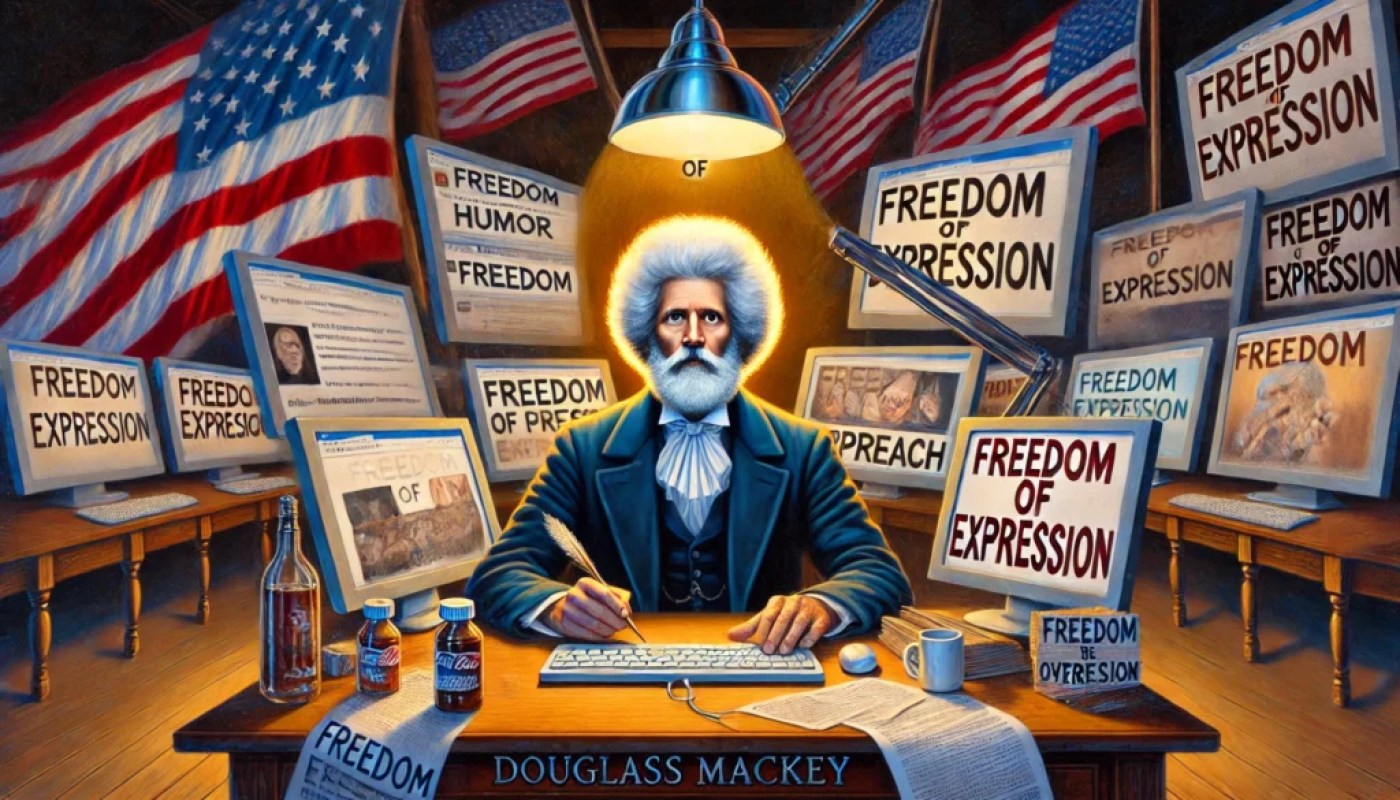
In 2023, Douglass Mackey, a political meme-maker known online as “Ricky Vaughn,” was sentenced to federal prison under charges of conspiring to deprive individuals of their right to vote. The charges stemmed from a series of satirical memes Mackey posted during the 2016 presidential election. Federal prosecutors claimed that these memes were intended to mislead voters—specifically Hillary Clinton supporters—into casting invalid ballots by texting their vote instead of using legitimate methods. The case raises critical questions about the boundaries of free speech, the selective application of justice, and the role of humor in political discourse.
Douglass Mackey’s conviction has been widely criticized as a politically motivated overreach, punishing what should be constitutionally protected speech. A presidential pardon is not only justified but necessary to address the miscarriage of justice in this case. Here’s why.
1. The Case Against Mackey: A Questionable Premise
The prosecution argued that Mackey’s memes, which included satirical instructions for voting via text message, were a deliberate effort to disenfranchise voters. However, the satirical nature of the memes was obvious. The posts were filled with absurdities, such as messages urging voters to “text” their votes and claiming the voting day for Clinton supporters was different from that for Trump supporters.
Despite the memes’ outlandishness, the prosecution claimed they were effective enough to constitute voter suppression. Yet, no significant evidence was provided to show that anyone was genuinely misled by the memes. The case hinged on the assumption that satire could be criminalized if interpreted by the state as misleading—a dangerous precedent for free expression.
2. A Chilling Effect on Free Speech
The Mackey case sets a troubling precedent that could stifle political satire, humor, and parody in the United States. Satire has long been a cornerstone of American democracy, serving as a tool to critique power structures and engage citizens in political discourse. Figures such as Mark Twain, George Carlin, and Jon Stewart have used humor to challenge the status quo and provoke thought.
If jokes and memes can be prosecuted under the same laws meant to address serious voter suppression efforts, the boundaries of free speech will erode. Satirical content creators, political commentators, and ordinary citizens could find themselves silenced by the fear of criminal prosecution. Pardoning Mackey would reaffirm the principle that humor, even when controversial, is protected under the First Amendment.
3. Selective Prosecution: A Partisan Vendetta
Mackey’s case highlights concerns about selective enforcement of the law. While Mackey was prosecuted for his pro-Trump memes, no similar actions were taken against left-leaning activists or comedians who posted satirical content targeting Trump supporters. For instance, during the same election cycle, left-wing activists circulated memes urging Trump supporters to vote via Twitter or Facebook—yet these individuals faced no legal repercussions.
This discrepancy suggests that Mackey’s prosecution was politically motivated, targeting him as a scapegoat for the Democratic Party’s 2016 loss. By focusing on Mackey while ignoring similar behavior from others, the Department of Justice undermined its credibility and demonstrated a troubling bias.
4. The Danger of Over-Criminalizing Satire
Prosecuting Mackey for his memes blurs the line between legitimate voter suppression efforts and protected forms of political expression. Voter suppression laws are critical for ensuring fair elections, but applying them to satirical content dilutes their purpose. Genuine voter suppression involves tactics such as purging voter rolls, intimidating voters at polling places, or disseminating false information in official communications. Mackey’s memes, while controversial, do not fall into these categories.
If satirical memes can be classified as voter suppression, it raises questions about the limits of humor and criticism in political discourse. Pardoning Mackey would send a clear message that the justice system must prioritize serious threats to democracy rather than targeting satirists and meme-makers.
5. The Role of Intent in Free Speech Cases
One of the most significant issues in Mackey’s case is the question of intent. The prosecution claimed that Mackey intended to mislead voters, yet his actions are better understood as an attempt to ridicule Clinton supporters through satire. Without concrete evidence showing that Mackey’s goal was to disenfranchise voters—and that his memes had a meaningful impact on voter behavior—the case rests on speculation.
Legal experts have argued that intent is a critical factor in free speech cases. Punishing individuals based on subjective interpretations of their motives sets a dangerous precedent. By pardoning Mackey, the government would acknowledge the importance of intent in determining whether speech crosses the line into criminal conduct.
6. Protecting the First Amendment
The First Amendment guarantees the right to free speech, including speech that is provocative, offensive, or satirical. While certain forms of speech, such as incitement to violence or direct threats, are not protected, Mackey’s memes do not meet these criteria. The content was clearly intended as satire, not as a genuine effort to mislead voters.
If speech as benign as Mackey’s memes can result in federal charges, the scope of First Amendment protections will shrink. Pardoning Mackey would reinforce the constitutional principle that political expression, even when controversial, deserves robust protection.
7. Restoring Public Trust in Justice
The Mackey case has fueled concerns about the politicization of the justice system. By targeting a pro-Trump meme-maker for actions that were clearly satirical, the Department of Justice risks appearing as a tool for partisan retribution rather than an impartial enforcer of the law.
Issuing a pardon would demonstrate a commitment to fairness and impartiality, signaling that the justice system must prioritize real threats to democracy over politically charged prosecutions. It would also restore public trust in the ability of the government to protect free expression without bias.
8. A Call for Balance in Political Discourse
The Mackey case reflects the increasingly polarized nature of American politics, where humor and satire are often misconstrued as malicious intent. Pardoning Mackey would serve as a reminder that political discourse should allow space for disagreement, critique, and humor—even when it offends or challenges the opposing side.
By protecting satirical content creators, the government can foster a healthier political environment that values free expression over censorship and punitive measures.
Conclusion: A Pardon as a Statement of Principle
Douglass Mackey’s conviction represents a troubling overreach in the application of voter suppression laws, raising serious questions about free speech, selective prosecution, and the politicization of justice. His memes, while controversial, were clearly satirical and did not constitute a genuine effort to disenfranchise voters. Punishing him for such content sets a dangerous precedent that threatens the boundaries of free expression in America.
By pardoning Mackey, a president could reaffirm the importance of the First Amendment, correct a miscarriage of justice, and send a message that satire, humor, and parody are vital components of a free and open society. At a time when the principles of free speech are under increasing pressure, a pardon would stand as a powerful statement of America’s commitment to its constitutional values.
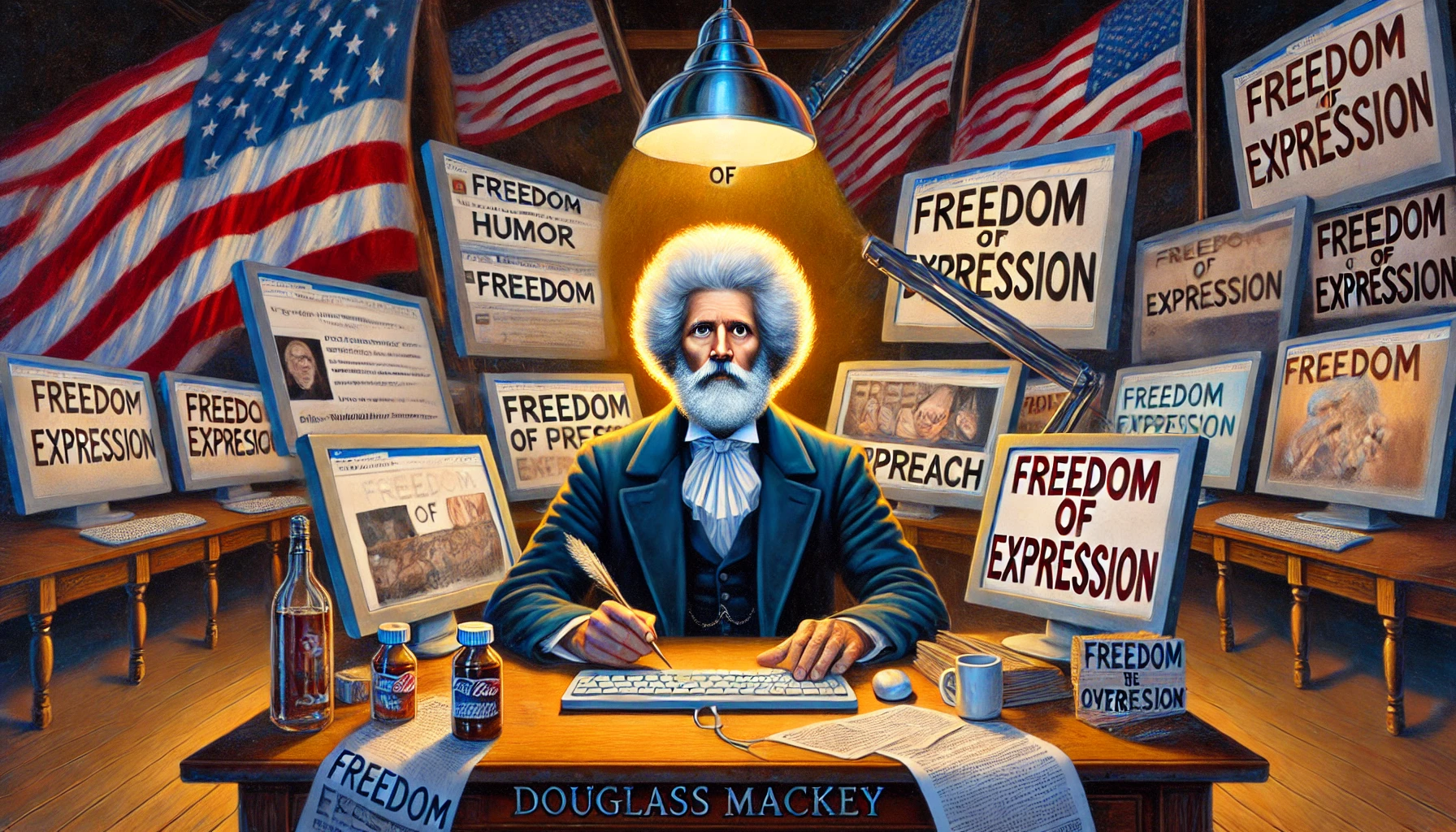
Meme-Maker Douglass Mackey from a Libertarian Populist Perspective
Douglass Mackey, known online as “Ricky Vaughn,” became a controversial figure when he was prosecuted and convicted under federal law for creating satirical memes during the 2016 presidential election. To libertarian populists, Mackey represents more than just a meme-maker; he is a symbol of government overreach, selective enforcement, and the increasing erosion of free speech protections in the digital age.
The Satirist vs. the State
From a libertarian populist viewpoint, Mackey’s memes were a form of political expression—provocative, irreverent, and unmistakably satirical. His content, including memes suggesting Clinton supporters “text” their votes instead of casting ballots, was clearly absurd and intended as parody, not as an actionable guide for voters. Libertarians see such satire as a cornerstone of free speech and a healthy democracy. Mackey’s prosecution, therefore, is viewed as a dangerous precedent that criminalizes humor and chills dissent.
Free Speech as a Foundational Right
Libertarian populists argue that free speech is the bedrock of a free society. Mackey’s prosecution under the pretext of “voter suppression” is seen as a gross misapplication of law, targeting a meme-maker for exercising his First Amendment rights. If satirical memes can be considered a crime, libertarians fear that other forms of political humor, critique, or commentary could soon face similar scrutiny. This slippery slope threatens not only digital creators but also the broader principles of open dialogue and political discourse.
Selective Justice and Political Bias
The unequal application of the law is a central theme in libertarian populist critiques of the Mackey case. While Mackey was prosecuted for his pro-Trump memes, numerous similar memes created by left-leaning activists during the same election cycle went unpunished. For example, memes falsely suggesting that Trump supporters could vote by tweeting their ballot received no legal attention.
This discrepancy suggests to libertarian populists that Mackey was targeted not for his actions, but for his politics. They view this as a symptom of a broader trend in which the justice system is weaponized against political opponents, undermining its legitimacy and reinforcing a dangerous two-tiered system of enforcement.
Big Government Overreach
Mackey’s case exemplifies libertarian populists’ concerns about the unchecked growth of government power. Charging a satirist with federal crimes for making memes strikes libertarians as emblematic of a state that has overstepped its constitutional limits. Rather than focusing on real issues—like election security, government accountability, or reducing bureaucracy—the government has turned its resources toward policing jokes on the internet.
For libertarian populists, this kind of overreach is precisely why the federal government’s power must be curtailed. Mackey’s case becomes a rallying cry against a bloated state that prioritizes political theater over meaningful governance.
The Role of Big Tech
Libertarian populists also see Mackey’s case as part of a broader alliance between Big Tech and Big Government. Mackey was a prominent figure on platforms like Twitter, using memes to influence political discourse. His eventual prosecution raises questions about whether platforms, under pressure from government officials, contributed to the identification or targeting of his activities.
This intersection of corporate and state power is deeply troubling to libertarians, who view it as a form of soft censorship. The case serves as evidence of a growing technocratic regime that seeks to control speech and silence dissenting voices, especially those who challenge the status quo.
The Populist Symbol
For populists, Mackey represents an ordinary citizen wielding creativity to question and mock the political elite. His memes resonated with a segment of the population that felt ignored, belittled, or demonized by mainstream media and establishment politicians. The government’s decision to prosecute him is perceived as an attack not just on Mackey, but on the broader populist movement that seeks to upend entrenched power structures.
Populists see Mackey’s conviction as a sign of the elite’s fear of grassroots movements and digital insurgencies. By criminalizing satire, the establishment seeks to suppress dissent and maintain control over the narrative. Pardoning Mackey, from this perspective, would symbolize a victory for the people against an overreaching elite.

Originally posted 2022-11-23 15:49:15.