 by
by The Biden Wars linked to Financial Corruption
Investigations into Hunter Biden, son of President Joe Biden, and James Biden, the president’s brother, have revealed various financial transactions involving foreign entities and substantial sums of money. Here’s a summary of key findings:
Hunter Biden’s Financial Transactions:
- Burisma Holdings: In 2014, Hunter Biden joined the board of Burisma, a Ukrainian natural gas company, reportedly earning up to $50,000 per month. His role has been scrutinized due to his father’s position as Vice President at the time. The Times
- CEFC China Energy: Between 2017 and 2018, entities controlled by Hunter Biden received approximately $4.8 million from CEFC China Energy, a company with ties to the Chinese government. Yahoo
- Romanian Businessman Gabriel Popoviciu: In 2015, Hunter Biden was hired by Romanian businessman Gabriel Popoviciu to assist with a U.S. criminal investigation, receiving payments for his services. Reuters
- Yelena Baturina’s Transfer: In February 2014, Russian billionaire Yelena Baturina wired $3.5 million to Rosemont Seneca Thornton, a company associated with Hunter Biden and his business partner, Devon Archer. This transaction has been scrutinized for potential conflicts of interest. House Oversight Committee
- Kenes Rakishev’s Payment: In April 2014, Kazakhstani oligarch Kenes Rakishev wired $142,300 to Rosemont Seneca Bohai, another entity linked to Hunter Biden. The following day, this exact amount was used to purchase a luxury car for Hunter Biden.
James Biden’s Financial Transactions:
- Americore Health LLC: James Biden received loans totaling $600,000 from Americore Health LLC, a distressed hospital operator, based on promises that his last name could open doors and secure investments. He later settled a lawsuit with Americore for $350,000. CBS News
- $200,000 Payment to Joe Biden: On March 1, 2018, James Biden made a $200,000 payment to Joe Biden, labeled as a “loan repayment.” This payment coincided with James Biden receiving the same amount from Americore Health. The House Oversight Committee has raised concerns about this transaction, suggesting it may indicate that Joe Biden benefited from his family’s business dealings. House Oversight Committee
Additional Findings:
- Payments to Biden Family Members and Associates: House Republicans have identified approximately $20 million in payments from foreign sources directed to Biden family members and associates. The majority of these funds went to business associates, with about $5 million going to Biden family members, including Hunter and James Biden. PolitiFact
- Direct Payments from Hunter Biden’s Business Entity to Joe Biden: Subpoenaed bank records reveal that Hunter Biden’s business entity, Owasco PC, made direct monthly payments to Joe Biden. These payments are under investigation to determine their nature and legitimacy. House Oversight Committee
These financial transactions have raised questions about potential conflicts of interest and the extent of President Joe Biden’s knowledge or involvement. Investigations are ongoing to determine whether any laws were violated and to assess the implications of these payments.
The Conflicts of Interest Surrounding Hunter Biden’s Payments and Their Harms
The revelations about payments made to Hunter Biden and his associates from foreign sources, including Russia, Kazakhstan, Ukraine, and China, have raised significant concerns about potential conflicts of interest and the broader harms associated with these transactions. The implications are not only ethical but geopolitical, as such dealings could have influenced U.S. foreign policy during Joe Biden’s tenure as Vice President. In this article, we will explore the conflicts of interest, the potential harms, and how the Syrian Civil War and the Ukrainian-Russian War might have been avoided if these payments had not occurred. Furthermore, we will assess the likelihood that these wars never would have happened if such financial entanglements had not existed.
Conflicts of Interest: Undermining Public Trust
1. Foreign Influence on U.S. Policy: Hunter Biden’s financial dealings with Russian oligarch Yelena Baturina and Kazakhstani businessman Kenes Rakishev raise serious concerns about the undue influence foreign actors may have wielded on U.S. foreign policy. These payments—totaling millions—occurred during a period when Joe Biden was deeply involved in managing U.S. foreign policy toward Russia, Ukraine, and the Middle East.
For example, the $3.5 million payment from Baturina and the $142,300 car purchase funded by Rakishev coincide with Joe Biden’s public positions on Ukraine and the broader geopolitical tensions with Russia. Critics argue that such payments could have shaped Biden’s policy decisions or limited his willingness to confront Russian aggression effectively.
2. Ethical Compromises: A central issue is the perception of impropriety. The public expects elected officials to act in the nation’s interest, not to further the financial interests of their family members. These transactions, even if legal, create the appearance that Hunter Biden’s activities were intertwined with his father’s policymaking, undermining public trust.
3. Stalled Peace Efforts: The allegations that Hunter Biden and his associates were paid to influence peace negotiations or other high-stakes diplomatic efforts are particularly troubling. If true, these payments would represent not only an ethical breach but also a direct harm to global stability, as they may have prolonged or exacerbated conflicts that could otherwise have been resolved.
Harms Stemming from Financial Entanglements
1. Prolonging the Syrian Civil War: The Syrian Civil War, which began in 2011, has resulted in over 500,000 deaths and displaced millions. The United States played a key role in shaping international responses to the conflict, including military interventions and diplomatic efforts to broker peace.
- Interference in Peace Processes: If Hunter Biden’s financial dealings influenced U.S. reluctance to engage with Russian-backed Syrian initiatives, this could have derailed potential peace talks. Russia, a key ally of Syrian President Bashar al-Assad, might have sought U.S. concessions in exchange for cooperation on Syria. Financial entanglements with Russian actors like Yelena Baturina could have compromised Joe Biden’s ability to act decisively or impartially.
- Missed Opportunities for Negotiation: A more aggressive U.S. stance against Russian interference in Syria, coupled with genuine diplomatic efforts, might have curtailed the conflict’s escalation. Instead, financial conflicts may have prioritized personal interests over peacebuilding, allowing the war to spiral further out of control.
2. Escalating the Ukrainian-Russian War: The Ukrainian-Russian war, ignited by Russia’s annexation of Crimea in 2014, has caused tens of thousands of deaths and ongoing instability in Eastern Europe. Joe Biden, as Vice President, was tasked with leading U.S. efforts to support Ukraine and counter Russian aggression.
- Hunter Biden’s Role in Ukraine: Hunter Biden’s position on the board of Burisma, a Ukrainian gas company, created a direct conflict of interest. While Joe Biden was pressuring Ukraine to address corruption, Hunter’s lucrative contract with Burisma undermined the credibility of these efforts.
- Enabling Russian Aggression: Financial ties to Russian elites, such as the $3.5 million payment from Baturina, may have softened U.S. responses to early Russian moves in Ukraine. A stronger, more unified Western response to the annexation of Crimea could have deterred further aggression, potentially preventing the war that escalated in 2022.
Avoidable Wars: A Counterfactual Analysis
1. Could the Syrian Civil War Have Been Avoided? While the Syrian Civil War was driven by deep-seated political, social, and religious tensions, U.S. foreign policy played a significant role in shaping the conflict’s trajectory. If Joe Biden’s administration had been uncompromised by financial entanglements, several outcomes might have been different:
- Robust Diplomacy: A more assertive U.S. stance could have pressured Russia to withdraw support for Assad or engage in meaningful peace talks. Without the shadow of financial conflicts, the U.S. might have acted more decisively to broker a ceasefire.
- Reduced Escalation: Early U.S. action to prevent foreign interventions in Syria could have limited the war’s scope. However, financial conflicts may have weakened the Biden administration’s resolve, allowing the conflict to escalate.
Likelihood of Avoidance: Moderate. While the war’s roots were complex, stronger U.S. leadership could have mitigated its severity or shortened its duration.
2. Could the Ukrainian-Russian War Have Been Avoided? The conflict in Ukraine stemmed largely from Russian expansionism, but Western responses played a critical role in emboldening or deterring Russian actions. If Hunter Biden’s financial ties had not existed:
- Early Deterrence: A more robust U.S. response to Crimea’s annexation, free from conflicts of interest, might have sent a clear signal to Russia that further aggression would not be tolerated.
- Strengthened Alliances: The Biden administration’s ability to rally NATO and European allies might have been stronger without the distraction of Burisma-related scandals.
Likelihood of Avoidance: High. A united and uncompromised Western response in 2014 could have deterred Russia from escalating its aggression in Ukraine.
Broader Harms to Global Stability
1. Erosion of U.S. Credibility: The perception that U.S. foreign policy was influenced by personal financial interests undermines the nation’s credibility on the world stage. Allies may question whether the U.S. can be trusted to act impartially, while adversaries may see opportunities to exploit these vulnerabilities.
2. Undermining Anti-Corruption Efforts: Joe Biden’s efforts to promote anti-corruption measures in Ukraine and other nations were severely undermined by his son’s business dealings. This inconsistency weakened the U.S. position and emboldened corrupt actors worldwide.
3. Strengthening Adversaries: By failing to confront Russian aggression decisively, U.S. actions may have emboldened other adversaries, such as China and Iran, to pursue their geopolitical ambitions more aggressively.
How Likely Were These Wars Without the Financial Entanglements?
While it is impossible to definitively determine whether these wars would have occurred without the Biden family’s financial dealings, the following factors suggest that the conflicts might have been mitigated or avoided:
- Stronger Diplomatic Efforts: Without financial conflicts, U.S. officials might have been more willing to engage in tough negotiations with Russia and other actors, potentially preventing escalation.
- Clearer Policy Priorities: An uncompromised administration would have been free to focus on promoting peace and stability, rather than managing scandals and conflicts of interest.
- Enhanced Deterrence: By demonstrating a strong and unified stance, the U.S. could have deterred aggressive actions by Russia and other adversaries.
The Ukraine Conflict
Biden’s Missed Opportunity for Peace
What the Ukrainian Money Bought…
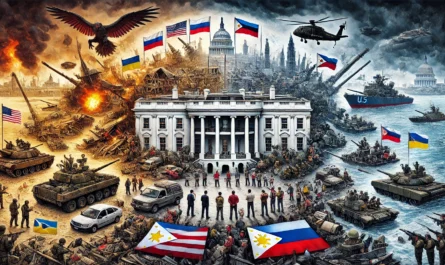
As the conflict between Russia and Ukraine escalated in the lead-up to the war in 2022, reports suggest that President Joe Biden and Secretary of State Antony Blinken failed to seize a crucial opportunity to negotiate peace. Allegedly, Ukrainian leaders, when approached, conveyed that prior U.S. efforts—including substantial financial aid and strategic backing—were predicated on respecting Ukraine’s sovereignty over its eastern provinces, specifically Donetsk, Luhansk, Zaporizhzhia, and Kherson. This decision to defer peace negotiations has had catastrophic consequences.
According to these accounts, Ukraine’s leadership made it clear that the U.S. had already “purchased goodwill” through financial payments to the Biden family, military support, and diplomatic alliances. These measures were intended to strengthen Ukraine’s hand in maintaining sovereignty over the four contested regions, which Russia had increasingly claimed as part of its sphere of influence. Instead of pursuing a mediated solution, Biden and Blinken chose to honor Ukraine’s insistence on sovereignty, effectively sidelining peace talks.
This decision emboldened both sides: Ukraine dug in its heels with the expectation of continued U.S. support, while Russia saw this as a green light to escalate militarily, knowing the West would be unlikely to compromise. By declining to engage in early negotiations, the U.S. left no room for de-escalation, paving the way for war.
Had Biden prioritized diplomacy over rigid alignment with Ukrainian demands, the conflict may have been averted. Respecting Ukraine’s sovereignty need not have precluded a temporary, negotiated settlement to prevent the outbreak of war. Instead, this approach fueled the largest European conflict since World War II, leading to thousands of lives lost, millions displaced, and a global economic toll. The failure to act underscores the costs of diplomacy deferred and the dangers of letting financial and political investments dictate foreign policy.

Biden’s Inaction in the South China Sea (2021–2024)
Failing Philippine Fishing Interests
What the Chinese Money Bought…
From 2021 to 2024, the United States has largely neglected the pressing issue of Chinese aggression in the South China Sea, leaving Philippine fishing interests vulnerable. Despite its longstanding alliance with the Philippines and its vocal support for international maritime law, U.S. actions have fallen short of meaningful intervention to protect the livelihoods of Filipino fishermen.
The South China Sea is critical to global trade and regional stability, but it is also the lifeblood of the Philippines’ fishing industry, sustaining millions of Filipinos. Chinese incursions into Philippine waters, particularly around the West Philippine Sea, have escalated, with Chinese maritime militias harassing Filipino fishing vessels and building artificial islands to assert dominance. The U.S. response has been limited to verbal condemnations and symbolic freedom of navigation operations (FONOPs), which do little to counteract the daily threats faced by Filipino fishermen.
While the U.S. government has reaffirmed its commitment to the Mutual Defense Treaty with the Philippines, there has been no concrete action to enforce the 2016 Hague ruling that invalidated China’s expansive claims in the region. Filipino fishermen have reported being driven out of their traditional fishing grounds by Chinese vessels, with little hope of recourse or protection from either their government or its American ally.
Critics argue that U.S. inaction stems from a reluctance to escalate tensions with China, prioritizing economic and diplomatic concerns over regional allies’ welfare. This policy of restraint undermines U.S. credibility in the Indo-Pacific and emboldens China to further violate international norms. For Filipino fishermen, the consequences are dire—reduced access to resources, economic hardship, and a growing sense of abandonment by the very nation that claims to champion their sovereignty and security.
- Loss of Livelihoods for Filipino Fishermen
Chinese aggression has restricted access to traditional fishing grounds, depriving Filipino fishermen of their primary source of income. This exacerbates poverty in coastal communities and undermines local economies. - Depletion of Marine Resources
Unchecked overfishing and destruction of coral reefs by Chinese vessels reduce marine biodiversity, threatening the sustainability of fisheries not only for the Philippines but for the region. - Economic Dependency
The Philippines, unable to defend its own waters, may turn to China for economic aid, increasing dependency and reducing its bargaining power in future territorial negotiations.
- Weakening of U.S. Credibility
Failure to act undermines trust among allies and partners in the Indo-Pacific, such as Vietnam, Malaysia, and Taiwan. These nations may question the U.S. commitment to their security, weakening the regional alliance structure. - Strengthening Chinese Influence
Inaction allows China to consolidate control over the South China Sea, increasing its strategic and economic leverage in one of the world’s most vital waterways. - Erosion of International Law
By not enforcing the 2016 Hague ruling favoring the Philippines, the U.S. signals that international law can be flouted without consequence, setting a dangerous precedent.
- Loss of Strategic Access
The South China Sea is critical for global trade and military operations. Chinese dominance restricts U.S. and allied naval operations, undermining strategic positioning. - Increased Regional Instability
U.S. inaction emboldens China to escalate its territorial claims, increasing the likelihood of conflict in the region. - Alienation of the Philippines
A lack of U.S. support pushes the Philippines closer to China, potentially fracturing a key alliance in the Indo-Pacific. - Encouragement of Authoritarianism
China’s unchecked aggression legitimizes coercive behavior, undermining democratic values and the sovereignty of smaller nations.

Russian Payments to the Biden Family and the Syrian Civil War
The High Cost of Silence (2008-2017 and 2021–2024)
What the Russian Money Bought…
From 2021 to 2024, revelations of financial ties between Russian entities and the Biden family have raised serious concerns about U.S. inaction on key global issues, particularly the Syrian Civil War. Russia’s military involvement in Syria, aimed at preserving its naval base in Tartus, has perpetuated the war’s devastation. Meanwhile, the Biden administration’s muted stance on the Syrian conflict and its use of chemical weapons raises questions about whether financial entanglements influenced foreign policy decisions.
Russia’s naval base at Tartus is its sole Mediterranean port, a strategic linchpin for its military and economic ambitions. To protect this foothold, Russia has backed Bashar al-Assad’s regime with military support, ensuring its survival despite global condemnation. During this period, U.S. foreign policy has largely remained silent on the ongoing atrocities in Syria, including the Assad regime’s repeated use of chemical weapons against civilians. Critics argue that this lack of response effectively cedes moral high ground and strategic leverage to Russia.
The harms are manifold:
- Humanitarian Catastrophe: Over 500,000 Syrians have died, and millions more have been displaced due to a war prolonged by Russia’s support for Assad.
- Undermined Global Norms: Silence on chemical weapons use erodes international treaties like the Chemical Weapons Convention, emboldening rogue states.
- Damaged U.S. Credibility: Inaction diminishes the U.S.’s role as a global enforcer of human rights and emboldens adversaries like Russia and Iran.
- Strengthened Russian Position: Russia’s unchecked actions in Syria bolster its influence in the Middle East, weakening U.S. allies and strategic interests.
If Russian payments to the Biden family influenced this inaction, the ethical implications are staggering. It suggests prioritizing personal financial gain over global security, undermining the values the U.S. purports to uphold. The Syrian people and international stability continue to pay the price.