by
by Geopolitics Today: Socialist-Globalists vs. Nationalist-Populists
The geopolitical landscape of the 21st century has evolved into a battleground between two ideologically distinct forces: Socialist-Globalists and Nationalist-Populists. This divide reflects deeper conflicts over sovereignty, economic models, and cultural identity, shaping policies and political movements worldwide. The clash manifests in trade agreements, immigration policies, global governance, and responses to crises such as climate change, pandemics, and armed conflicts.
Defining the Camps
- Socialist-Globalists
- Advocate for international cooperation and institutions like the United Nations, World Trade Organization (WTO), and International Monetary Fund (IMF) to address global challenges.
- Emphasize redistributive policies, such as wealth transfers from developed to developing nations, often framed as climate reparations or global aid.
- Support policies like open borders, multinational trade agreements, and global tax frameworks, which prioritize international unity over national sovereignty.
- Nationalist-Populists
- Focus on preserving national sovereignty and protecting local industries, workers, and cultural identities.
- Resist global institutions perceived as undermining national autonomy.
- Advocate for controlled immigration, bilateral trade agreements, and policies that prioritize domestic interests over global obligations.
Key Geopolitical Flashpoints
- Trade and Economic Policy
- Socialist-Globalist Approach: Multilateral trade agreements such as the Trans-Pacific Partnership (TPP) and the Paris Climate Agreement exemplify efforts to centralize economic and environmental governance. Globalists argue that these agreements create economic interdependence and foster peace.
- Nationalist-Populist Response: Leaders like Donald Trump, Viktor Orbán, and Marine Le Pen have pushed back against such agreements, labeling them as threats to national industries and autonomy. Trump’s withdrawal from the TPP and renegotiation of NAFTA into the USMCA highlighted this resistance.
- Immigration and Border Policies
- Socialist-Globalist Approach: Support for open-border policies and global migration compacts is rooted in the idea of shared responsibility for refugees and economic migrants. The European Union’s push for member states to share the burden of asylum seekers reflects this stance.
- Nationalist-Populist Response: Countries like Hungary, Poland, and the U.S. under Trump emphasized border security and national identity, rejecting mandates that force compliance with international migration quotas. Hungary’s construction of border fences and Brexit’s focus on “taking back control” are emblematic of this divide.
- Global Governance
- Socialist-Globalist Approach: The World Health Organization (WHO) and United Nations (UN) are central to globalist strategies, coordinating responses to crises like the COVID-19 pandemic and climate change. Proposals for global taxation and enhanced powers for organizations like the IMF align with this vision.
- Nationalist-Populist Response: Skepticism toward these institutions stems from concerns about accountability and sovereignty. For example, Brazil under Jair Bolsonaro resisted WHO mandates during the pandemic, framing them as infringements on national decision-making.
- Climate Change and Environmental Policies
- Socialist-Globalist Approach: Policies like the Green New Deal and the Paris Climate Accord emphasize redistributive measures, requiring developed nations to bear financial and regulatory burdens for global environmental protection.
- Nationalist-Populist Response: Critics argue that such policies disproportionately harm national economies while benefiting global elites. Trump’s withdrawal from the Paris Agreement and India’s resistance to emission caps highlight this resistance.
- Cultural Sovereignty vs. Global Homogenization
- Socialist-Globalist Approach: Promotes cultural inclusivity and global citizenship, often clashing with traditional and nationalist values. Movements to erase historical monuments, implement progressive gender policies, and promote global educational standards reflect this ideology.
- Nationalist-Populist Response: Countries like Poland and Russia actively promote policies that protect traditional cultural norms. Poland’s defense of its judicial reforms, despite EU sanctions, underscores its commitment to cultural sovereignty over globalist pressures.
Evidence and Examples
- China’s Role in Globalism
- China positions itself as a globalist leader through initiatives like the Belt and Road Initiative (BRI), which creates economic dependencies in developing nations. While globalists applaud China’s investments, critics argue that these projects often exploit local economies and erode national autonomy.
- European Union vs. Populist Movements
- The EU embodies the globalist vision, promoting integration and centralized governance. However, populist parties in Italy, Hungary, and Poland challenge this model, advocating for stronger national sovereignty and opposing the EU’s migration and climate policies.
- The COVID-19 Pandemic
- Globalists framed the pandemic as a need for centralized coordination through the WHO and vaccine equity programs. Populists, however, criticized these efforts as inefficient and intrusive, with leaders like Bolsonaro and Trump promoting national strategies over global mandates.
- U.S. Foreign Policy Shifts
- Under President Joe Biden, the U.S. rejoined globalist initiatives like the Paris Agreement and promoted international tax frameworks. In contrast, Trump’s America First policy withdrew from such commitments, prioritizing domestic economic growth and border security.
The Broader Implications
The clash between Socialist-Globalists and Nationalist-Populists is reshaping geopolitics, with profound implications for governance, trade, and culture. Globalists argue that interdependence fosters peace and addresses challenges that transcend borders. Populists counter that unchecked globalism erodes sovereignty, destabilizes economies, and alienates citizens.
As these ideological forces collide, the stakes are clear: the future will be defined either by the expansion of centralized global governance or the resurgence of national sovereignty. The outcome of this struggle will shape not only international relations but also the lives of citizens worldwide.
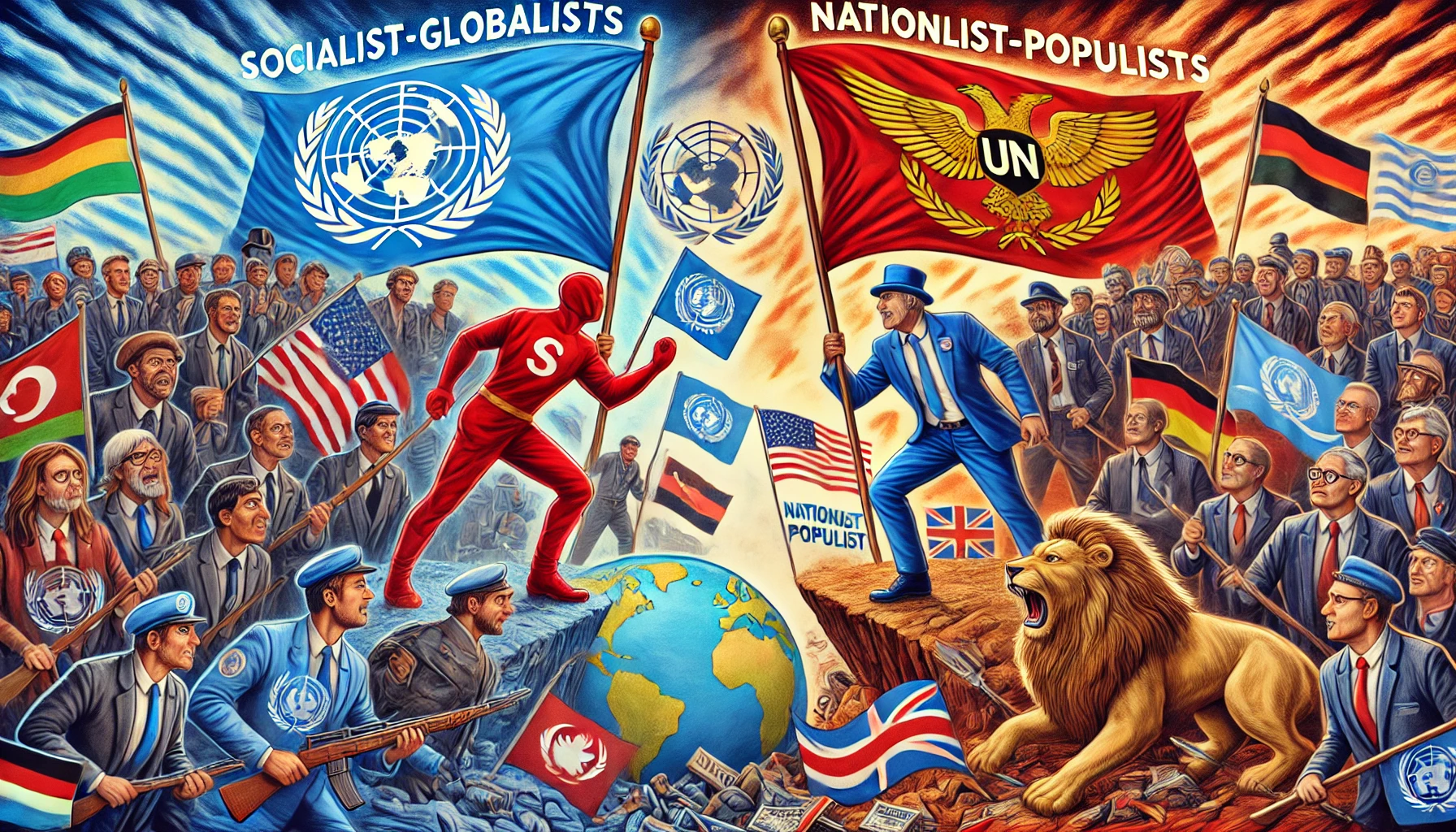
Action Steps: How Nationalist-Populists Can Prevail in the Conflict Against Socialist-Globalists
To effectively counter the rise of socialist-globalist influence, nationalist-populists must adopt a multi-faceted strategy that strengthens their movement, mobilizes public support, and reclaims control over key institutions. Below is a list of actionable steps to help nationalist-populists secure victory in this ideological conflict:
1. Strengthen National Sovereignty
- Exit Globalist Agreements: Withdraw from international treaties and agreements that undermine sovereignty, such as global tax frameworks, migration compacts, and redistributive climate policies.
- Reassert Border Control: Implement robust border security measures to protect national identity, reduce illegal immigration, and prioritize citizens’ needs over globalist migration policies.
- Defend Judicial Independence: Resist globalist pressure on domestic courts and legal systems, ensuring laws reflect national values rather than international mandates.
2. Promote Economic Nationalism
- Protect Domestic Industries: Impose tariffs and trade barriers to shield national industries from unfair global competition and economic dependence.
- Reshore Manufacturing: Incentivize the return of critical manufacturing sectors to reduce reliance on global supply chains dominated by socialist-globalist states like China.
- Oppose Global Taxation: Reject international tax initiatives that siphon wealth from sovereign nations to fund globalist agendas.
3. Build Populist Coalitions
- Unite Populist Movements Globally: Forge alliances with like-minded nationalist leaders and parties worldwide to counter globalist coordination. Examples include Hungary’s Viktor Orbán, Italy’s Giorgia Meloni, and Poland’s Andrzej Duda.
- Empower Grassroots Activism: Mobilize local communities to advocate for nationalist policies through protests, petitions, and community-building efforts.
- Engage Disenfranchised Groups: Reach out to citizens alienated by globalist policies, such as blue-collar workers, farmers, and small business owners, to expand the nationalist base.
4. Leverage Media and Cultural Influence
- Develop Nationalist Media Outlets: Create independent media platforms to counter globalist narratives and provide a voice for populist perspectives.
- Utilize Social Media: Use social media to disseminate nationalist messaging and combat censorship by big tech companies aligned with globalist interests.
- Promote Cultural Identity: Encourage national pride through cultural initiatives, such as preserving historical monuments, promoting traditional values, and celebrating national achievements.
5. Reform Global Institutions
- Challenge Globalist Control: Advocate for transparency and accountability in international institutions like the United Nations, World Health Organization, and World Economic Forum.
- Push for Fair Trade: Renegotiate trade agreements to prioritize equitable terms for national economies, ensuring global partnerships do not exploit sovereign nations.
- Resist Centralized Governance: Oppose efforts to expand globalist institutions’ power, such as proposals for international climate courts or centralized digital currencies.
6. Prioritize National Security
- Decouple from Adversaries: Reduce economic and technological dependence on globalist-aligned nations, particularly China, by strengthening domestic alternatives.
- Invest in Military Defense: Build strong, self-sufficient defense capabilities to deter globalist-backed international interventions.
- Protect Cyber Sovereignty: Develop robust cybersecurity policies to safeguard national information systems from globalist surveillance and interference.
7. Reform Education Systems
- Promote National Histories: Revamp curricula to emphasize national achievements and counter globalist historical revisionism.
- Encourage Civic Education: Teach students about the principles of sovereignty, democracy, and individual rights to foster a generation of informed nationalist leaders.
- Resist Globalist Indoctrination: Oppose international educational mandates that impose progressive ideologies, such as critical race theory or radical environmentalism.
8. Advance Policy Innovation
- Adopt Populist Economic Policies: Focus on lowering taxes, reducing government overreach, and empowering small businesses to create jobs and strengthen the economy.
- Localize Decision-Making: Empower local governments and communities to make decisions without interference from global or national bureaucracies.
- Pursue Energy Independence: Invest in domestic energy production, such as oil, natural gas, and renewables, to eliminate reliance on foreign energy sources.
9. Counter Globalist Narratives
- Expose Globalist Hypocrisy: Highlight the failures of globalist policies, such as rising inequality, cultural erosion, and unchecked corruption.
- Promote National Success Stories: Showcase examples of nationalist policies yielding tangible benefits, like economic growth, improved security, and stronger cultural cohesion.
- Challenge Censorship: Fight against big tech and media platforms that suppress nationalist voices, advocating for free speech and information diversity.
10. Empower Future Generations
- Support Young Nationalist Leaders: Mentor and fund emerging leaders who can carry the nationalist movement forward in politics, academia, and culture.
- Encourage National Service: Promote programs that instill patriotism and civic responsibility, such as military service, volunteer initiatives, and national education programs.
- Foster Independent Thinking: Encourage critical thinking skills to equip future generations to resist globalist propaganda.
Conclusion
Victory in the conflict between Socialist-Globalists and Nationalist-Populists depends on strategic action and unwavering commitment to the principles of sovereignty, freedom, and democracy. By implementing these steps, the nationalist-populist movement can not only counter globalist influence but also chart a course for a world where nations thrive as independent, self-determined entities. The time to act is now—before the globalists tighten their grip on the levers of power.