Populism in Africa
 by Alan Nafzger
 Populism in Africa: A Simplified and Evidence-Driven Approach
Introduction
In Africa, populism is a term applied to diverse political figures and strategies, encompassing both democratic and authoritarian regimes. Leaders ranging from Jerry Rawlings in Ghana to Julius Malema in South Africa have displayed populist tendencies through actions like fiery rhetoric, anti-elite messages, and dramatic public performances. However, the manifestations of populism in Africa differ significantly from those in Latin America or Europe, primarily due to weak institutional frameworks and the prominence of personalistic leadership.
This article adopts a cumulative approach to analyzing populism in Africa, integrating three main lenses:
- Political Strategy: The cultivation of direct, unmediated ties between leaders and their constituencies.
- Socio-Cultural Performance: Leaders’ dramatic, relatable behavior to “flaunt the low” and connect with everyday people.
- Ideological Framework: A discourse framing politics as a battle between “the pure people” and “a corrupt elite.”
By combining these perspectives, we uncover the unique dimensions of African populism and its evolution over time.
Populism in the 1980s: People’s Revolutions and Authoritarian Rule
Charismatic Leaders and Revolutionary Promises
The 1980s marked the rise of African leaders who leveraged populism to justify coups and revolutionary regimes. Leaders like Jerry Rawlings in Ghana, Thomas Sankara in Burkina Faso, and Yoweri Museveni in Uganda used populist rhetoric to portray themselves as saviors of the masses.
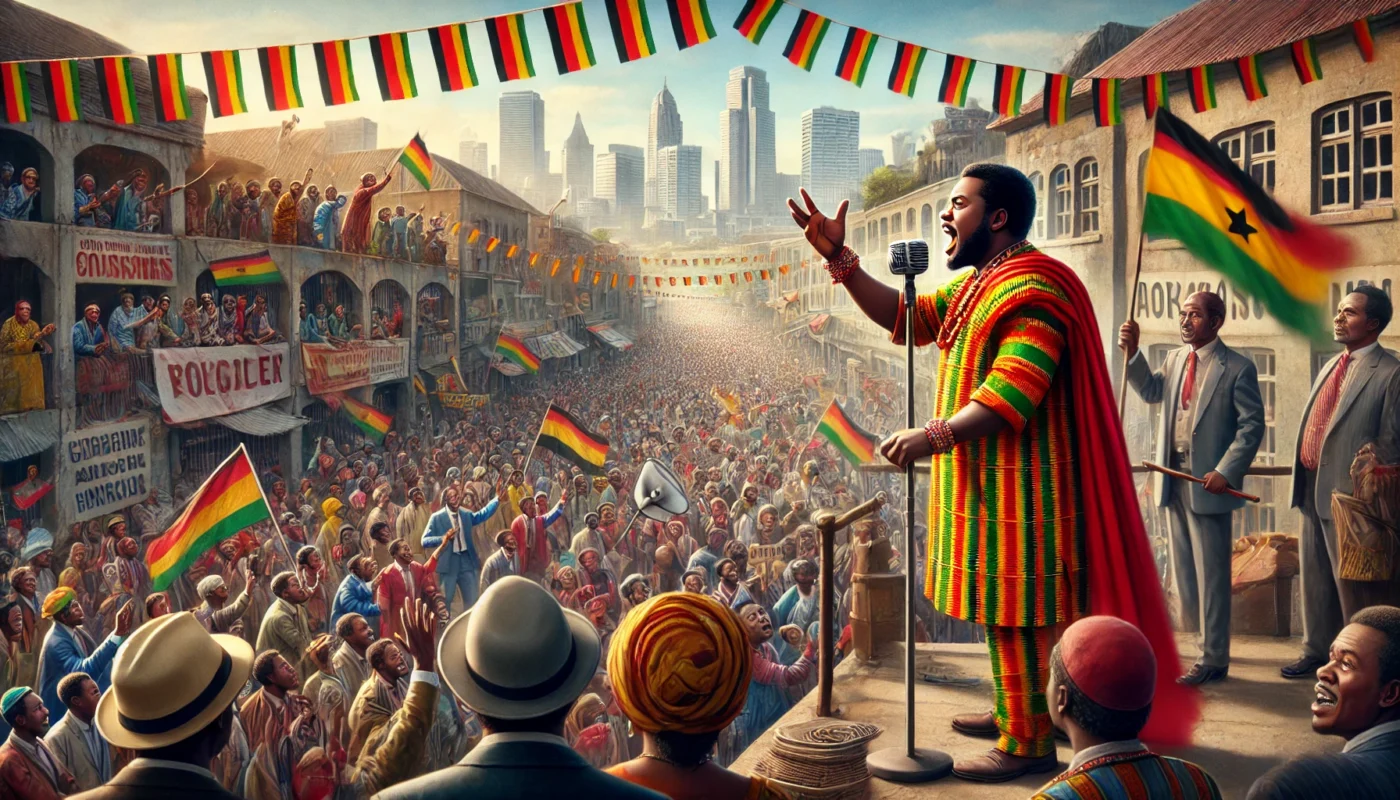
- Jerry Rawlings (Ghana, 1981): Rawlings ousted a civilian government, promising a “social revolution.” Wearing military fatigues and delivering impromptu speeches, he connected with the urban poor, youth, and unemployed. His People’s Defense Committees (PDCs) aimed to ensure grassroots participation, although his policies alienated the elite and middle class.
- Thomas Sankara (Burkina Faso, 1983): Known as the “African Che Guevara,” Sankara championed anti-imperialism and equality. He rejected luxury, opting for modest vehicles and abolishing his portrait in public offices. His revolution included dramatic gestures, like renaming the country Burkina Faso, meaning “land of upright people.”
- Yoweri Museveni (Uganda, 1986): After a guerrilla campaign, Museveni’s National Resistance Movement introduced local-level councils to promote popular participation. Using vernacular metaphors and relatable imagery, Museveni positioned himself as a leader of the common people.
Policies and Outcomes
These leaders focused on:
- Economic Intervention: Price controls, rural collectivization, and state-driven industrialization.
- Social Transformation: Efforts to dismantle patriarchy and promote equality.
However, populism’s initial success gave way to economic crises and political constraints. For instance, Rawlings transitioned to neoliberal reforms under IMF pressure, while Sankara’s revolutionary government ended with his assassination.
Populism in the 2000s: Urban Focus and Electoral Strategies
Transition to Electoral Populism
The 2000s saw a shift as Africa embraced multiparty democracy. Populist leaders like Raila Odinga (Kenya), Michael Sata (Zambia), Abdoulaye Wade (Senegal), and Julius Malema (South Africa) emerged, capitalizing on urban grievances.
- Urban Discontent: Unemployment, slum demolitions, and poor services became rallying cries for populist leaders. For example, Sata criticized Zambia’s ruling elites for neglecting urban areas, while Odinga promised to improve housing and employment in Kenya’s slums.
- Charismatic Performances: These leaders used relatable language, humor, and theatrical gestures. Malema donned miners’ outfits in South Africa’s parliament, and Sata’s 2011 campaign used the popular rap song Donchi Kubeba (“Don’t Tell”).
Anti-Elite Rhetoric
A hallmark of this era was a sharp divide between “the people” and the “corrupt elite”:
- Raila Odinga: Presented himself as the “People’s President” and promised to champion social justice.
- Michael Sata: Criticized foreign investors as “infestors” and accused Zambia’s ruling elite of perpetuating inequality.
- Abdoulaye Wade: Styled himself as “President of the Street,” contrasting his approach with the aloofness of Senegal’s political class.
Contemporary Drivers of Populism in Africa
Youthful Demographics and Urbanization
Africa’s rapid urbanization and large youth population create fertile ground for populism. Urban voters, especially the unemployed and informal workers, resonate with populist messages promising immediate improvements.
- Youth Unemployment: With urban youth unemployment as high as 72% in some countries, promises of job creation resonate deeply.
- Urban Housing and Services: Leaders like Sata and Odinga focused on improving slum housing and sanitation, highlighting the neglect of urban poor communities.
Ethno-Religious Mobilization
While urban concerns dominate, populist leaders often combine their rhetoric with appeals to rural ethnic or religious identities. For example:
- Michael Sata targeted Bemba-speaking regions in Zambia.
- Raila Odinga formed a multi-ethnic alliance to counter Kikuyu dominance in Kenya.
- Abdoulaye Wade leveraged his ties with Senegal’s Mouride brotherhood to secure rural votes.
Comparing 1980s and 2000s Populism
| Feature | 1980s Populism | 2000s Populism |
|---|---|---|
| Key Constituency | Rural peasants and marginalized groups | Urban poor and unemployed youth |
| Leadership Style | Outsiders (military leaders) | Insiders forming new opposition parties |
| Economic Policies | State intervention, collectivization | Mixed approaches: urban-focused reforms |
| Performative Tactics | Military imagery, messianic rhetoric | Theatrics, humor, relatable language |
Challenges and Sustainability
While populism has proven effective in mobilizing new constituencies, its sustainability is questionable:
- Unmet Expectations: Leaders often fail to deliver radical reforms, alienating their base.
- Authoritarian Tendencies: Populist leaders frequently bypass democratic norms, undermining long-term governance.
For instance, Sankara’s authoritarian policies led to internal dissent, while Sata’s promises of economic transformation remained largely unfulfilled.
Conclusion
Populism in Africa is shaped by its socio-political context, blending charismatic leadership, anti-elitist rhetoric, and performative connections to the masses. From the revolutionary populism of the 1980s to the urban-focused strategies of the 2000s, it reflects the evolving grievances and aspirations of African societies. However, its reliance on charismatic leaders and short-term promises raises questions about its ability to foster sustainable change. By adopting a cumulative approach, we gain a nuanced understanding of populism’s enduring relevance in African politics.

Originally posted 2023-07-30 07:12:42.