
 by
by Department of the Interior
The Department of the Interior (DOI) plays a pivotal role in managing the nation’s natural resources and public lands. From a populist perspective, it’s essential to prioritize the interests of ordinary citizens and ensure that government interventions do not hinder economic freedom and personal liberty. Emphasizing free-market principles and limited government can enhance the effectiveness and efficiency of the DOI’s operations, ensuring that America’s natural heritage is preserved and utilized sustainably.
Populism in the Department of the Interior
Populism focuses on empowering the average citizen and ensuring that their voices are heard in government decision-making. In the context of the DOI, this means:
- Public Engagement: Ensuring that the management of public lands and natural resources reflects the needs and desires of the general population.
- Transparency: Making information about land use, resource management, and environmental policies readily accessible to the public.
- Accountability: Holding government officials and agencies accountable for their actions and decisions, ensuring they serve the public interest.
Free Market Principles
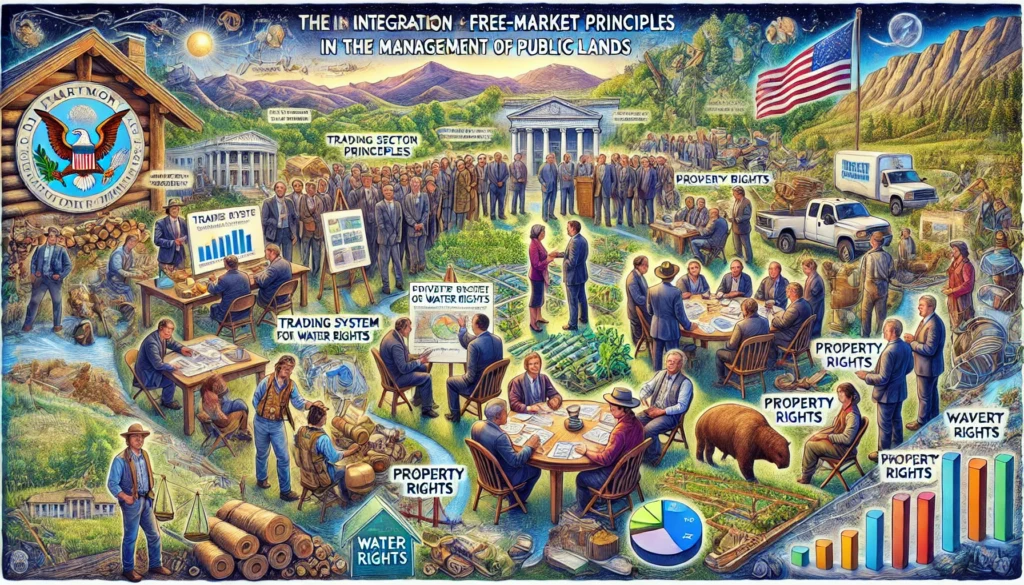
Integrating free-market principles into the DOI’s policies can drive innovation and economic growth while maintaining environmental stewardship. Key strategies include:
- Private Sector Partnerships: Collaborating with private companies to manage and develop natural resources more efficiently.
- Market-Based Solutions: Implementing mechanisms such as trading systems for water rights and carbon credits to encourage sustainable resource use.
- Property Rights: Strengthening property rights to incentivize landowners to invest in conservation and sustainable practices.
Limited Government Approach
A limited government approach focuses on reducing bureaucratic red tape and decentralizing decision-making to empower local communities and private entities. This involves:
- Devolution of Power: Transferring authority over land and resource management to state and local governments, who are more attuned to the needs and conditions of their areas.
- Regulatory Reform: Simplifying regulations to make it easier for individuals and businesses to comply while still protecting the environment.
- Reducing Federal Footprint: Limiting the federal government’s direct involvement in land management, allowing for more efficient use of resources.
Challenges
- Bureaucratic Inertia
- Description: The DOI’s existing bureaucratic structure can be resistant to change and innovation.
- Solution: Implementing regulatory reform and encouraging a culture of adaptability within the agency.
- Balancing Interests
- Description: Managing the diverse interests of conservationists, local communities, and industries can be challenging.
- Solution: Facilitating stakeholder engagement and finding common ground through market-based solutions.
- Resource Allocation
- Description: Ensuring equitable allocation of resources and access to public lands.
- Solution: Employing transparent and fair mechanisms for resource distribution.
- Environmental Protection
- Description: Maintaining environmental protections while promoting economic use of resources.
- Solution: Utilizing market-based environmental policies that incentivize sustainable practices.
Benefits of Policy Changes
- Increased Efficiency
- Market-driven approaches and private sector partnerships can enhance the efficiency of resource management.
- Economic Growth
- Reducing regulatory burdens and encouraging investment in natural resources can spur economic development.
- Enhanced Stewardship
- Empowering local communities and landowners can lead to better conservation outcomes through vested interests in sustainable management.
- Public Trust
- Transparency and accountability in decision-making can build public trust in the DOI’s management practices.
- Innovation
- Free-market principles can drive innovation in environmental protection and resource management technologies.
Conclusion
Adopting a populist, free-market, and limited government approach within the Department of the Interior can lead to more effective and efficient management of the nation’s natural resources. By prioritizing the interests of ordinary citizens, leveraging market mechanisms, and reducing bureaucratic constraints, the DOI can ensure sustainable use and preservation of America’s natural heritage. It is essential for stakeholders to support and collaborate on these policy changes to achieve these goals.

Originally posted 2024-08-05 02:04:51.