DOGE Analysis of the Department of the Interior
 by Alan Nafzger
 DOGE Analysis of the Department of the Interior (DOI): Efficiency, Relevance, and Alternatives
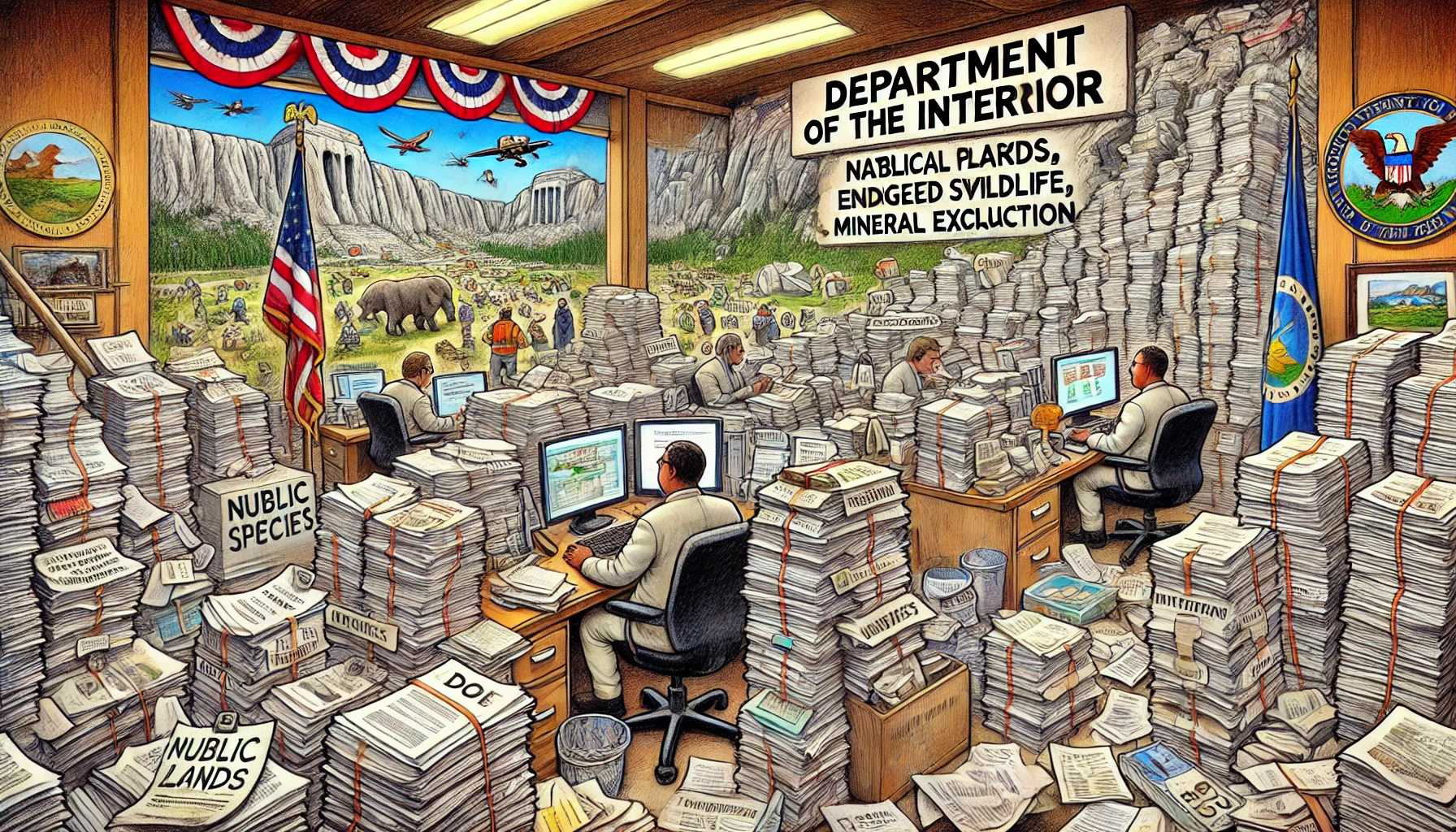
The Department of the Interior (DOI) manages a vast array of public lands, including national parks, wildlife refuges, and minerals, while also overseeing critical responsibilities such as environmental conservation, endangered species protection, and federal trust obligations to Native American tribes and Native Alaskans. The DOI plays a pivotal role in managing natural resources and preserving public lands, but with its extensive scope and diverse functions, there are numerous opportunities to streamline operations and enhance efficiency. This DOGE analysis will explore these opportunities.
The Department of the Interior (DOI) manages public lands and minerals, national parks, and wildlife refuges and upholds Federal trust responsibilities to Indian tribes and Native Alaskans. Additionally, Interior is responsible for endangered species conservation and other environmental conservation efforts.
Constitutional Basis and Governmental Mandate
The Department of the Interior operates under the constitutional authority granted to the federal government to manage public lands and resources, as well as its responsibility to protect national parks, manage Indian affairs, and enforce environmental protections. The DOI’s mandate is derived from various laws and acts such as the National Park Service Organic Act and the Indian Reorganization Act, which empower the department to manage the natural environment and oversee federal trust responsibilities.
Despite its constitutional legitimacy, critics argue that the DOI’s broad mandate can sometimes lead to inefficiencies and overly complex regulations. As the federal government continues to expand its role in conservation and natural resource management, the question arises whether state or local governments, or private entities, could take on some of these responsibilities more effectively.
Budget Analysis and Potential for Cuts
The DOI operates with a multi-billion-dollar budget, managing over 500 million acres of public lands and numerous conservation programs. While the department’s work is essential for environmental protection, there are several areas where budget cuts and reallocations could improve efficiency without undermining its core mission.
Potential Cuts and Reallocations:
- Consolidating Land Management Agencies: The DOI oversees several agencies, including the Bureau of Land Management (BLM), National Park Service (NPS), and U.S. Fish and Wildlife Service (USFWS), which sometimes have overlapping functions. Merging these agencies or consolidating their functions could reduce administrative overhead and improve coordination.
- Outsourcing Non-Critical Tasks: Certain administrative functions, such as environmental studies or park maintenance, could be outsourced to private contractors or nonprofit organizations with expertise in environmental conservation, reducing federal operational costs.
- Focus on High-Priority Conservation Projects: Redirect funding from smaller, lower-impact conservation projects to more critical, high-priority areas such as endangered species protection and climate change mitigation efforts, ensuring that resources are used most effectively.
- Digitizing Resource Management: Invest in technology to manage public lands, minerals, and wildlife data. By utilizing Geographic Information Systems (GIS) and other digital tools, the DOI can improve efficiency in land management and environmental monitoring while reducing paper-based workflows.
Efficiency and Effectiveness of DOI Programs
Strengths:
- Public Lands Management: The DOI oversees some of the most iconic and ecologically significant public lands, including Yellowstone National Park, Grand Canyon National Park, and numerous wildlife refuges. The department plays a critical role in preserving these areas for future generations.
- Environmental Conservation Efforts: The DOI leads efforts in endangered species conservation, habitat protection, and ecosystem restoration. Programs like the Endangered Species Act have had significant success in preventing the extinction of various species.
- Indian Affairs and Tribal Support: The DOI is responsible for managing the trust relationship between the federal government and Native American tribes. This includes managing land resources, overseeing tribal programs, and supporting the development of tribal infrastructure.
Weaknesses:
- Bureaucratic Overlap: The DOI’s many divisions and agencies sometimes create redundancies and inefficiencies in carrying out similar tasks. For instance, land management responsibilities can overlap between the BLM and NPS, leading to duplication of efforts and fragmented leadership.
- Slow Decision-Making: The department’s size and complexity can result in slow decision-making processes, especially when dealing with large-scale land use projects or resource extraction decisions. This can delay important environmental conservation work and resource development projects.
- Underfunding of Critical Programs: While the DOI receives significant funding, certain programs—such as climate change mitigation, habitat restoration, and tribal affairs—are often underfunded or face budget constraints that limit their effectiveness.
Can Non-Governmental Entities Do This Job?
Several functions within the DOI could be outsourced to private entities, nonprofit organizations, or state and local governments to improve efficiency and reduce costs:
- Land Management and Park Maintenance: Many state and local governments, as well as private organizations, already manage smaller parks, nature reserves, and recreational areas. Expanding partnerships with private sector companies and nonprofits to handle park maintenance and visitor services could reduce federal costs.
- Wildlife Conservation: Nonprofit organizations like World Wildlife Fund and Wildlife Conservation Society already do significant work in wildlife preservation. With appropriate oversight and funding, these organizations could take on more responsibilities related to endangered species protection and habitat restoration.
- Tribal Affairs: Many tribal communities are capable of managing their own land resources and social programs with federal support, rather than direct DOI intervention. By empowering tribes to manage their own resources, the federal government could reduce administrative costs and improve the efficiency of tribal programs.
- Resource Management: Private companies with expertise in environmental science and natural resource management could assist the DOI in conducting environmental assessments, land evaluations, and resource extraction planning more efficiently.
Best Option, Second Best Option, and Worse Option
Best Option: Privatize and Consolidate Functions
The best way to streamline the DOI would be to reduce federal involvement in certain aspects of land management and conservation, shifting some responsibilities to private and local entities. Key reforms include:
- Consolidating Agencies: Merge the BLM, NPS, and USFWS into a single, streamlined agency that can more efficiently manage public lands, wildlife, and parks.
- Privatizing Park Services: Outsource park maintenance, visitor services, and some conservation efforts to private companies and nonprofit organizations.
- Empowering Tribes: Shift more land management responsibilities to Native American tribes, allowing them to directly manage resources on tribal lands.
This would reduce federal bureaucracy while still maintaining strong protections for public lands and conservation efforts.
Second Best Option: Internal Restructuring
If privatization is politically unfeasible, the Second Best Option would be to streamline the DOI by:
- Reducing Redundancy: Consolidate overlapping responsibilities between the BLM, NPS, and USFWS into a more unified agency structure.
- Improve Cross-Agency Collaboration: Encourage better coordination between the DOI’s divisions to eliminate silos and improve resource allocation.
This option would improve some efficiencies but still maintain a large and complex federal bureaucracy.
Worse Option: Expand Federal Control and Spending
The Worse Option would involve expanding the DOI’s responsibilities and budget, which could include:
- Increasing the Size of the Department: Add more divisions to oversee emerging areas like climate change adaptation and international conservation efforts, leading to more bureaucracy and higher operational costs.
- Expanding Federal Land Ownership: Increase the amount of land managed by the federal government, even in areas with limited ecological value or strategic importance.
This would likely lead to greater inefficiencies, higher costs, and more complexity within the DOI.
Conclusion
The Department of the Interior (DOI) plays a crucial role in managing U.S. public lands, overseeing conservation efforts, and supporting Native American tribes. However, its extensive scope and bureaucratic complexity present opportunities for improvement. Streamlining the DOI by consolidating agencies, privatizing certain functions, and empowering local and tribal governments would make the department more efficient and cost-effective while maintaining its critical responsibilities. The Best Option is to reduce federal involvement in certain areas, while the Worse Option would lead to increased inefficiencies and costs.
Here is a list of ways to improve the Department of the Interior (DOI), focusing on increasing efficiency, reducing costs, and streamlining operations:
1. Consolidate Land Management Agencies
- Merge the Bureau of Land Management (BLM), National Park Service (NPS), and U.S. Fish and Wildlife Service (USFWS) into a single, streamlined agency to reduce duplication of efforts and improve coordination in managing public lands, wildlife, and parks.
2. Outsource Non-Critical Services
- Privatize park maintenance and non-essential functions (e.g., visitor services, facilities management) to private companies or nonprofit organizations to reduce federal costs while maintaining quality services.
3. Empower Tribal Governments
- Devolve more land management responsibilities to Native American tribes, allowing them to directly manage resources on tribal lands with federal support, reducing federal bureaucracy and improving local efficiency.
4. Use Technology for Resource Management
- Implement Geographic Information Systems (GIS) and other digital tools to improve land and resource management, reduce paper-based workflows, and enhance decision-making processes.
5. Streamline Environmental Impact Assessments
- Simplify the environmental review process for projects on public lands, focusing on expedited approvals for low-risk projects while ensuring high standards of environmental protection.
6. Increase Public-Private Partnerships
- Encourage collaborations with private entities for conservation and park management projects, such as habitat restoration and tourism services, to reduce government spending and encourage innovative solutions.
7. Reevaluate Federal Land Ownership
- Review the necessity of federal land ownership in certain areas, especially those with limited ecological or strategic value, and consider transferring management responsibilities to state or local governments to reduce federal spending.
8. Improve Cross-Agency Coordination
- Enhance collaboration between the DOI and other federal agencies (e.g., the Department of Agriculture, the Environmental Protection Agency) to avoid overlapping efforts and ensure resources are used efficiently.
9. Outsource Scientific and Environmental Studies
- Contract scientific research and environmental impact studies to private firms or universities, reducing internal costs and accessing specialized expertise without increasing federal overhead.
10. Focus on High-Priority Conservation Areas
- Prioritize conservation efforts in areas with the highest environmental value or risk of degradation (e.g., endangered species habitats, critical ecosystems) and redirect funding away from lower-priority areas.
11. Expand the Use of Renewable Energy on Federal Lands
- Promote the development of renewable energy projects (solar, wind) on federal lands to support sustainable energy initiatives while generating revenue for public conservation projects.
12. Increase Efficiency in Park Operations
- Automate administrative tasks within national parks, such as ticketing, visitor management, and scheduling, to reduce staff overhead and improve the visitor experience.
13. Implement Data-Driven Decision Making
- Use data analytics to drive decision-making in land management and conservation efforts, ensuring that resources are allocated based on performance metrics and environmental needs.
14. Reduce Bureaucratic Layers
- Flatten the DOI’s organizational structure to improve communication and decision-making speed, making it more agile in responding to land management and conservation challenges.
15. Develop a More Flexible Workforce
- Increase flexibility for DOI employees by allowing more telework opportunities, especially for roles that don’t require a physical presence in the field, reducing operational overhead.
16. Improve Grant Management
- Streamline the grant application and oversight process to reduce delays in funding for conservation and land management projects and ensure that grants are distributed efficiently to meet key environmental goals.
17. Implement a Performance-Based Budgeting System
- Tie funding allocation to measurable outcomes, such as improved species conservation rates or enhanced public land access, ensuring that taxpayer dollars are spent effectively.
18. Improve National Park Revenue Streams
- Increase the use of user fees and private sector involvement in national parks to generate additional revenue, which can be reinvested into park maintenance and conservation efforts.
19. Reduce Travel Expenses
- Limit international travel for DOI staff and encourage virtual meetings, especially for non-critical international engagements, to reduce travel costs.
20. Revamp Endangered Species Programs
- Focus on the most at-risk species and ensure that resources are directed to high-priority conservation efforts that offer the greatest chance for recovery.
21. Enhance Public Education and Outreach
- Expand digital platforms for public education on conservation, wildlife protection, and national park programs, reducing the need for expensive in-person campaigns while still engaging the public.
22. Reform Mineral and Resource Extraction Processes
- Streamline approval processes for responsible resource extraction on public lands, ensuring that it is done sustainably while reducing delays in mineral leasing and resource management.
23. Promote Volunteer and Community-Led Conservation
- Increase the use of volunteers and local community groups in conservation efforts, reducing the reliance on federal funding for certain projects while fostering local engagement in land preservation.
24. Reduce Overlap in Environmental Regulations
- Simplify and consolidate environmental regulations across federal agencies to reduce compliance costs for businesses and local governments while ensuring effective environmental protection.
25. Leverage International Conservation Expertise
- Partner with international organizations on conservation projects to share knowledge and resources, reducing the cost of global conservation initiatives.
By implementing these improvements, the Department of the Interior (DOI) can reduce costs, improve efficiency, and better align its operations with the needs of the American people. Streamlining operations and leveraging technology and partnerships will ensure that DOI continues to effectively manage public lands, wildlife, and environmental resources.