 by
by The Case for Withdrawing from the UN Human Rights Council
Introduction: A Broken Institution
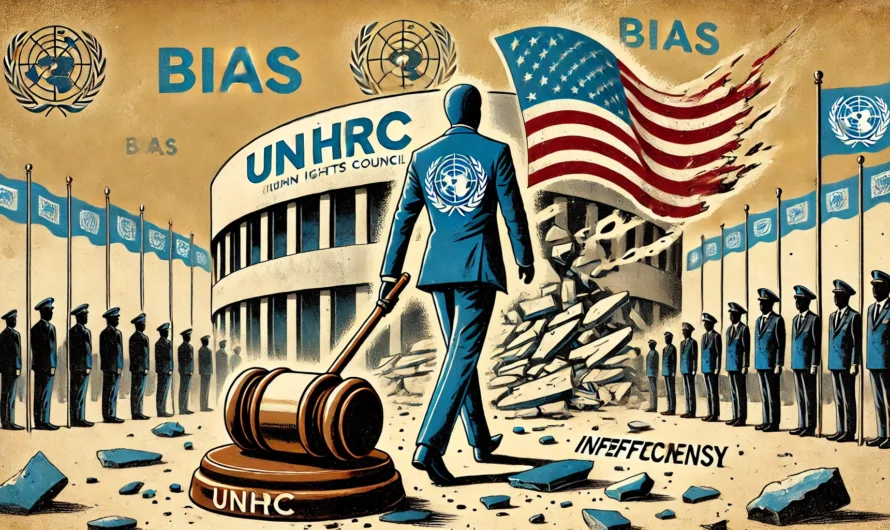
The United Nations Human Rights Council (UNHRC) was created with the noble intent of promoting and protecting human rights worldwide. However, over the years, it has morphed into a platform dominated by nations with questionable human rights records, and it has devolved into an anti-Israel, anti-American echo chamber. The Obama administration’s decision to join the council lent it unwarranted legitimacy without achieving significant reforms. The Trump administration recognized this failure and withdrew from the council, a move that signaled a rejection of its politicized practices. However, the Biden administration rejoined, again validating an institution that has proven itself ineffective. To uphold its values and foreign policy principles, the United States should immediately withdraw from the UNHRC once more, leaving it to face the consequences of its failures.
The UNHRC’s Anti-Israel Bias
One of the most glaring flaws of the UNHRC is its relentless focus on Israel. Despite numerous human rights abuses worldwide, the council disproportionately targets Israel, passing resolution after resolution condemning the Jewish state. This obsession not only undermines the council’s credibility but also detracts from addressing genuine human rights crises.
Key Examples of Bias:
- Agenda Item 7: Israel is the only country permanently singled out for criticism under a dedicated agenda item at every session. No other country receives this treatment, not even notorious human rights violators like North Korea or Iran.
- Disproportionate Resolutions: Since its inception, the UNHRC has passed more resolutions condemning Israel than any other country. For example, between 2006 and 2022, nearly 50% of all country-specific resolutions targeted Israel.
The UNHRC’s Hypocrisy
The composition of the council itself highlights its hypocrisy. Member states often include some of the world’s worst human rights offenders, such as China, Russia, and Cuba. These nations use their positions to shield themselves from scrutiny while turning the council into a tool for advancing their own political agendas.
A Few Notable Examples:
- China: Despite its systemic repression of Uyghurs in Xinjiang, China has faced minimal criticism from the council, thanks to its political influence and strategic alliances.
- Saudi Arabia: A country with a notorious record on women’s rights and freedom of speech has often escaped accountability due to its financial and diplomatic leverage.
- Venezuela: Even amidst a humanitarian crisis, the council has largely ignored the regime’s abuses.
Failure to Achieve Meaningful Reforms
The Obama administration’s decision to join the UNHRC was premised on the idea that U.S. participation could drive reforms from within. However, this approach failed to yield any significant changes. The council remains structurally flawed, with no mechanisms to prevent countries with poor human rights records from joining or dominating the agenda.
Why Reform Has Failed:
- Lack of Enforcement: The council’s resolutions are non-binding and lack enforcement mechanisms, rendering them largely symbolic.
- Political Alliances: Blocks of nations with poor human rights records often band together to protect each other from criticism, perpetuating the council’s dysfunction.
- Structural Issues: The election process for council membership does not prioritize human rights performance, allowing egregious violators to gain seats.
The Trump Administration’s Withdrawal: A Bold and Necessary Move
Recognizing the futility of engagement, the Trump administration withdrew from the UNHRC in 2018. This decision sent a strong message: the United States would not endorse or fund a body that undermines its values and principles.
Impact of the Withdrawal:
- Loss of Legitimacy: The U.S. withdrawal exposed the council’s flaws, diminishing its credibility on the global stage.
- Financial Consequences: As a significant contributor to the UN, the U.S. withdrawal reduced the council’s resources, forcing it to reckon with its inefficiency.
- Support for Allies: By leaving the council, the U.S. stood in solidarity with Israel, a key ally unfairly targeted by the UNHRC.
The Biden Administration’s Reentry: A Misguided Decision
The Biden administration’s decision to rejoin the UNHRC was a step backward, granting undue legitimacy to a broken institution. Despite promises to push for reforms, there has been little evidence of meaningful change since the U.S. reengaged with the council.
Consequences of Reentry:
- Legitimization of Bias: Rejoining the council signals acceptance of its anti-Israel agenda and politicized practices.
- Wasted Resources: U.S. contributions to the council could be better spent on direct human rights initiatives rather than supporting a flawed institution.
- Diplomatic Weakness: Reentry undermines the strong stance taken by the Trump administration and emboldens adversaries who exploit the council’s platform.
Why Immediate Withdrawal Is Necessary
Remaining in the UNHRC not only contradicts U.S. values but also wastes valuable resources and diplomatic capital. Immediate withdrawal would:
- Expose Hypocrisy: Without U.S. participation, the council’s flaws would become even more apparent to the global community.
- Redirect Resources: Funds currently allocated to the council could be redirected to more effective human rights initiatives, such as supporting NGOs or bilateral programs.
- Support Israel: By withdrawing, the U.S. would reaffirm its commitment to standing against anti-Israel bias.
Rebutting Criticisms of Withdrawal
Critics often argue that withdrawing from the UNHRC would weaken U.S. influence on human rights issues. However, this perspective overlooks the reality that engagement has failed to yield significant results.
Rebuttal Points:
- Limited Influence: U.S. participation has not prevented the council’s bias or dysfunction.
- Alternative Leadership: The U.S. can lead on human rights issues through bilateral initiatives, regional organizations, and partnerships with NGOs.
- Moral Clarity: Withdrawal reinforces the message that the U.S. will not tolerate hypocrisy and bias in global institutions.
Conclusion: Time to Leave Again
The UN Human Rights Council has proven itself incapable of fulfilling its mandate. Its anti-Israel bias, structural flaws, and failure to achieve meaningful reforms make it an unworthy platform for U.S. engagement. The Biden administration’s decision to rejoin was a mistake that must be rectified. By withdrawing once more, the United States can take a principled stand, redirect resources to more effective initiatives, and support its allies against unjust targeting. It is time for the U.S. to prioritize substance over symbolism and leave the UNHRC behind.