 by
by Revolutionary Violence on the Left
A Growing Threat to Democracy
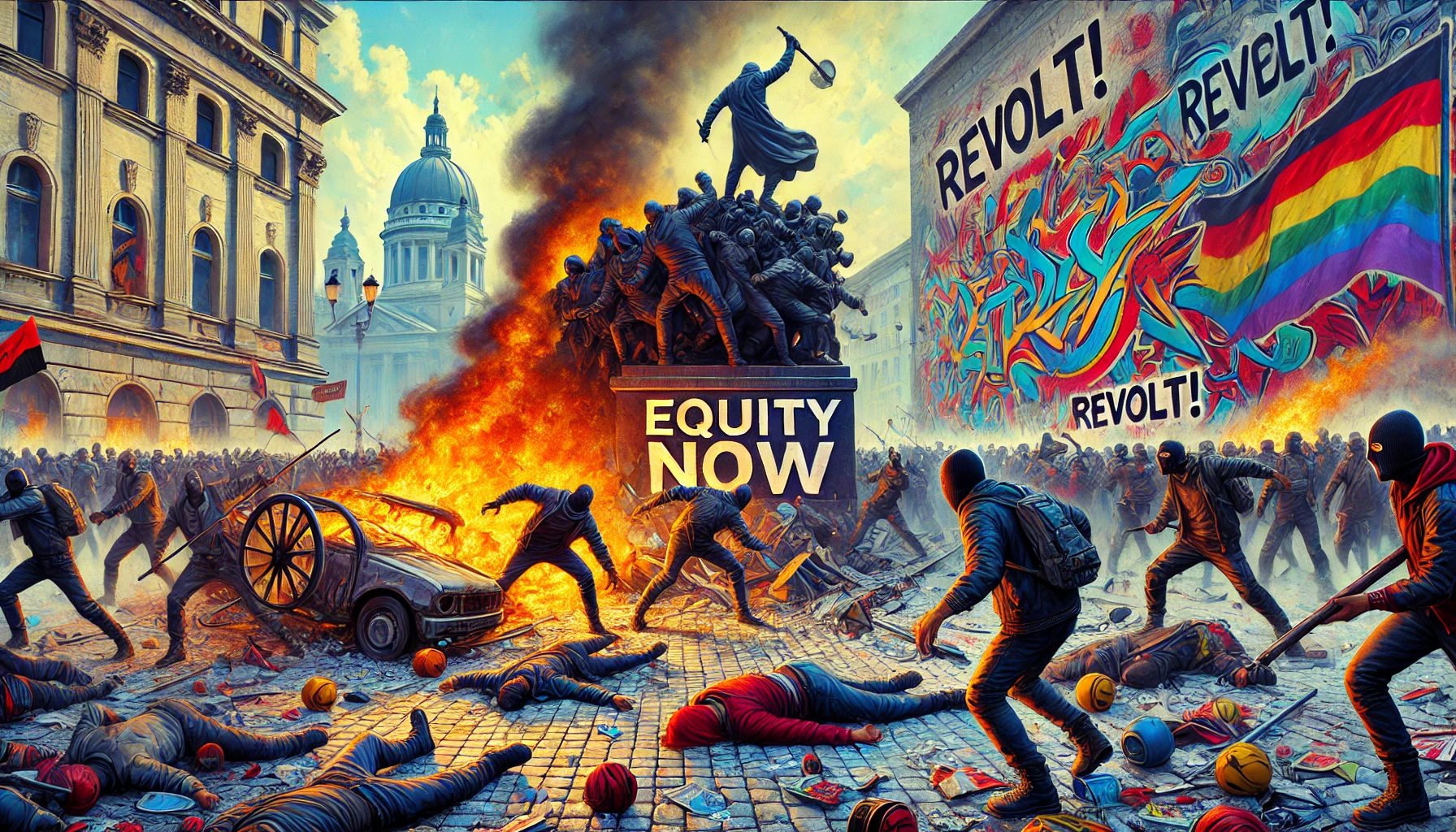
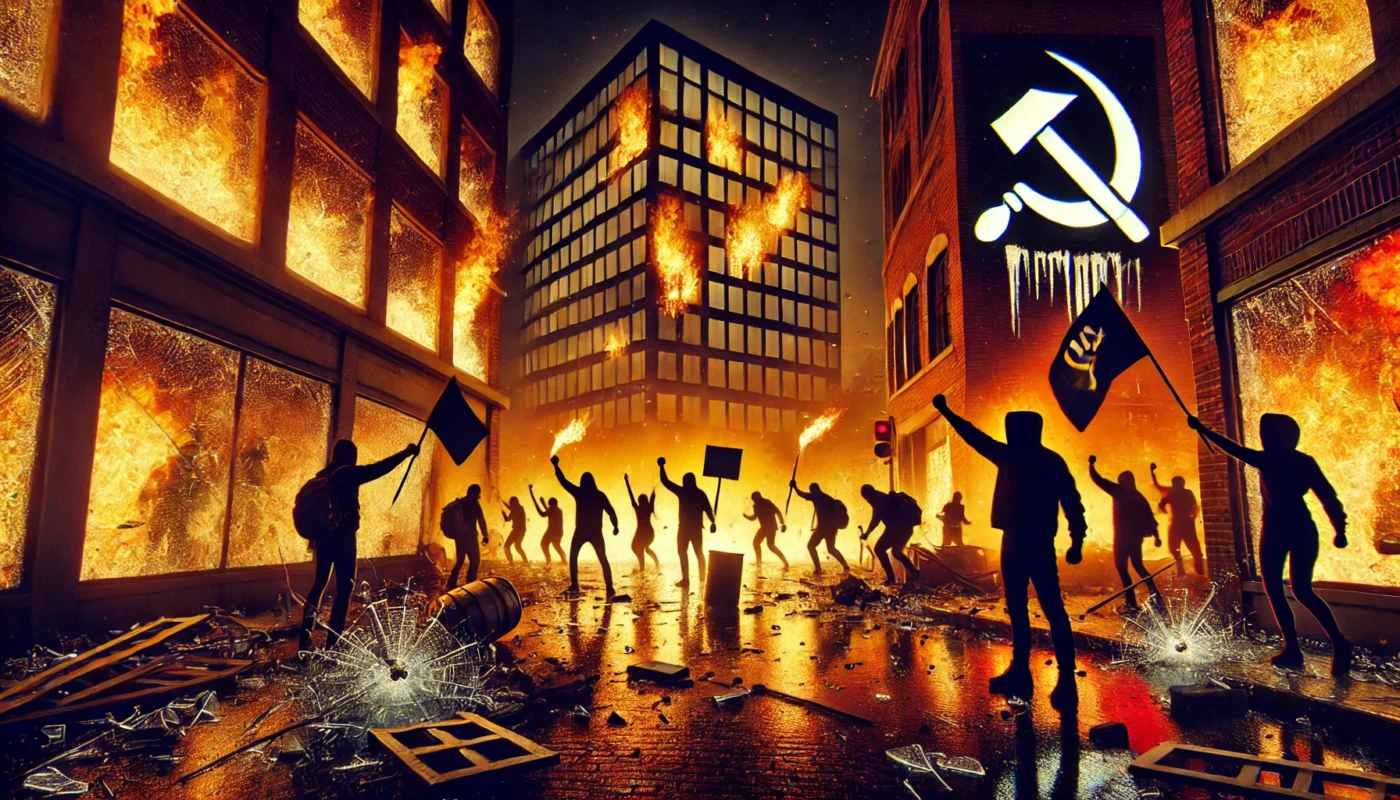
The assassination of United Health executive Brian Thompson in New York City last Wednesday underscores a disturbing trend of revolutionary violence emerging from the far left. Authorities continue their search for the suspect, who left cartridges marked with phrases like “deny,” “defend,” and “depose,” terms linked to critiques of corporate healthcare practices. This event, accompanied by widespread approval from segments of the radical left, highlights an alarming shift toward the normalization of political violence.
This essay will dissect the ideological roots, societal implications, and historical parallels of revolutionary violence on the left, providing evidence of how such extremism threatens democratic values and societal cohesion.
The Incident: Violence Rooted in Ideology
Brian Thompson’s murder is emblematic of a broader trend where ideological fervor is weaponized against individuals perceived as representing systemic injustices. The suspect’s motives, as inferred from the markings on the cartridges, align with longstanding critiques of the healthcare system. Critics of private health insurance often accuse executives like Thompson of denying care to maximize profits, framing them as oppressors.
Evidence of Justification in Public Discourse
Following the incident, several public figures and commentators on the left openly celebrated Thompson’s death:
- Taylor Lorenz, a former journalist, tweeted in support of the act, echoing sentiments of retribution against corporate healthcare executives.
- Nathan Robinson, a socialist commentator, reinforced the narrative by focusing on the alleged sins of the insurance industry rather than condemning the violence.
- Social media posts from professionals, including nurses, expressed sentiments like, “I just can’t feel sympathy for him because of all those patients and their families.”
Such reactions reveal a disturbing moral calculus where perceived systemic harm is used to justify individual acts of violence. This aligns with revolutionary leftist ideologies that prioritize dismantling systems over preserving democratic norms.
Revolutionary Ideology: From Marxism to the Modern Left
The ideological underpinnings of revolutionary violence on the left are deeply rooted in Marxist thought. Historical parallels with movements like the Red Army Faction (RAF) in 1970s Germany, also known as the Baader-Meinhof Gang, illuminate the danger posed by such ideologies.
Historical Context: The Red Army Faction
The RAF sought to overthrow capitalism through targeted violence, including assassinations of business leaders and bombings of industrial sites. Like today’s radical left, they justified their actions as resistance against systemic oppression:
- Andreas Baader, a leader of the RAF, idolized figures like Che Guevara and framed violence as a necessary tool for revolutionary change.
- RAF members engaged in bank robberies, kidnappings, and assassinations, actions they believed would destabilize capitalist structures.
Modern Parallels
Today’s leftist radicals, though operating in different contexts, draw from similar ideological wells. The celebration of violence against figures like Thompson mirrors the glorification of RAF assassinations. Social media amplifies these sentiments, creating echo chambers where extreme views are normalized.
The Consequences of Revolutionary Violence
Revolutionary violence undermines the very fabric of democratic societies, replacing dialogue with coercion and fear. Its consequences extend beyond individual victims, destabilizing institutions and eroding trust.
1. Erosion of Democratic Norms
Democracy thrives on peaceful resolution of conflicts through debate and compromise. Violence bypasses this process, threatening the foundational principles of governance:
- Evidence: A study by the University of Chicago’s Project on Security and Threats found a correlation between political violence and declining public trust in democratic institutions.
- Historical Example: The 1970s saw an increase in domestic terrorism in the U.S., leading to heightened political polarization and distrust in government.
2. Normalization of Violence
When violence is celebrated or excused, it lowers societal thresholds for what is deemed acceptable behavior:
- Evidence: The 2020 Black Lives Matter protests, while largely peaceful, were accompanied by over $2 billion in property damage during riots. Public figures who downplayed these acts contributed to a culture of permissiveness.
- Historical Parallel: The RAF’s activities in Germany received tacit support from intellectuals, emboldening their actions and prolonging the era of violence.
3. Economic and Social Destabilization
Targeting private industry leaders creates fear and uncertainty, discouraging investment and innovation:
- Evidence: A 2023 study by the Brookings Institution highlighted how political instability and violence deter economic growth, particularly in sectors reliant on public trust like healthcare.
- Example: The assassination of industrialists by the RAF in Germany led to tightened security measures and reduced economic activity in affected regions.
Addressing Revolutionary Violence: Policy and Cultural Responses
To counteract the growing threat of revolutionary violence, society must address both its ideological roots and its enablers. This requires coordinated efforts across government, media, and civil society.
1. Condemnation and Accountability
Public figures must unequivocally condemn violence, regardless of political affiliation:
- Evidence: Political science research consistently shows that clear condemnation from leaders reduces public tolerance for violence.
- Recommendation: The administration should issue statements rejecting all forms of political violence and emphasize the rule of law.
2. Strengthen Law Enforcement Capabilities
Law enforcement must be equipped to prevent and respond to acts of political violence:
- Evidence: Data from the FBI’s Domestic Terrorism Report shows that proactive measures, such as monitoring extremist groups, reduce the likelihood of attacks.
- Recommendation: Increase funding for counterterrorism units focused on domestic threats, including left-wing extremism.
3. Combat Radicalization Online
Social media platforms play a significant role in spreading extremist ideologies:
- Evidence: A 2021 report by the Center for Strategic and International Studies found that online radicalization contributes to the majority of domestic terror cases.
- Recommendation: Collaborate with tech companies to identify and remove content promoting violence, while preserving free speech protections.
4. Promote Civic Education
Educating citizens about democratic values and conflict resolution can counteract extremist narratives:
- Evidence: Programs that teach critical thinking and historical context have been shown to reduce susceptibility to radical ideologies.
- Recommendation: Invest in civic education initiatives that emphasize the importance of dialogue and peaceful activism.
Conclusion: A Call to Defend Democracy
The murder of Brian Thompson and the subsequent celebration of his death by segments of the left highlight the dangers of revolutionary violence. This phenomenon, rooted in Marxist ideology and amplified by modern media, threatens to destabilize democratic norms and institutions.
To safeguard the principles of democracy, society must reject all forms of political violence and address the cultural and ideological factors that enable it. By fostering accountability, strengthening law enforcement, and promoting civic education, we can counteract the divisive influence of revolutionary ideologies and build a more united and resilient nation.