 by
by Identity Politics Should Be Destroyed
Embrace Equality and Reject ‘Equity’
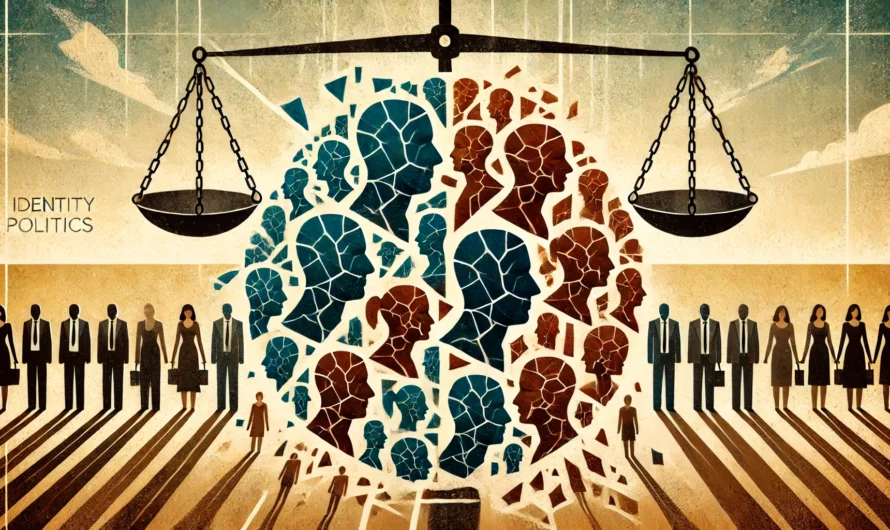
Identity politics has fractured American society, undermined unity, and eroded the foundational principles of equality and meritocracy. By emphasizing differences over shared values and common humanity, identity politics pits groups against each other in a zero-sum competition for resources, power, and cultural dominance. This divisive ideology not only undermines individual agency but also sows resentment and alienation, weakening the social fabric that binds us as a nation.
The new administration must champion a vision of unity rooted in equality of opportunity rather than equity of outcomes. It must reject the corrosive influence of identity politics and instead foster policies that celebrate individual merit, shared aspirations, and the enduring American ideal of “E pluribus unum”—out of many, one.
Understanding Identity Politics: A Recipe for Division
Identity politics operates on the premise that an individual’s primary identity is defined by their membership in a particular racial, ethnic, gender, or other social group. This framework assigns moral, social, and political value based on group identity rather than individual character or merit.
The False Promise of Equity
At its core, identity politics seeks “equity”—the equalization of outcomes across groups—rather than equality of opportunity. This distinction is crucial:
- Equality of Opportunity: Ensures that every individual has the same chance to succeed based on their talents, efforts, and choices.
- Equity: Redistributes resources and outcomes to achieve proportional representation, often at the expense of fairness, merit, and individual effort.
The equity model implies that disparities in outcomes are inherently unjust, ignoring the complex interplay of personal choices, cultural factors, and individual agency. Policies driven by equity risk penalizing achievement while rewarding victimhood, creating a culture of dependency and grievance.
The Harmful Effects of Identity Politics
Identity politics has infiltrated nearly every aspect of American life, from education and workplace policies to cultural discourse. Its impacts are far-reaching and deeply corrosive.
1. Erosion of National Unity
By emphasizing group differences over shared values, identity politics fragments society into competing factions. Rather than fostering mutual understanding, it creates an “us vs. them” mentality that undermines trust and cooperation.
Evidence of Division:
- Political Polarization: Identity politics has contributed to unprecedented levels of political polarization, with Americans increasingly retreating into echo chambers defined by race, gender, and ideology.
- Racial Tensions: Surveys show rising perceptions of racial animosity, fueled in part by narratives that frame all societal disparities as evidence of systemic oppression.
2. Undermining Meritocracy
A merit-based society rewards individuals based on their abilities, contributions, and efforts. Identity politics, however, prioritizes group representation over merit, leading to quotas, preferences, and lowered standards.
Real-World Examples:
- College Admissions: Policies that prioritize racial and ethnic diversity over academic achievement, as seen in the recent controversies surrounding elite universities, undermine the principle of rewarding hard work and excellence.
- Workplace Practices: Corporate diversity initiatives often impose quotas that sideline qualified candidates in favor of meeting arbitrary demographic benchmarks.
3. Weaponization of Victimhood
Identity politics incentivizes individuals to adopt a victim narrative, as societal rewards increasingly flow to those who claim oppression. This undermines personal accountability and resilience.
Cultural Impact:
- Cancel Culture: Identity politics has fueled the rise of cancel culture, where individuals are ostracized or professionally ruined for perceived offenses against the dominant narrative.
- Resentment and Backlash: The prioritization of certain groups over others breeds resentment among those excluded, deepening societal divisions.
A Path Forward: Embracing Equality Over Equity
To counteract the harms of identity politics, the new administration must pursue policies that prioritize unity, individual merit, and equal opportunity. Here are actionable steps to achieve this vision:
1. Focus on Economic Empowerment for All
Rather than redistributing resources based on identity, policymakers should address the root causes of inequality—poverty, education, and access to opportunities—regardless of race or gender.
Policy Proposals:
- School Choice: Expand access to high-quality education through school choice initiatives, allowing families in underserved areas to escape failing schools.
- Job Training Programs: Invest in vocational training and apprenticeship programs to equip all Americans with the skills needed for a changing economy.
- Tax Reform: Simplify the tax code and reduce burdens on working-class families to promote economic mobility.
2. Protect Meritocracy in Education and Employment
Meritocracy ensures that individuals are judged by their abilities and efforts, not by arbitrary group characteristics.
Policy Proposals:
- Ban Race-Based Admissions: End affirmative action policies that prioritize race over merit in college admissions and hiring practices.
- Promote Transparent Standards: Require institutions to adopt clear, merit-based criteria for evaluation and advancement.
- Support Gifted Education: Expand programs for gifted students, ensuring that talent and potential are nurtured regardless of background.
3. Defend Free Speech and Open Debate
Identity politics stifles free speech by labeling dissenting views as offensive or oppressive. A thriving democracy requires open dialogue and the exchange of ideas.
Policy Proposals:
- Campus Free Speech Protections: Enforce policies that protect free expression on college campuses, ensuring that diverse perspectives are heard.
- Promote Civics Education: Reintroduce civics education in schools to foster an understanding of constitutional rights and responsibilities.
- Condemn Cancel Culture: Use the presidential platform to call for a culture of tolerance and respect for differing opinions.
4. Address Systemic Barriers Without Racializing Solutions
Acknowledging systemic challenges does not require racializing every problem. Policies should address universal barriers while avoiding divisive identity-based framing.
Policy Proposals:
- Criminal Justice Reform: Implement fair sentencing reforms and expand rehabilitation programs to reduce recidivism.
- Affordable Healthcare Access: Increase competition in the healthcare market to lower costs and improve access for all Americans.
- Infrastructure Investment: Modernize infrastructure in underserved areas to create jobs and improve quality of life.
5. Promote Cultural Unity Through Shared Values
Reviving a sense of shared purpose and national identity is essential to counteract the divisiveness of identity politics.
Policy Proposals:
- Celebrate National Holidays: Elevate the significance of national holidays, such as Independence Day and Thanksgiving, as moments of unity and reflection.
- Highlight Shared Achievements: Use public platforms to celebrate stories of diverse Americans who embody the principles of hard work, resilience, and service.
- Foster Community Engagement: Encourage volunteerism and civic participation through initiatives that bring people from different backgrounds together.
The Case for Destroying Identity Politics
Destroying identity politics is not about ignoring inequality or pretending differences do not exist. Rather, it is about rejecting the corrosive narratives that reduce individuals to their group identities and pit Americans against one another. Embracing equality and rejecting equity ensures that every individual is valued for their unique contributions and talents.
Historical Lessons:
- Civil Rights Movement: The successes of the civil rights movement were rooted in appeals to shared humanity and universal principles, not divisive identity-based rhetoric.
- Immigrant Success Stories: America has long been a beacon for immigrants who achieved success through hard work and perseverance, proving the power of individual agency over collective identity.
Addressing Common Counterarguments
“But equity addresses historical injustices.”
While historical injustices must be acknowledged, equity-based solutions often perpetuate the very divisions they seek to resolve. Policies should focus on empowering individuals, not entrenching group identities.
“Identity politics gives a voice to marginalized groups.”
True empowerment comes from fostering equal opportunity and celebrating individual achievements, not reducing people to their group affiliations.
“Equity ensures fairness.”
Fairness comes from treating individuals equally, not imposing quotas or redistributing outcomes based on arbitrary criteria.
Conclusion: Toward a Post-Identity Politics Future
Identity politics has done more to divide than to unite, undermining the principles of equality, meritocracy, and individual agency that define the American dream. To move forward as a nation, we must embrace policies that prioritize unity over division, equality over equity, and merit over mediocrity.
The new administration has an opportunity to lead this charge, promoting a vision of America where individuals are judged not by the color of their skin, their gender, or their group affiliation, but by the content of their character and the quality of their contributions. Only by rejecting identity politics can we truly fulfill the promise of a united, prosperous, and free America.