Trump Locked Out of the Transition
 by
by Drones Over New Jersey and a Nation on Edge
In recent weeks, reports of mysterious drones flying over critical infrastructure in New Jersey have stirred fears about national security threats ranging from chemical leaks to radiological “dirty bomb” plots. Against this backdrop, the ongoing Biden-Trump presidential transition raises troubling questions about how prepared the United States is to handle such crises. With accusations of partisanship and distrust between the outgoing and incoming administrations, the stakes couldn’t be higher. Is national security at risk because of political grudges? Why hasn’t the Biden team briefed Trump’s advisors about these potential threats? And could partisan animosity leave the nation vulnerable?
White House Isn’t Prioritizing Briefing Trump
Donald Trump’s silence on the mysterious drone activity in New Jersey is deafening. For a man known for speaking out on national security threats, his lack of commentary raises eyebrows. The absence of any statement suggests he’s being left in the dark by the Biden administration, which appears unwilling to share critical intelligence.
This silence fuels speculation that the current White House isn’t prioritizing briefing Trump on emergent threats, even as rumors swirl about potential chemical or radiological dangers tied to the drones. National security experts point out that if the government suspects a serious threat, withholding information from Trump—still a prominent political figure—could undermine bipartisan preparedness for crises.
The question remains: Is this an intentional snub rooted in political animosity, or a broader failure of the Biden team to engage Trump on key issues? Either way, it leaves America’s preparedness for potential threats shrouded in uncertainty.
Ten Reasons Why Biden Should Brief Trump on the Iranian Threat and Potential Dirty or Chemical Weapons in the USA
- National Security Continuity
- Sharing intelligence ensures a united front against potential threats, regardless of political differences. National security demands cooperation to prevent catastrophic attacks.
- Trump’s Influence on National Dialogue
- As a former president and a key political figure, Trump’s voice can rally public and international support for heightened vigilance and preventive measures.
- Potential for Post-Presidency Action
- Trump maintains significant influence over state-level leadership and international allies. A briefing could help mobilize resources and allies in preparation for potential threats.
- Enhanced Bipartisan Preparedness
- Briefing Trump could help align Republican leadership in Congress, enabling bipartisan legislative actions to address gaps in security measures.
- Strategic Risk Mitigation
- If an attack occurs and Trump was not informed, it could lead to accusations of negligence by the Biden administration, undermining public trust.
- Iranian Retaliation Focus
- Iran has explicitly threatened Trump in the past, making him a potential target. Informing him helps protect a high-value individual and demonstrates respect for the ongoing risk.
- Public Reassurance
- Transparency and collaboration between administrations would send a strong signal to the American people that the government is united in protecting them from threats.
- Utilizing Trump’s Unique Relationships
- Trump’s strong ties with leaders in Israel and the Gulf States could be leveraged to apply coordinated pressure on Iran and share intelligence.
- Avoiding Political Fallout
- If the Biden administration fails to brief Trump and a crisis unfolds, the lack of communication could be exploited as a political weapon, leading to deeper national divisions.
- Strengthening Deterrence
- A united stance between current and former leadership strengthens the perception of U.S. resolve, sending a clear message to adversaries like Iran that the country will not tolerate threats.

The Importance of Seamless National Security Transitions
Transitions of power in the United States are designed to ensure the uninterrupted protection of the homeland. The Presidential Transition Act of 1963 mandates cooperation between outgoing and incoming administrations, especially in areas like national defense and intelligence. The principle is simple: the continuity of government must outweigh partisan interests.
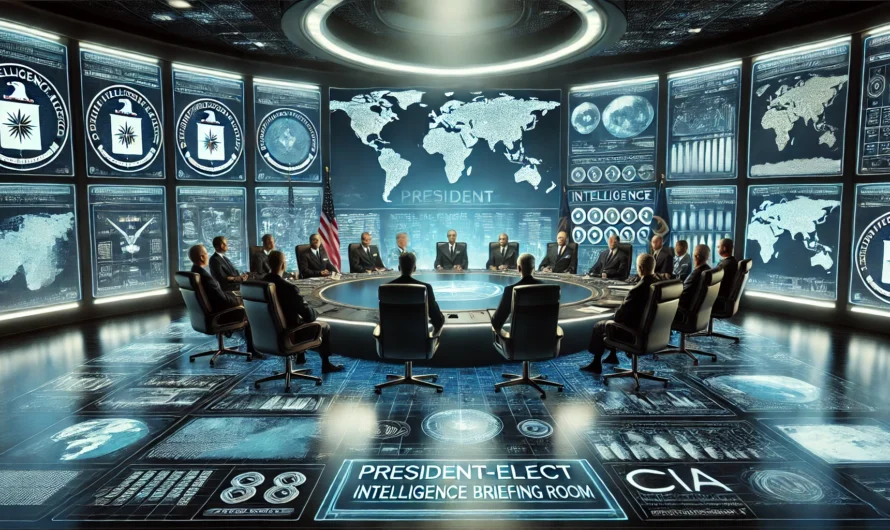
In theory, the incoming administration should be looped in on any emergent threats. This includes classified briefings, threat assessments, and operational updates to ensure a smooth handover of authority. In practice, however, political rivalries can create dangerous delays.
Past Examples of Successful Transitions:
- In 2000, despite the protracted Bush-Gore election dispute, President Bill Clinton’s administration provided critical updates about threats from al-Qaeda.
- In 2008, the Bush administration briefed Barack Obama’s team extensively about the financial crisis and ongoing military operations in Iraq and Afghanistan.
These examples illustrate that, even during politically contentious times, the nation’s safety came first. The Biden-Trump transition, however, appears to be breaking this tradition.
The Biden Administration’s Handling of the Transition
President Biden’s approach to the transition has been marked by minimal contact with Trump’s team. Critics suggest this reflects a deep mistrust of the former president. Others argue it is a deliberate strategy to undermine Trump’s influence before his potential 2024 campaign.
Key Issues in the Biden-Trump Transition:
- Delayed Briefings: Reports suggest that Biden’s national security team has not fully shared information about pressing threats, including those posed by the drones in New Jersey. This raises concerns about whether partisan disputes are taking precedence over public safety.
- Conflicting Priorities: Biden’s focus on diplomacy and climate change may conflict with Trump’s “America First” approach, particularly on matters like the Iranian threat.
- Failure to Engage: Unlike previous transitions, there seems to be no structured effort to bring Trump’s advisors into the loop.
This lack of coordination could have dire consequences, particularly as the U.S. faces complex, multilayered threats.
The National Security Threat Landscape
The mysterious drones over New Jersey are a stark reminder of the threats America faces. Experts have identified three plausible scenarios tied to the activity:
- Chemical Threats: With hundreds of chemical plants in New Jersey, the drones may be searching for airborne toxins released by an industrial leak or deliberate sabotage.
- Radiological “Dirty Bomb” Threats: Given New Jersey’s proximity to New York City, the drones could be part of an effort to locate radiological material being prepared for a dirty bomb attack.
- Infrastructure Vulnerabilities: The Round Valley Reservoir and nearby power plants are critical targets, and drone activity suggests heightened concerns about potential tampering.
Each scenario points to the need for unified national leadership. If intelligence about these threats exists, it must be shared promptly with both current and incoming officials.
The Iranian Threat and Political Calculations
Iran looms large in this discussion, especially with reports that Tehran has sleeper cells in North America. Iranian leaders have long sought revenge for the 2020 killing of General Qassem Soleimani, and a symbolic attack on U.S. soil—potentially involving a dirty bomb—cannot be ruled out.
Key Factors:
- Radiological Materials: Iran’s proxies, like Hezbollah, are known to smuggle materials for dirty bombs.
- NYC as a Target: New York City’s symbolic value makes it an attractive target for terror groups linked to Tehran.
- The January 20th Factor: High-profile political events like presidential inaugurations often attract threats, and Iran’s animosity toward Trump increases the risk.
If intelligence has indeed flagged Iranian-linked threats, the Biden administration has an obligation to share that information with Trump’s team. Failing to do so could jeopardize lives and undermine trust in the government’s ability to protect its citizens.
Trump’s Criticism of Biden’s National Security Policies
Donald Trump has publicly criticized Biden’s handling of national security, accusing his administration of being soft on Iran and negligent in counterterrorism. Trump’s team has pointed to the drone activity in New Jersey as evidence that the U.S. is not adequately prepared for emergent threats.
Trump’s Proposed Actions:
- Maximum Pressure on Iran: Reinstate harsh sanctions and explore military options to prevent Tehran from acquiring nuclear capabilities.
- Enhanced Domestic Security: Increase funding for surveillance and counterterrorism operations within U.S. borders.
- Transparency: Demand that the Biden administration provide detailed briefings about the current threat landscape.
These proposals reflect Trump’s broader vision of projecting strength while prioritizing homeland security. Whether or not Biden’s team will heed these calls remains uncertain.
The Role of Intelligence in Shaping Policy
Both administrations have access to world-class intelligence capabilities, from satellite imagery to intercepted communications. These tools are critical for identifying threats like the drone activity in New Jersey.
The Importance of Intelligence Sharing:
- Countering Terrorism: Timely intelligence can disrupt plots before they materialize.
- Building Trust: Sharing information across administrations demonstrates a commitment to the nation’s safety.
- Strategic Alignment: Coordinated responses to threats ensure that no resources are wasted.
Without robust intelligence sharing, the U.S. risks blind spots that adversaries could exploit.
Political Rivalries and National Security
The Biden-Trump feud is emblematic of a broader trend in U.S. politics, where partisanship increasingly undermines governance. When it comes to national security, however, there is no room for political gamesmanship.
The Consequences of Distrust:
- Delayed Responses: A lack of communication can slow critical decision-making.
- Public Panic: Mixed messages from leaders can erode public confidence in government institutions.
- Missed Opportunities: Failure to collaborate could allow adversaries to exploit gaps in U.S. defenses.
Bridging this divide requires leadership on both sides. For Biden, this means prioritizing national security over political grudges. For Trump, it means demonstrating a willingness to engage constructively.
Solutions for a Stronger Transition
To safeguard the nation, both the Biden and Trump teams must adopt a proactive approach to national security. This includes:
- Regular Briefings: Daily updates on emerging threats, with bipartisan participation.
- Joint Exercises: Simulations to prepare for potential crises, such as a dirty bomb attack or chemical spill.
- Clear Communication: Public assurances that leaders are working together to address threats.
These measures would not only enhance security but also reassure the American people that their leaders are putting the nation first.
Conclusion: Rising Above Partisanship to Protect the Homeland
The drone activity in New Jersey is a stark reminder of the challenges America faces in an increasingly complex security environment. From chemical threats to Iranian proxies, the risks are real—and they demand a unified response.
The Biden-Trump transition offers a critical opportunity to demonstrate that national security transcends politics. By prioritizing collaboration and transparency, both administrations can ensure the safety of the American people and send a powerful message to America’s adversaries: The United States stands united, even in the face of internal divisions.
For now, the nation watches and waits. Will its leaders rise to the occasion, or will political animosity leave the homeland vulnerable? Only time will tell.