 by
by Not So Mysterious Drones is Government Surveillance
Recent reports have highlighted numerous sightings of large, unidentified drones over various regions in the United States, particularly in New Jersey, New York, and Pennsylvania. These occurrences have raised public concern and prompted investigations by federal agencies.
Nature of the Drone Sightings
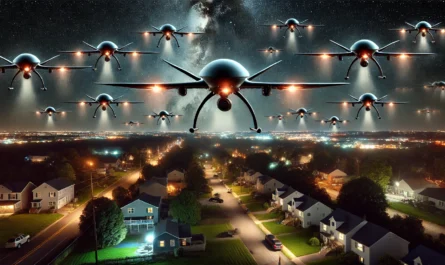
Since mid-November 2024, residents have reported observing drones, some described as large as SUVs, flying at night with distinctive light patterns. These drones have been noted for their unique flight behaviors and have been spotted near sensitive areas, including military installations and critical infrastructure. New York Post
Government Response and Investigations
Federal agencies, including the FBI and the Department of Homeland Security (DHS), are actively investigating these reports. Preliminary statements suggest that many sightings may be misidentified manned aircraft operating lawfully. Authorities have not found credible evidence indicating that these drones pose a threat to national security. BBC
Public Concerns and Speculations
The lack of definitive explanations has led to various speculations among the public and officials. Some theories propose that these drones could be part of secretive government programs testing new technologies, while others suggest potential foreign involvement. However, there is no substantial evidence supporting these claims. New York Post
Policy and Legal Considerations
The U.S. military’s ability to respond to unidentified drones is constrained by legal limitations, particularly concerning the use of force in domestic airspace. The Pentagon has developed strategies to counter unmanned systems, but actions like shooting down drones are highly restricted due to potential collateral damage and legal implications. Wired
Conclusion
While the sightings of unidentified drones have understandably caused public concern, current investigations have not revealed any immediate threats to national security. The government continues to monitor the situation, and authorities are working to enhance transparency and address public apprehensions. As of now, there is no evidence to suggest that these drones are part of any domestic testing programs targeting the U.S. population.

A Case Against the DOD Domestic Drone Project
Legal, Ethical, and Policy Concerns
The use of Department of Defense (DOD) drones over U.S. airspace raises significant legal, ethical, and policy concerns. It touches on fundamental issues of privacy, transparency, accountability, and the proper role of the military in domestic affairs. Below, I outline the case against such a program, grounded in constitutional principles, federal laws like the Posse Comitatus Act, moral considerations, and the need for governmental transparency.
Legal Concerns: The Posse Comitatus Act
- The Law’s Intent
The Posse Comitatus Act of 1878 restricts the use of the military for domestic law enforcement purposes. It explicitly prohibits the Army and Air Force (and by extension, other branches like the DOD) from engaging in civilian policing unless expressly authorized by Congress. This law was designed to prevent the military from becoming a tool of domestic control or surveillance, ensuring a clear separation between civilian and military roles. - Drones as a Potential Violation
Deploying DOD drones over domestic airspace could skirt the boundaries of the Posse Comitatus Act. While proponents may argue that such programs are not “law enforcement,” their surveillance capabilities—monitoring civilian movements, collecting data, and potentially aiding law enforcement—essentially position them in a quasi-policing role. This interpretation violates both the letter and spirit of the law. - Authorization and Oversight
Unless there is explicit Congressional authorization for using drones domestically, such deployments raise significant legal questions. Any use without transparent oversight undermines democratic accountability and the legal safeguards built into the system.
Ethical Concerns: Privacy and Civil Liberties
- Mass Surveillance and the Fourth Amendment
The Fourth Amendment protects Americans from unreasonable searches and seizures. DOD drones, equipped with advanced imaging, facial recognition, or data-gathering tools, can violate this protection. Surveillance without warrants undermines privacy rights and fosters a chilling effect on free speech and assembly. - Erosion of Trust
Deploying military-grade surveillance drones over U.S. cities signals distrust of the civilian population. Such actions erode public confidence in the government, creating an environment of suspicion and fear. Ethical governance requires trust, which is compromised when citizens feel monitored by their own military. - Creeping Militarization
The use of drones domestically risks normalizing military tools in civilian life. Over time, this normalization can lead to an erosion of civil liberties, as the distinction between military and civilian spheres becomes increasingly blurred.
Transparency Concerns
- Lack of Public Disclosure
There has been minimal transparency regarding the purpose, scope, and limits of the DOD drone program. Are these drones for surveillance? Testing? Dual-use purposes? Without clear answers, the public is left in the dark, unable to hold decision-makers accountable. - Absence of Public Consent
Democratic governance requires the informed consent of the governed. Policies like drone deployment over U.S. airspace demand public debate and scrutiny. The secretive nature of the program prevents such discussions, undermining democratic principles. - Potential for Abuse
A lack of transparency heightens the risk of misuse. Drones could be used for political surveillance, targeting protest groups, or monitoring journalists, all without public knowledge. The history of government programs (e.g., COINTELPRO) shows that secrecy often breeds abuse.
Moral and Philosophical Considerations
- Government Accountability to the People
The government is morally obligated to act transparently and protect the rights of its citizens. Surveillance drones, especially those controlled by the military, invert this relationship, placing the government in a position of unchecked power over its populace. - Respect for Autonomy
Privacy is a cornerstone of individual autonomy. Military drones capable of constant surveillance strip citizens of their ability to act without oversight, reducing them to subjects under perpetual observation. - Precedent for Escalation
If drones are normalized for surveillance today, what’s next? Armed drones? Autonomous systems patrolling U.S. streets? Failing to draw clear ethical lines now risks opening the door to more invasive technologies in the future.
Policy Recommendations
- Enforce and Expand the Posse Comitatus Act
- Strengthen the act to include explicit prohibitions on domestic drone use by the military, closing any loopholes that allow quasi-law enforcement roles.
- Establish Oversight Committees
- Require independent oversight and regular reporting to Congress and the public on the scope, purpose, and outcomes of any drone deployments.
- Enhance Privacy Protections
- Pass federal privacy legislation limiting surveillance capabilities and ensuring drones cannot collect or store personal data without warrants.
- Restrict Domestic Drone Use
- Ban the use of military drones for domestic purposes except in narrowly defined cases, such as natural disasters or other emergencies, and only with explicit Congressional approval.
- Transparency Mandates
- Require public disclosure of all drone activities, including clear objectives, geographic scope, and accountability mechanisms.
Conclusion
The deployment of DOD drones over U.S. airspace is a direct challenge to foundational principles of democracy, civil liberties, and governmental accountability. Using military tools on domestic populations risks violating the Posse Comitatus Act, undermining privacy rights, and eroding public trust. It sets a dangerous precedent for the normalization of military surveillance and intervention in civilian life.
America must draw a firm line between military and civilian spheres, adhering to both legal statutes and moral imperatives. By enforcing existing laws, enhancing transparency, and strengthening privacy protections, the government can ensure that technological advancements serve the public good without compromising democratic principles. Testing drones over domestic populations, under any administration, is unacceptable and must be unequivocally rejected.