 by
by Party Politics and Representational Deficiencies: The Origins of Populist Challengers
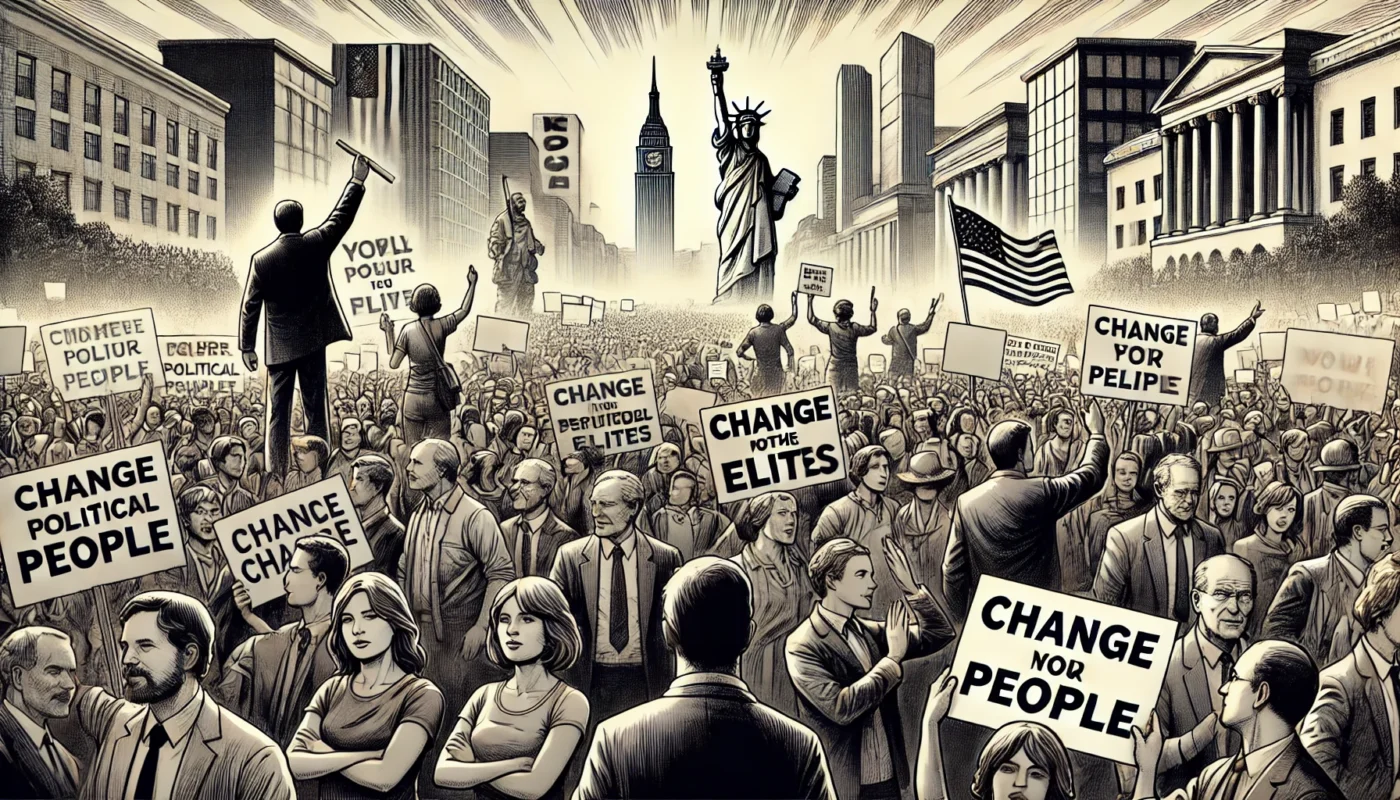
Although populism has been defined in myriad ways, virtually all conceptualizations agree that some form of anti-establishment appeal to mass constituencies lies at the heart of the political phenomenon. Populism, in essence, is the quintessential expression of anti-elite and anti-establishment politics. The challenge, however, lies in determining who or what constitutes “the establishment,” as this concept is both variable and historically constructed. In democratic settings, “the establishment” often includes mainstream political parties. The rise of populism, therefore, inherently challenges the control that mainstream party organizations have over the electoral marketplace. In some cases, populist currents emerge within a mainstream party and challenge traditional leadership structures—an example being the US Republican Party’s recent populist transformation with figures like Donald Trump (Skocpol and Williamson, 2013). More often, populists emerge outside traditional parties, presenting themselves as offering “the people” a more authentic mode of political representation.
The rise of populist challenges to mainstream parties is not an inevitability, nor does it occur frequently in well-established democracies. Theoretically, party systems tend to be stable once universal suffrage is achieved and the electorate is fully mobilized into rival partisan camps. Lipset and Rokkan’s (1967) seminal work suggests that once party systems “freeze,” they stabilize along deep socio-political cleavages, leaving little room for new challengers. Similarly, Aldrich’s (2011) rational choice approach suggests that both elite political entrepreneurs and rank-and-file voters have strong incentives to stick with established party organizations. For elites, this means exploiting loyalty to established brands, and for voters, it provides information shortcuts and ease of mobilization. Such systems, however, are not immune to breakdowns, especially when a crisis of representation occurs—when large swathes of the electorate become alienated from the established parties. It is during these crises that populist challenges often flourish.
A Crisis of Representation and Its Role in Populism
A “crisis of representation,” as Laclau (2005) put it, is at the root of any populist uprising. This crisis occurs when citizens lose trust in intermediary institutions—political parties, in particular—that claim to link society to the state and represent societal interests in policy-making arenas. Such lack of trust does not necessarily lead to a strengthening of populism. Some people may simply opt out of the political process, while others may vote for traditional parties out of habit or perceived lack of alternatives. However, when large groups of citizens become susceptible to mobilization by outsiders who promise more responsive or authentic representation, a crisis of representation is born.
Recent examples of such crises are widespread. The rise of populist leaders like Jair Bolsonaro in Brazil, Marine Le Pen in France, and Donald Trump in the US are direct responses to a breakdown in trust in traditional party systems. In Brazil, Bolsonaro capitalized on growing dissatisfaction with corruption scandals involving the Workers’ Party (PT) and a struggling economy. Similarly, Trump’s appeal was largely based on his anti-establishment rhetoric, positioning himself as a political outsider even as he ascended to the presidency of a major political party. These leaders built their populist platforms by capitalizing on disillusionment with the political establishment and the perceived ineffectiveness of established parties.
Political Exclusion and the Initial Process of Mass Political Incorporation
Populism often rises in societies that have experienced political exclusion. When oligarchic or exclusionary political systems extend suffrage and mobilize previously excluded segments of society, populist movements often find fertile ground. A prime example is Latin America’s experience in the mid-20th century, when the combination of industrialization and suffrage reforms gave the vote to urban working and middle classes who had few ties to traditional oligarchic parties. Populism in this period was not just a political response; it was an alternative form of political representation for large segments of society. In Argentina, for instance, Juan Perón used populist rhetoric to mobilize working-class citizens into political engagement, leading to widespread state-led industrialization and redistribution efforts.
Similar patterns of populist mobilization occurred in other regions during democratic transitions. In Thailand, Thaksin Shinawatra’s rise was partly a response to the perceived failures of the established political system to meet the needs of the rural poor. Shinawatra’s populist movement successfully appealed to these previously marginalized voters, often employing a platform of economic inclusion and political decentralization.
Organizational Cartelization and Political Cartels
One reason populist movements emerge is the “cartelization” of mainstream party organizations. Established parties, once rooted in deep social cleavages, become more professionalized and detached from grassroots organizations as they consolidate power. This process creates political cartels, where parties collude to monopolize state resources and access to public institutions, effectively closing off the electoral marketplace to new entrants. European cases such as the rise of populist movements like Italy’s Lega and Germany’s AfD reflect a growing disillusionment with such political cartels. In Italy, the Five Star Movement (M5S) emerged as a populist alternative, capitalizing on widespread disillusionment with Italy’s established political elite, which had been mired in corruption scandals.
In response to this cartelization, populist leaders often rally around the slogan of “breaking the mold” of established politics, promising to dismantle the entrenched systems of power. This was evident in the 2016 Brexit referendum, where anti-establishment rhetoric played a significant role in encouraging the British public to vote to leave the European Union, challenging both the Conservative and Labour parties’ stances on EU membership.
Performance Failures and Voter Disillusionment
Performance failures, including economic crises and corruption scandals, frequently lead to the weakening of traditional party systems. Voters often lose confidence in established parties when they fail to effectively address economic recessions, corruption, or issues of governance. The 2008 financial crisis is one such case, where the crisis created an opening for populist movements to capitalize on disillusionment. In Greece, the financial austerity measures imposed by the European Union led to the rise of Syriza, a left-wing populist movement that capitalized on opposition to austerity. In Italy, the Five Star Movement similarly emerged, voicing opposition to traditional political elites and the European Union’s austerity measures.
In Venezuela, the widespread belief that corrupt political elites had squandered the country’s vast oil wealth created an opening for Hugo Chávez’s populist movement. Chávez framed himself as the champion of the poor, promising redistributive policies that would directly benefit the working class.
Programmatic Convergence and Ideological Compression
The failure of mainstream parties to provide a meaningful range of policy alternatives can lead to a process known as programmatic convergence. When mainstream parties converge on a narrow set of policy choices, they cease to represent the full spectrum of societal preferences, creating a political void that populist challengers can exploit. This phenomenon is visible in the European Union, where the austerity measures adopted in response to the 2008 financial crisis created political convergence among mainstream parties. In Greece, the austerity measures championed by the left-wing PASOK government led to the rise of the populist Syriza movement, which opposed austerity and portrayed itself as a defender of the people.
Similarly, in Hungary and Poland, populist movements on the right have emerged in response to what they perceive as a failure by mainstream parties to protect national sovereignty and cultural values from the perceived threats of immigration and European Union policies.
Conclusion
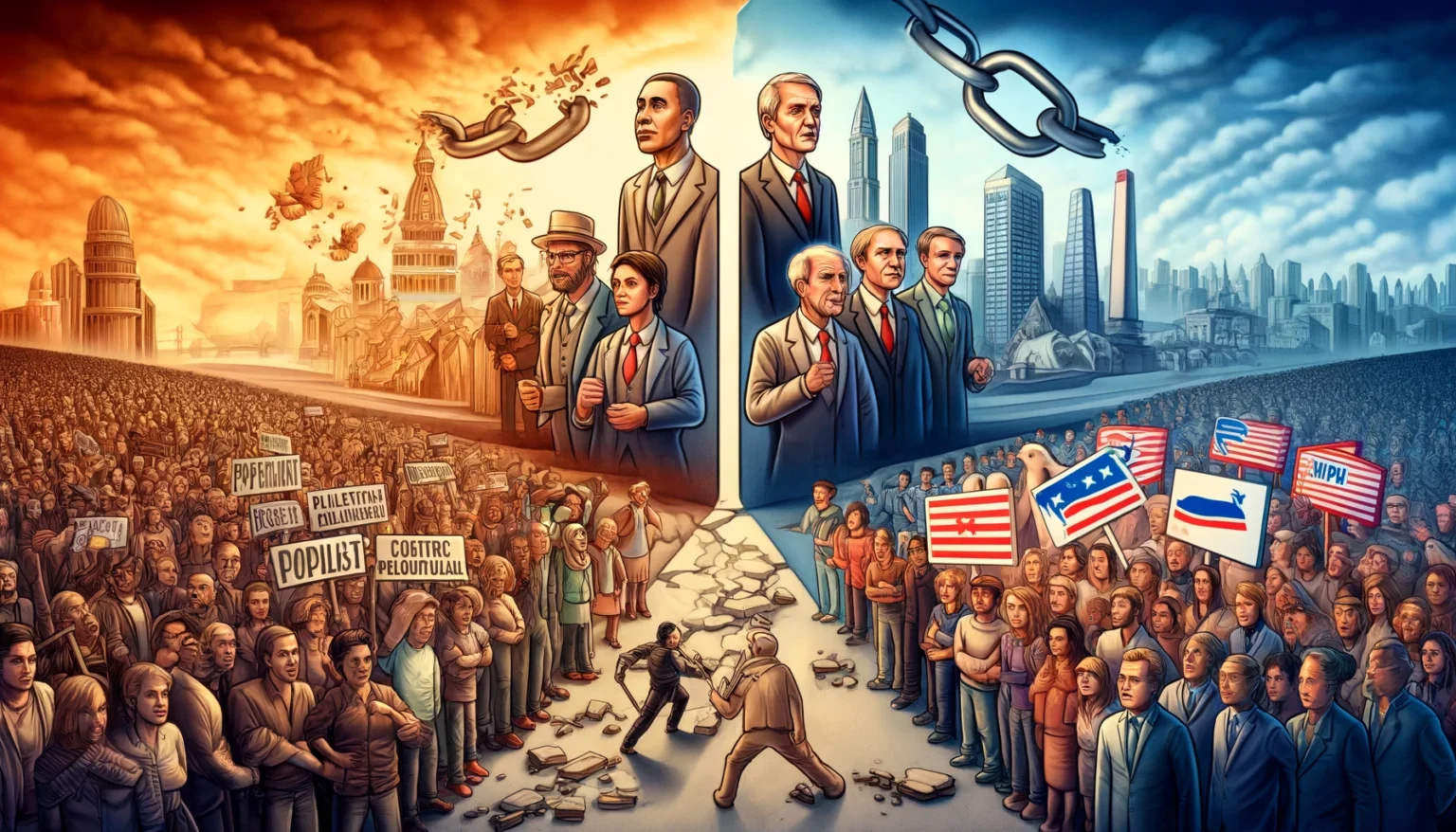
Populism thrives in situations where mainstream political parties have failed to represent large portions of the electorate, whether due to political exclusion, organizational cartelization, performance failures, or programmatic convergence. In these contexts, populist movements emerge as challengers to established party systems, often promising to break free from the grip of political elites and offer more authentic forms of representation. The contemporary political landscape in the US, Europe, Latin America, and beyond demonstrates that populism remains a potent force in challenging the status quo and reshaping national party systems.
SOURCES
- Rise of Populism in the US Republican Party:
- Jair Bolsonaro and the Populist Surge in Brazil:
- Marine Le Pen’s National Front and French Populism:
- Thaksin Shinawatra and Populism in Thailand:
- Populism in Venezuela and the Rise of Hugo Chávez:
- The Italian Five Star Movement and Anti-Establishment Politics:
- Italy’s Anti-Austerity Populism Post-2008 Financial Crisis:
- Syriza’s Rise in Greece Amidst Economic Crisis and Austerity:
- Hungary’s Populist Government and Its Challenge to the European Union:
- Populist Challenges in Poland and the Law and Justice Party: