 by
by Flaws of the H-1B Visa Program
The H-1B visa program was established to help U.S. companies fill gaps in specialized fields by allowing them to hire foreign workers in areas like technology, healthcare, and engineering. However, over time, significant flaws have emerged, undermining its intended purpose and creating a system that disadvantages both American workers and H-1B employees.
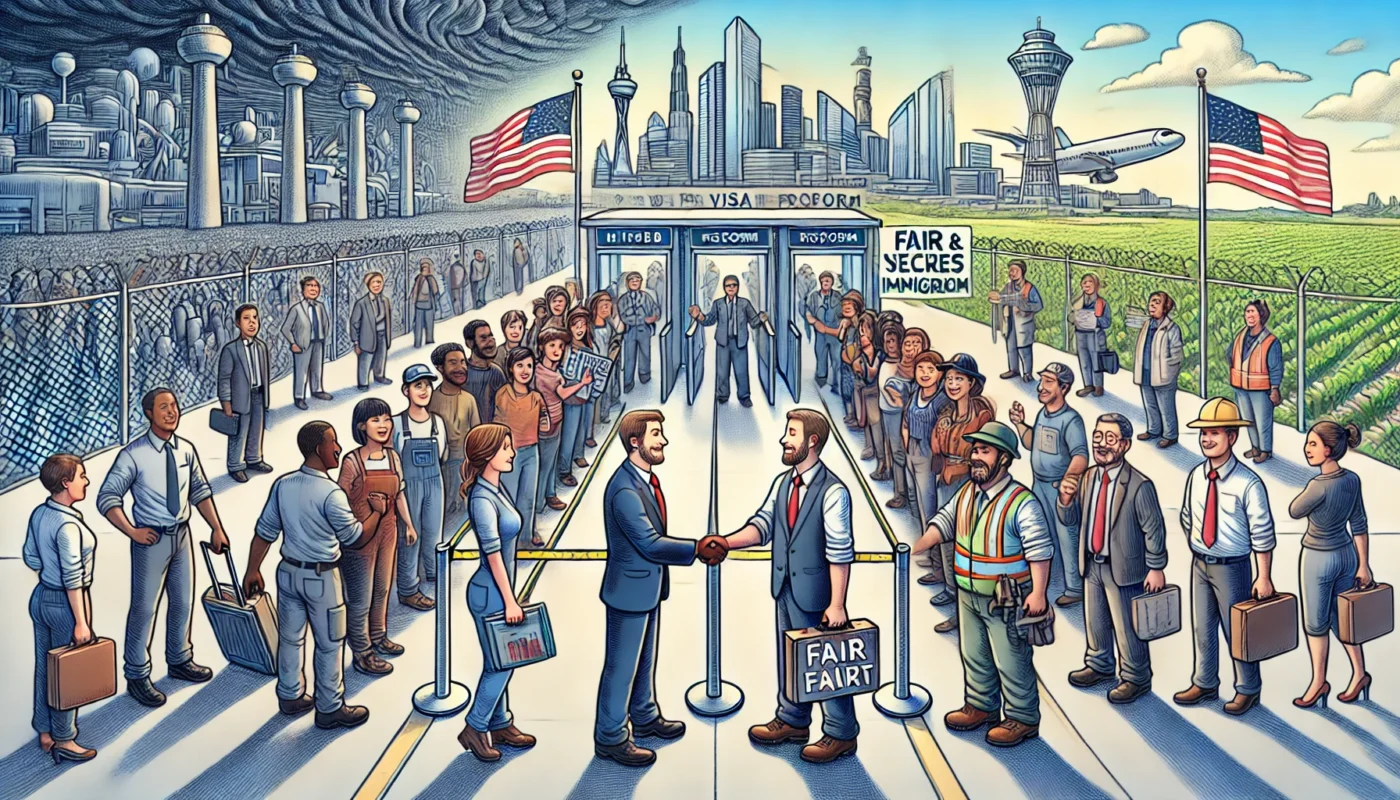
Fair Wages, Fair Play: Reform the H-1B Way!
“Don’t Throw the Baby Out with the Bathwater: Smart H-1B Reform”
This phrase underscores the importance of addressing the flaws of the H-1B visa program without completely eliminating it. A reformed H-1B program can strike a balance between protecting domestic workers and leveraging global talent. Here’s how this concept applies to reforming the program:
Key Points to Support H-1B Program Reform
- Preserve the Benefits:
- The H-1B program has historically fueled innovation in tech, medicine, and STEM fields.
- Companies like Google, Apple, and Tesla were founded or expanded by immigrant talent who could enter the U.S. through visa programs.
- Targeted Adjustments Instead of Elimination:
- Rather than scrapping the program, reform can address abuses like wage suppression and outsourcing dominance.
- Policies can ensure visas prioritize highly skilled individuals rather than entry-level workers.
- Support American Workers While Embracing Talent:
- Focus on filling skill gaps that genuinely exist, rather than allowing corporations to use the program to cut costs.
- Invest in workforce development alongside reforms to foster a competitive domestic talent pool.
- Ensure Economic Growth Without Exploitation:
- Allow global innovators to contribute to the U.S. economy while enforcing wage parity to protect American workers.
- A reformed H-1B program can maintain America’s global edge without undermining domestic labor markets.
1. Wage Suppression
The H-1B program allows companies to pay foreign workers less than their American counterparts, effectively undercutting the domestic labor market.
- Prevailing Wage Loopholes: Employers are required to pay H-1B workers the “prevailing wage,” but the standards for determining these wages are often inadequate. This allows companies to offer significantly lower salaries for equivalent roles.
- Evidence of Wage Suppression: Outsourcing firms, such as Tata Consultancy Services and Infosys, often pay H-1B workers between $60,000 and $70,000 annually, far below the market rate for skilled tech workers in the U.S.
- Impact on American Workers: Lower wages create downward pressure on salaries for domestic employees, limiting opportunities for wage growth and reducing overall earning potential in affected industries.
2. Job Displacement
The program has been exploited to displace American workers rather than fill genuine skill gaps.
- High-Profile Cases: Companies like Disney and Southern California Edison laid off American IT employees and replaced them with H-1B workers. In some cases, the displaced employees were required to train their replacements to receive severance packages.
- Effect on Employment Opportunities: By prioritizing cheaper foreign labor, companies reduce incentives to hire or train domestic workers, exacerbating unemployment and underemployment in key sectors.
3. Abuse by Outsourcing Firms
The H-1B program is heavily dominated by outsourcing firms, which use it to lower costs rather than address skill shortages.
- Dominance of Outsourcing Companies: Firms like Tata, Infosys, and Wipro receive a disproportionate share of H-1B visas. In 2014, nearly one-third of all new H-1B visas were allocated to just 13 outsourcing companies.
- Entry-Level Roles: These firms often use H-1B workers for lower-paying, entry-level jobs rather than highly specialized positions, contradicting the program’s original intent.
- Reduced Access for U.S.-Based Companies: The dominance of outsourcing firms limits the availability of visas for companies that genuinely need high-skilled talent.
4. Lack of Oversight and Enforcement
The H-1B program lacks sufficient regulatory oversight, leading to widespread abuses.
- Minimal Audits: The Department of Labor conducts few audits to ensure compliance with wage and employment standards, allowing bad actors to exploit the system.
- Fraud and Misrepresentation: Cases of fraudulent applications and misclassification of job roles are common, undermining the program’s credibility.
- Inadequate Worker Protections: H-1B workers are tied to their sponsoring employers, creating a power imbalance that discourages them from reporting mistreatment or exploitation.
5. Questionable Skill Shortage Claims
The justification for the H-1B program often hinges on the claim of a STEM skills shortage, but this assertion is highly contested.
- Surplus of STEM Graduates: Studies from Rutgers University and other institutions show that U.S. colleges produce more STEM graduates annually than the job market can absorb. Many graduates report being unable to find employment in their fields.
- Flat Wages in STEM Fields: If a true skills shortage existed, wages in STEM industries would be rising. Instead, salaries have remained relatively stagnant, contradicting the shortage narrative.
6. Exploitation of H-1B Workers
The program creates a system of dependency that leaves foreign workers vulnerable to exploitation.
- Tied to Employers: H-1B workers cannot easily change jobs without risking their immigration status, giving employers undue leverage over them.
- Lack of Mobility: This dependency limits career advancement opportunities and exposes workers to poor working conditions.
- Long Green Card Wait Times: Workers from countries like India often face decades-long backlogs for green card processing, keeping them in legal and professional limbo.
7. Negative Economic Consequences
The H-1B program has broader economic implications that harm American industries and local communities.
- Erosion of Middle-Class Jobs: By displacing domestic workers, the program contributes to the hollowing out of the middle class and weakens local economies.
- Reduced Innovation: Critics argue that relying on cheap labor discourages companies from investing in workforce development and automation, potentially stifling long-term innovation.
- Outsourcing Trends: The program incentivizes companies to offshore jobs, further reducing domestic employment opportunities.
8. National Security Risks
Heavy reliance on foreign workers in critical industries poses significant risks to national security.
- Sensitive Roles: Many H-1B workers are employed in industries like technology and defense, raising concerns about intellectual property theft and cybersecurity vulnerabilities.
- Limited Vetting: The lack of stringent oversight increases the risk of sensitive information being exposed to foreign governments or bad actors.
9. Misalignment with Original Intent
The program has strayed far from its original purpose of addressing temporary skills shortages in specialized fields.
- Focus on Cost-Cutting: Instead of bringing in the “best and brightest,” the program is often used as a cost-cutting tool, with many visas going to lower-skilled roles.
- Lack of Accountability: Employers are not required to prove that they have exhausted efforts to hire American workers before turning to H-1B hires, undermining the program’s stated goals.
10. Public Backlash
The H-1B program has faced increasing criticism from both policymakers and the public.
- Bipartisan Opposition: Lawmakers from both parties have raised concerns about the program’s impact on American workers and its susceptibility to abuse.
- Worker Protests: High-profile cases of job displacement have sparked protests and lawsuits, highlighting the program’s flaws and fueling public resentment.
- Erosion of Trust: The program’s misuse undermines public confidence in immigration policies and the government’s ability to prioritize the interests of its citizens.
11. Barriers to Workforce Development
By relying on foreign labor, the H-1B program discourages companies from investing in domestic workforce training.
- Short-Term Focus: The availability of cheap labor reduces incentives for companies to develop long-term training programs for American workers.
- Neglect of Underserved Communities: The program overlooks the potential of underrepresented groups, such as minorities and rural populations, to fill skills gaps through targeted education and training initiatives.
12. Inequity in Visa Distribution
The current system disproportionately benefits large outsourcing firms at the expense of smaller businesses and startups.
- Lottery System: The random allocation of visas disadvantages smaller companies that cannot compete with outsourcing giants for available slots.
- Barriers to Innovation: Startups and smaller firms, which are often engines of innovation, struggle to access the talent they need due to the program’s skewed distribution.
The H-1B visa program, while originally intended to address specific labor market needs, has devolved into a flawed system that prioritizes corporate profits over the interests of American workers and the integrity of foreign labor. Its shortcomings—ranging from wage suppression and job displacement to exploitation and national security risks—make a compelling case for its reform or abolition. By addressing these flaws, the United States can create a more equitable and sustainable labor market that prioritizes the well-being of its citizens and fosters long-term economic growth.

Remedies to Reform the H-1B Visa Program Populist Perspective
To address the flaws in the H-1B visa program while adhering to free-market and libertarian principles, reforms must focus on promoting competition, protecting American workers’ interests, and maintaining the program’s integrity without resorting to excessive government control. The following remedies aim to balance the need for skilled labor with the principles of a free-market economy.
1. Eliminate Prevailing Wage Loopholes
- Issue: The current system allows employers to exploit prevailing wage requirements, underpaying H-1B workers and suppressing wages for domestic workers.
- Remedy: Require market-based wages for H-1B workers that align with actual industry rates, ensuring fair competition. Remove tiered wage levels that enable companies to categorize jobs at lower pay scales.
- Free-Market Argument: Ensuring market-driven wages levels the playing field for all workers, encouraging employers to hire based on skill rather than cost savings.
2. Prioritize High-Skilled Talent
- Issue: Many H-1B visas are used for entry-level roles rather than specialized positions requiring advanced expertise.
- Remedy: Restrict H-1B visas to truly specialized positions that demonstrate a lack of domestic talent, focusing on advanced degrees or unique skills.
- Free-Market Argument: A competitive labor market thrives when visas are allocated to individuals with skills that genuinely complement and enhance domestic capabilities.
3. Implement Transparent Labor Market Tests
- Issue: Employers are not required to prove a genuine shortage of qualified domestic workers before hiring H-1B visa holders.
- Remedy: Mandate rigorous labor market tests that require employers to demonstrate they have actively recruited and failed to find qualified U.S. workers before seeking foreign labor.
- Free-Market Argument: This ensures businesses are incentivized to invest in domestic labor first while allowing the visa system to address genuine skill gaps.
4. Enforce Stronger Oversight and Penalties
- Issue: The lack of enforcement and accountability allows misuse of the program, including fraudulent applications and worker exploitation.
- Remedy: Strengthen oversight mechanisms, increase penalties for violations, and establish an independent body to audit H-1B employers regularly.
- Free-Market Argument: A transparent and accountable system discourages bad actors and fosters trust, ensuring that only legitimate businesses benefit from the program.
5. Limit Dominance by Outsourcing Firms
- Issue: A significant portion of H-1B visas is monopolized by outsourcing firms, which use the program to cut costs rather than address skill shortages.
- Remedy: Cap the number of H-1B visas allocated to outsourcing companies and prioritize direct hires by U.S.-based firms.
- Free-Market Argument: This reform fosters competition by ensuring smaller businesses and startups have equal access to talent, promoting innovation and reducing monopolistic practices.
6. Allow Greater Mobility for H-1B Workers
- Issue: Tying H-1B workers to a single employer creates a dependency that limits career growth and exposes workers to exploitation.
- Remedy: Grant H-1B workers more freedom to switch employers without jeopardizing their visa status, creating a more competitive labor market.
- Free-Market Argument: Worker mobility increases competition among employers, encouraging better wages and working conditions for all employees.
7. Introduce Market-Driven Visa Allocation
- Issue: The current lottery system randomly allocates visas, favoring high-volume applicants rather than those with the most need or merit.
- Remedy: Implement a market-driven allocation system where companies bid for visas, prioritizing firms willing to pay higher wages or demonstrate greater economic impact.
- Free-Market Argument: A bidding system incentivizes employers to value skilled labor appropriately and ensures that visas are allocated based on market demand.
8. Shorten Green Card Backlogs
- Issue: Long wait times for green card processing leave H-1B workers in a state of uncertainty, reducing their ability to fully contribute to the economy.
- Remedy: Streamline the green card process, allowing H-1B workers on long-term assignments to transition to permanent residency more efficiently.
- Free-Market Argument: Reducing bureaucratic delays maximizes the contributions of skilled workers, fostering a more stable and productive workforce.
9. Promote Domestic Workforce Development
- Issue: Over-reliance on foreign labor discourages investment in training and education for the domestic workforce.
- Remedy: Pair H-1B reforms with incentives for companies to invest in domestic workforce development programs, particularly in underrepresented communities.
- Free-Market Argument: A competitive domestic workforce reduces dependency on foreign labor and encourages long-term economic growth through innovation and diversity.
10. Cap Employer Dependency on H-1B Workers
- Issue: Some companies rely excessively on H-1B workers, displacing domestic employees and stifling wage growth.
- Remedy: Limit the proportion of H-1B employees a single company can employ relative to its total workforce, encouraging a balance between domestic and foreign labor.
- Free-Market Argument: Diversifying the labor pool ensures resilience and prevents market distortions caused by over-reliance on foreign talent.
11. Increase Program Transparency
- Issue: A lack of data on H-1B applications, wages, and job roles makes it difficult to assess the program’s impact on the labor market.
- Remedy: Mandate public reporting of H-1B usage, including detailed information on job titles, salaries, and employer practices.
- Free-Market Argument: Transparency allows market participants to make informed decisions and promotes accountability among employers and policymakers.
12. Align with Broader Immigration Reforms
- Issue: The H-1B program operates in isolation from broader immigration policies, creating inefficiencies and misalignment with national priorities.
- Remedy: Integrate H-1B reforms into a comprehensive immigration strategy that prioritizes economic growth and national interests.
- Free-Market Argument: A holistic approach ensures that immigration policies serve the broader goals of fostering a dynamic and competitive economy.
Conclusion
Reforming the H-1B visa program from a free-market and libertarian perspective involves eliminating inefficiencies, protecting American workers, and encouraging fair competition. By addressing these flaws, the program can fulfill its original purpose of complementing the domestic workforce while maintaining the integrity of the U.S. labor market. These remedies promote innovation, reward merit, and ensure that the system works for both American citizens and high-skilled immigrants.