 by
by Federal Support for State Efforts to Relocate Migrants to Sanctuary Jurisdictions
Ensuring Accountability and Equitable Responsibility for Immigration Policies
Addressing the Disparity of Burden
The United States is facing an immigration crisis that disproportionately impacts states along the southern border. Communities in Texas, Florida, and Arizona bear the brunt of the financial, social, and logistical challenges created by an influx of migrants. In response, some states have taken bold steps to relocate migrants to “blue” states and cities that have championed sanctuary policies. This strategy highlights a fundamental inequity: jurisdictions advocating for open-border policies often remain insulated from the consequences. President Trump should take executive action to support these relocation efforts, ensuring that migrants are moved to jurisdictions that align with their professed values.
Sanctuary Policies and Their Impact
Sanctuary jurisdictions—states and cities that limit cooperation with federal immigration enforcement—pride themselves on being havens for migrants. However, their support for open-border policies frequently comes without assuming the direct responsibilities associated with hosting large migrant populations. For example:
- Economic Strain: Southern border states must provide healthcare, housing, and education to migrants, straining public services.
- Community Impact: Influxes of migrants often lead to overcrowded facilities and increased pressure on local infrastructure, such as hospitals and schools.
Sanctuary jurisdictions, by contrast, espouse support for migrants from a distance, with little direct experience of the challenges faced by border communities.
Texas and Florida’s Bold Initiative
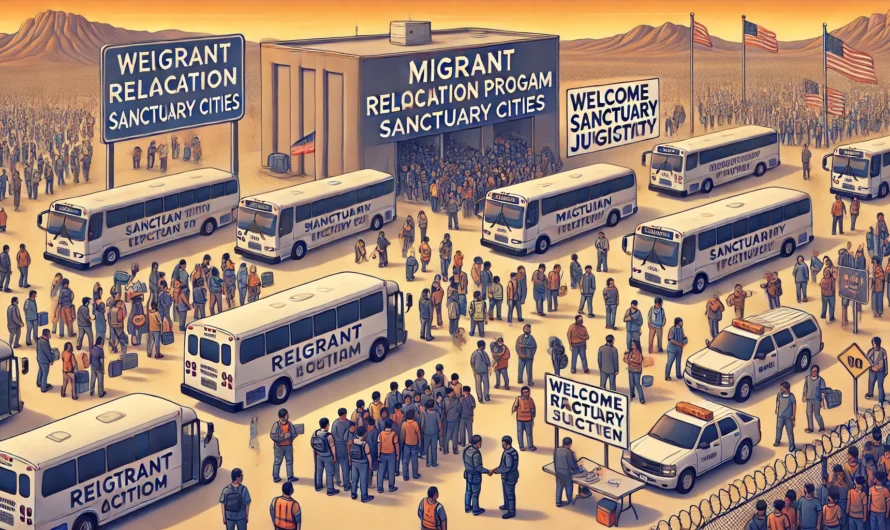
Governors Greg Abbott of Texas and Ron DeSantis of Florida have highlighted this disparity by relocating migrants to sanctuary cities such as New York City, Chicago, and Washington, D.C. These efforts have sparked national debate, but they serve a crucial purpose: holding sanctuary jurisdictions accountable for their policies.
- Public Awareness: The relocations have drawn national attention to the disconnect between sanctuary rhetoric and the realities of immigration.
- Equitable Burden-Sharing: By sending migrants to sanctuary jurisdictions, these states are forcing blue states to share in the responsibilities of supporting migrants.
The Federal Government’s Role
The federal government already plays a significant role in relocating migrants. Under current practices, migrants are often moved from border states to various communities across the country without input from local governments. This approach disperses the impact but does not prioritize equity or accountability.
President Trump’s proposed executive action to support state-led relocation efforts would:
- Align Relocations with Sanctuary Values: Migrants would be sent to jurisdictions that openly support sanctuary policies, ensuring alignment between values and actions.
- Enhance Federal-State Cooperation: Federal support would provide logistical resources and funding to assist states like Texas and Florida in these relocations.
- Promote Accountability: Sanctuary jurisdictions would experience firsthand the implications of their policies, fostering a more balanced national dialogue on immigration.
Addressing Criticism
Critics argue that relocating migrants is a form of political theater or that it treats migrants as pawns. However, these concerns can be addressed with thoughtful implementation:
- Respect and Dignity: Ensure that relocations are carried out humanely, with migrants informed and consenting to their destinations.
- Access to Resources: Provide information on available services in the destination jurisdictions to support migrants’ integration.
- National Debate: Highlight the broader need for comprehensive immigration reform by exposing the practical challenges of sanctuary policies.
The Case for Equitable Responsibility
Sanctuary jurisdictions have the resources and infrastructure to support migrants. Cities like New York and San Francisco have robust social services, progressive policies, and declared commitments to immigrant communities. By sending migrants to these areas, the burden is distributed more equitably, and sanctuary jurisdictions are given the opportunity to demonstrate their commitment in practice.
Benefits of Federal Support for Relocation
Federal backing for state relocation efforts would provide several advantages:
- Improved Coordination: Federal resources would ensure relocations are organized, humane, and efficient.
- Reduced Border State Burdens: Southern states would gain relief from the disproportionate challenges they currently face.
- Accountability in Sanctuary Jurisdictions: Sanctuary cities would experience the realities of the policies they advocate for, leading to more informed discussions on immigration.
Conclusion: A Necessary Executive Action
The current immigration crisis demands innovative solutions that address disparities in burden-sharing. By supporting state-led efforts to relocate migrants to sanctuary jurisdictions, President Trump’s executive action would promote accountability, equity, and a renewed focus on the realities of immigration policy. This approach aligns sanctuary rhetoric with practice, ensuring that jurisdictions advocating for open borders take responsibility for the migrants they claim to welcome.