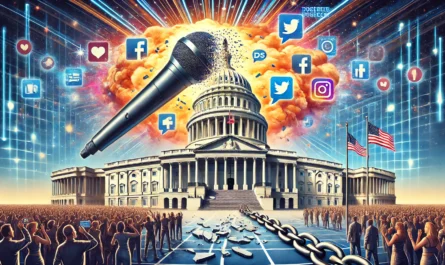
The Growing Political Divide: Hollywood’s Struggle with Conservative Voices
Blacklisted for Beliefs: How Hollywood’s Bias Impacts Careers and Creativity
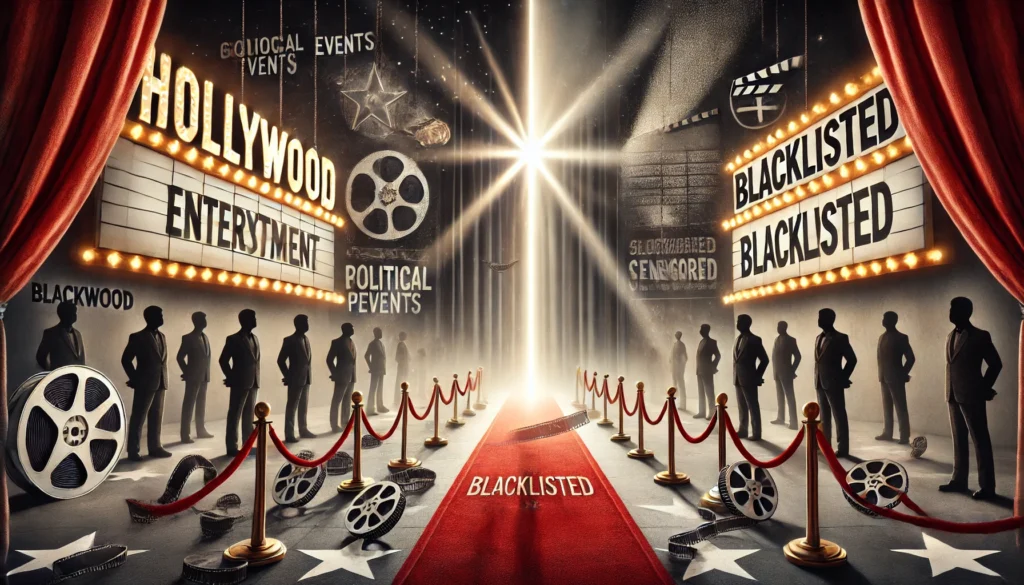
In the heart of Hollywood, where glitz and glamour often mask deeper societal issues, a new kind of political discrimination is taking shape. In the past, the entertainment industry was known for its rigorous anti-communist measures, most notably the Hollywood blacklist of the 1950s. However, the tables have turned in recent decades, with conservative voices increasingly silenced in favor of the progressive mainstream. While Hollywood has long prided itself on promoting free speech and diversity, those who dare to express conservative or right-wing views are now finding themselves ostracized, marginalized, and, in some cases, entirely excluded from the industry.
The Hollywood blacklist of the 1950s was a direct result of the fear of communism and the perceived threat of left-wing ideology during the Cold War. In response to the political climate of the time, many individuals in Hollywood were blacklisted, often without any concrete evidence of communist ties, simply due to their political leanings or affiliations. The House Un-American Activities Committee (HUAC) famously interrogated dozens of filmmakers, screenwriters, and actors, with many refusing to cooperate and subsequently having their careers ruined. However, as much as the industry decried these actions in hindsight, the legacy of blacklisting has evolved in a manner that is less overt but no less damaging—this time targeting conservatives.
The irony of this shift lies in the fact that the political left, which once opposed blacklisting and censorship, is now the very force responsible for excluding those with dissenting political views from Hollywood’s ranks. The modern blacklist is not about communism or the far left—it is about silencing conservative viewpoints that conflict with Hollywood’s prevailing liberal narrative. In this new era, a person’s political affiliation is often more important than their talent, and expressing conservative beliefs can lead to career-ending consequences. From established stars to up-and-coming talent, many conservatives have found themselves pushed to the margins or forced to hide their beliefs to avoid being blacklisted.
The Experience of Conservative Celebrities in Hollywood
The experience of well-known conservative celebrities highlights the extent to which political ideology influences Hollywood today. Take Clint Eastwood, Jon Voight, and Tim Allen—these are actors with decades of experience and highly successful careers. Despite their accomplishments, all three have faced considerable pushback in Hollywood due to their outspoken conservative views. While these actors have remained successful, they have had to navigate a political environment that has increasingly become hostile to their beliefs.
Tim Allen’s show, Last Man Standing, is perhaps one of the most high-profile examples of the intersection of politics and entertainment. The show, which featured a conservative protagonist, was one of the few network television series to cater to conservative viewers. Despite its strong ratings and loyal following, ABC made the controversial decision to cancel the show in 2017. While the network officially denied that politics played a role, many fans and media outlets speculated that Allen’s vocal support for conservative causes, including his backing of President Donald Trump, was a key factor in the decision. The cancellation sent a clear message: if you don’t adhere to Hollywood’s left-wing agenda, even a popular show with high ratings may not be enough to save your career.
Allen himself expressed his disappointment and surprise at the cancellation, stating that he felt “blindsided” by the network’s decision. The cancellation of Last Man Standing was a blow to conservative viewers who felt that their values were being underrepresented in mainstream media. For many, it felt like a direct response to the political and cultural climate in Hollywood, where conservative voices are increasingly marginalized.
The situation has only worsened for those in Hollywood who hold conservative views. Actors like James Woods and Robert Davi have also faced consequences for their outspoken politics. Woods, known for his roles in films such as Casino and Once Upon a Time in America, regularly uses his social media platform to voice his conservative opinions. However, his outspoken criticism of the left and his support for President Trump have led to Hollywood distancing itself from him. Similarly, Davi’s support for President Trump led to the loss of a major role in the show The Blacklist, with Davi confirming that his political beliefs cost him the opportunity.
This growing intolerance of conservative viewpoints in Hollywood is not limited to veteran actors. Newcomers to the industry, particularly those with right-of-center views, are finding it increasingly difficult to break into the Hollywood scene. Those who do make it into the industry are often forced to conceal their beliefs to avoid professional repercussions. The idea of a “secret conservative society” within Hollywood, such as Friends of Abe—an underground group of conservatives—further highlights the political divide and the necessity of keeping political views hidden for the sake of career survival.
The Impact of Political Correctness on Hollywood
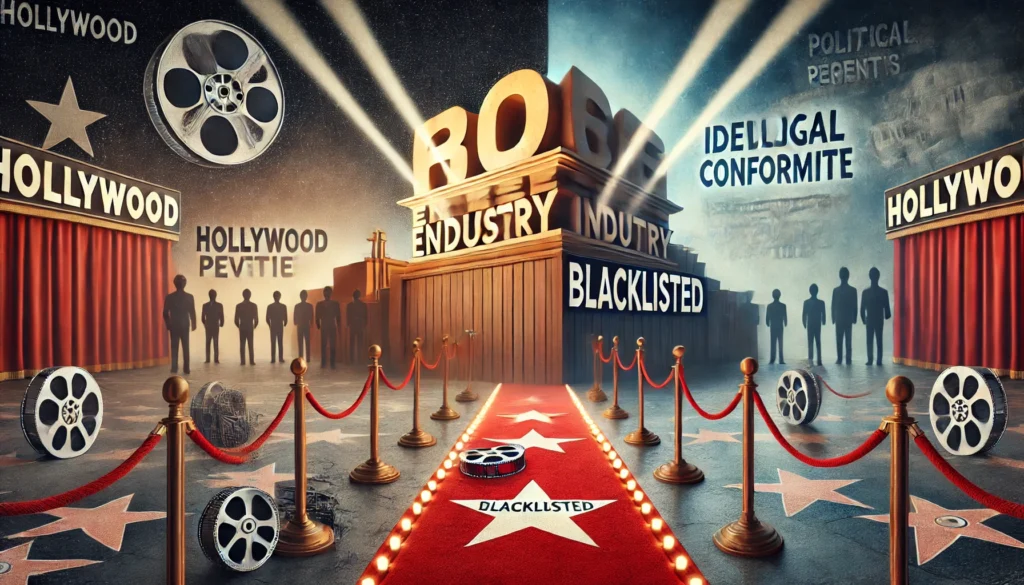
The rise of political correctness and “woke culture” in Hollywood has played a significant role in creating an environment where only one set of values—those of the left—are tolerated. Political correctness, once a tool to ensure that diverse voices and viewpoints were heard, has now become a weapon of ideological conformity. Hollywood, once seen as a bastion of free thought and individualism, has become a place where dissenting opinions are not only discouraged but actively punished.
This shift has made Hollywood a space where creativity is stifled by ideological conformity. Writers, directors, and actors are expected to conform to the political views of the majority, which leaves little room for diversity of thought. The result is a narrowing of the range of stories and ideas that are allowed to be told, as Hollywood prioritizes political correctness over artistic expression.
Moreover, this climate of fear and self-censorship has forced many to compromise their values to fit into the dominant cultural narrative. Those who refuse to conform—whether out of principle or personal belief—face the risk of being marginalized, blacklisted, or outright silenced. For many in Hollywood, the pressure to align with the left-wing agenda is simply too great, and those who speak out against it risk being ostracized.
The Damage of Political Blacklisting
The political blacklisting in Hollywood harms more than just the careers of individual conservatives. It also undermines the integrity of the entertainment industry as a whole. Hollywood prides itself on being a place that values creativity, diversity, and freedom of expression. However, when certain viewpoints are censored or excluded from the conversation, it limits the scope of artistic freedom and restricts the kinds of stories that can be told.
The impact of this blacklisting extends beyond the industry itself. Hollywood plays an influential role in shaping public opinion, especially on social and political issues. By promoting only one side of the political spectrum, the entertainment industry reinforces a narrow worldview and limits the public’s understanding of the full range of political ideologies. This not only affects the entertainment industry but also contributes to the polarization of society as a whole.
Conclusion
The blacklisting of conservatives in Hollywood is a troubling and dangerous trend that stifles free speech, undermines creativity, and perpetuates ideological conformity. Hollywood, once a space for diverse voices and political thought, has increasingly become a place where dissent is not tolerated. While some conservatives have found ways to navigate the industry, the risks of speaking out have never been greater. The cancellation of shows like Last Man Standing, the marginalization of conservative actors, and the rise of underground conservative groups all point to the reality that political views matter more than talent in today’s Hollywood.
It is crucial for the future of Hollywood and for the entertainment industry as a whole that political diversity is embraced and respected. Only when people are free to express their views—without fear of retribution or exclusion—can Hollywood truly live up to its ideal of being a space for creative freedom and individual expression. If Hollywood continues to silence conservative voices, it will not only lose some of its most talented individuals but also undermine the very principles of free speech and artistic expression that it claims to uphold.

 by
by