How Trump’s Populist Revolution is Reshaping News Consumption
 by
by The 2024 Election Media Meltdown
How Trump’s Populist Revolution is Reshaping News Consumption
In a world where news networks were once the uncontested arbiters of public opinion, the last decade has seen their credibility crumble under the weight of bias, sensationalism, and the rise of alternative media. As Fox News sets record viewership numbers and Hallmark Channel surpasses CNN and MSNBC, it’s clear that the media landscape is undergoing a seismic shift. At the heart of this transformation lies Donald Trump’s populist revolution, a movement that has not only redefined political discourse but also exposed and accelerated the decline of legacy media.
I. The Fall of Legacy Media
A. Declining Ratings: A Crisis in Trust
The once-dominant news giants CNN and MSNBC are now struggling to stay relevant. In the week following the 2023 election, Fox News captured 69% of the total cable news audience, setting an all-time record for the network. Meanwhile, CNN and MSNBC reported their lowest viewership numbers in decades. In a shocking turn, the Hallmark Channel, a network best known for feel-good holiday movies, outperformed both CNN and MSNBC during the same period.
Evidence of Decline:
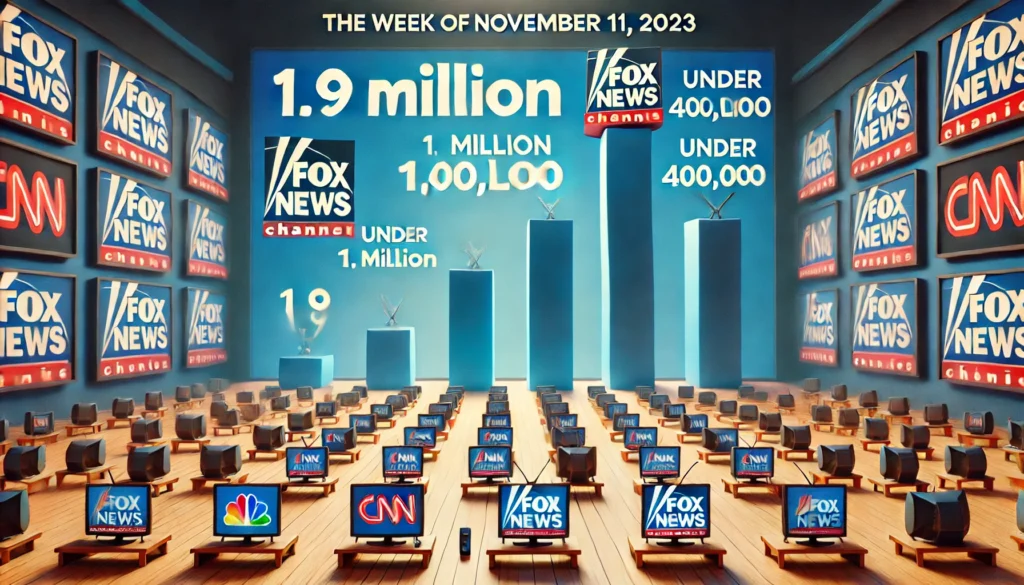
- Fox’s Dominance: Fox averaged 1.9 million viewers during the week of November 11, 2023, while CNN and MSNBC hovered below 400,000.
- Hallmark’s Success: Hallmark averaged 810,000 viewers during the same week, underscoring the public’s preference for uplifting content over divisive rhetoric.
- Trust in Media: According to a 2022 Gallup poll, only 34% of Americans expressed trust in mass media, marking an all-time low.
These numbers reflect not just a ratings slump but a broader crisis of trust. The populist wave Trump ignited has forced millions to reevaluate their media consumption habits, leading to a migration toward outlets that challenge establishment narratives.
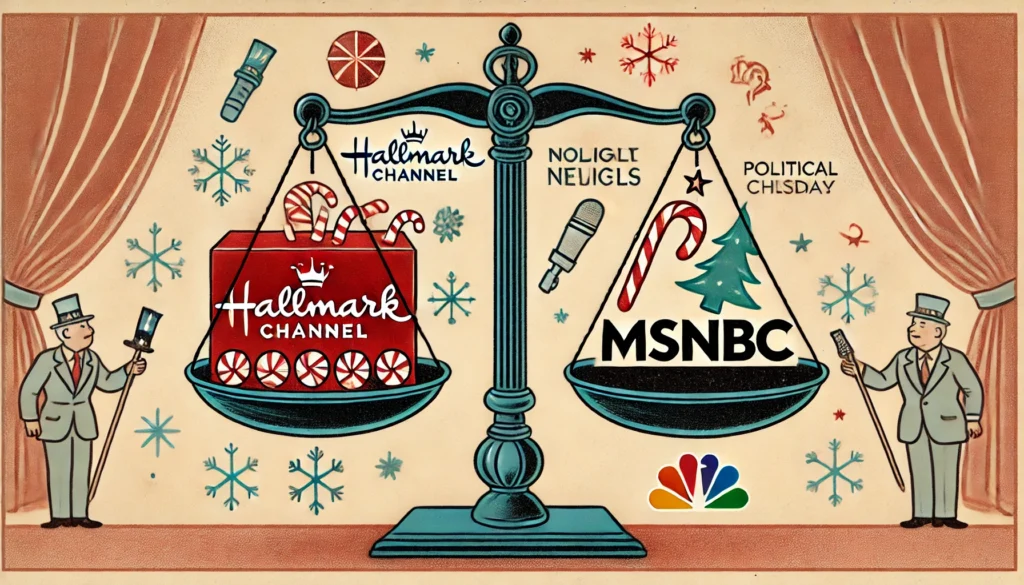
Hallmark Channel outperformed MSNBC in viewership
It’s both funny and ironic that the Hallmark Channel outperformed MSNBC in viewership during an election year. Hallmark, known for its heartwarming holiday movies featuring predictable plots, small-town charm, and romantic snowfalls, is the antithesis of the high-stakes, drama-filled election coverage MSNBC aims to provide. The humor lies in the stark contrast between Hallmark’s escapist entertainment and MSNBC’s attempts at serious political analysis.
The irony deepens when you consider the context: election years are supposed to be the Super Bowl for news networks. MSNBC should be thriving, given the heightened public interest in politics. Instead, viewers chose Christmas tree farms and cozy romances over cable news, signaling their fatigue with partisan bickering and sensationalism.
It’s as if audiences collectively decided that fictional misunderstandings about mistletoe were more relatable and honest than real-life debates filled with overblown accusations and media bias. Hallmark doesn’t pretend to be anything it’s not, while MSNBC struggles with its identity, caught between its ideological slant and declining credibility. In a time when trust in the media is at an all-time low, perhaps it’s no surprise people would rather watch a snowman competition than another talking head arguing about polling numbers.
B. Loss of Credibility: The Impact of Bias
Legacy networks like MSNBC and CNN have increasingly been seen as extensions of partisan agendas rather than objective news sources. This perception was cemented during Trump’s presidency, as networks leaned into Trump Derangement Syndrome (TDS)—a relentless barrage of negative coverage aimed at discrediting Trump and his supporters.
Key Example:
- Sunny Hostin’s Apology on “The View”: Recently, Sunny Hostin was forced to read a legal note on-air acknowledging that Matt Gaetz, a frequent target of liberal media, had been cleared of all allegations by the DOJ. The moment was emblematic of the media’s overreach and the legal consequences of biased reporting.
Trump’s populist rhetoric has repeatedly exposed the media’s double standards, forcing networks to confront their role in eroding public trust. This erosion has paved the way for alternative platforms to fill the void.
II. Media Bias and Legal Accountability
A. The Role of the FCC in Media Oversight
Under Trump’s potential second term, the Federal Communications Commission (FCC) could take on a greater role in holding media outlets accountable for biased or misleading reporting. The FCC has already signaled an interest in reviewing the practices of networks like CBS and ABC, particularly regarding their coverage of presidential campaigns.
Evidence of Media Overreach:
- CBS and 60 Minutes: The network faced scrutiny for editing interviews in ways that critics argue were designed to misrepresent Trump’s statements.
- The Trump FCC’s Agenda: In Trump’s first term, the FCC took steps to deregulate media ownership but signaled a willingness to address bias. A more assertive approach in a second term could reshape how networks operate.
B. The Legal Fallout of Biased Reporting
Matt Gaetz’s legal victory against false allegations is a microcosm of a larger trend: media outlets are increasingly facing legal challenges for defamatory reporting. These cases often hinge on proving “malice,” a standard made more relevant as Trump’s populist movement pushes back against media overreach.
Evidence of Accountability:
- The Covington Lawsuit: Nicholas Sandmann, a teenager falsely accused of racism in viral media coverage, won significant settlements from major networks.
- Potential Future Cases: Trump allies have indicated plans to pursue legal remedies against media organizations they accuse of defamation and election interference.
By aligning with Trump’s populist message, these legal battles reinforce the notion that legacy media has overstepped its bounds and must be held accountable.
III. The Rise of Alternative Media
A. Independent Platforms as the New Frontline
In stark contrast to traditional networks, independent platforms like Joe Rogan’s podcast and the PBD Podcast have flourished. These platforms offer unfiltered, long-form discussions that resonate with audiences tired of scripted, agenda-driven news.
Evidence of Growth:
- Election Night Coverage: Independent creators outpaced CNN and MSNBC in engagement during the 2022 midterms, demonstrating a shift in viewer preferences.
- Joe Rogan’s Reach: With an estimated 11 million listeners per episode, Rogan’s podcast dwarfs the viewership of most cable news shows.
Trump’s populist revolution has fueled this growth by emphasizing the need for unfiltered information and open dialogue, values championed by independent media.
B. The Role of Elon Musk and Twitter/X
Elon Musk’s acquisition of Twitter, now rebranded as X, has played a pivotal role in reshaping news consumption. By prioritizing transparency and reducing censorship, Musk has transformed the platform into a more balanced reflection of the electorate.
Evidence of Impact:
- Twitter Files: Revelations about government and media collusion in content moderation have further eroded trust in legacy outlets.
- Shifting Demographics: In 2022, 65% of Twitter users who consumed news identified as Democrats. By 2023, that figure had dropped to 48%, with Republicans making up 47%, reflecting a more balanced user base.
Musk’s alignment with Trump’s populist ethos—challenging establishment control and empowering individuals—has made X a central hub for alternative media.
IV. The Populist Message: Fairness and Accountability
A. Reclaiming Objectivity in Media
Trump’s populist revolution has consistently called for fairness in media coverage. This message has resonated with millions who feel alienated by the perceived elitism of legacy networks.
Evidence of Public Sentiment:
- Pew Research Center Study (2021): 59% of Americans believe news organizations favor one political party over another.
- The Rise of Neutral Platforms: Outlets like NewsNation and independent podcasts have gained traction by positioning themselves as alternatives to partisan networks.
B. Trump’s Influence on Media Disruption
Trump’s unique ability to dominate news cycles has forced legacy networks to cover him extensively, often at the expense of their own credibility. His populist rhetoric has exposed media biases and encouraged viewers to seek alternative sources.
Evidence of Impact:
- CNN’s Coverage Strategy: During Trump’s presidency, CNN frequently aired live feeds of empty podiums waiting for Trump, underscoring his ability to command attention.
- Legacy Networks’ Decline: CNN and MSNBC’s ratings plummeted post-Trump, suggesting that their relevance was tied more to opposition than substance.
V. The Future of News Consumption
A. The Death of Partisan Media?
As networks like MSNBC face potential privatization and the possible sale of CNN looms, the era of partisan cable news may be nearing its end. Trump’s populist revolution has accelerated this decline by demanding accountability and transparency.
Evidence of Industry Shift:
- Comcast’s Plans for MSNBC: Reports indicate that Comcast may spin off MSNBC, distancing itself from the brand’s toxic reputation.
- NBC’s Strategy: NBC News is reportedly prioritizing its core operations over its association with MSNBC, reflecting a broader industry trend.
B. The Role of Populism in Rebuilding Trust
Trump’s populist movement emphasizes the importance of direct communication between leaders and the public. This approach is reflected in his use of social media and his alignment with independent platforms.
Evidence of Populist Success:
- Trump’s Social Media Strategy: By bypassing traditional media, Trump has maintained direct engagement with his base, setting a precedent for future leaders.
- The Rise of Citizen Journalism: Platforms like X have empowered individuals to report and analyze news, democratizing information in ways that align with populist ideals.
VI. Conclusion
The media meltdown we are witnessing is not merely a ratings slump; it is a reckoning. Trump’s populist revolution has exposed the biases, inefficiencies, and vulnerabilities of legacy networks, paving the way for a new era of news consumption. As alternative platforms rise and traditional outlets falter, the American public is reclaiming its agency, demanding fairness, transparency, and accountability from those who shape public discourse.
This transformation is not just about media; it is about democracy itself. Trump’s populist message—rooted in empowering ordinary citizens and holding elites accountable—has reshaped how we consume and interpret information. As the dust settles, one thing is clear: the era of unchecked media influence is over, and a new chapter of populist-driven transparency has begun.
10 Easy-to-Understand Takeaways
- Legacy Media Is Losing Relevance
Traditional networks like CNN and MSNBC are seeing historic declines in viewership, even losing to niche channels like Hallmark. - Fox News Dominates the Cable News Landscape
Fox News captured 69% of cable news viewers in a single week, showing a massive gap between conservative and liberal media consumption. - Alternative Media Is on the Rise
Independent platforms like Joe Rogan’s podcast and Elon Musk’s X (formerly Twitter) are becoming the go-to sources for unfiltered, balanced news. - Americans Distrust Legacy News Outlets
Polls show that only 34% of Americans trust traditional media, reflecting frustration with perceived bias and sensationalism. - Trump’s Populist Revolution Is Driving Media Change
Trump’s push for fairness and transparency has exposed media biases, inspiring millions to seek alternative, trustworthy sources. - Sunny Hostin’s Legal Apology Shows Media Accountability
Forced apologies like Hostin’s on “The View” demonstrate how populist legal pressures are holding media outlets accountable for unfair reporting. - Elon Musk’s Twitter/X Has Revolutionized News Consumption
Musk transformed X into a platform reflecting balanced demographics, providing a counterweight to traditional media bias. - Partisan Media Is Facing Its Decline
MSNBC and CNN are struggling to remain relevant, with reports of potential spin-offs and privatization signaling their collapse. - Populism Empowers Citizen Journalism
Platforms like X allow ordinary people to share and analyze news, democratizing information and diminishing the monopoly of big media. - Media Bias Is No Longer Unchecked
Trump’s populist movement, combined with legal challenges and alternative platforms, is forcing the media to reevaluate its practices and priorities.
These takeaways illustrate how Trump’s populist revolution has reshaped the media landscape, driving transparency and empowering Americans to demand fairer, more balanced news coverage.