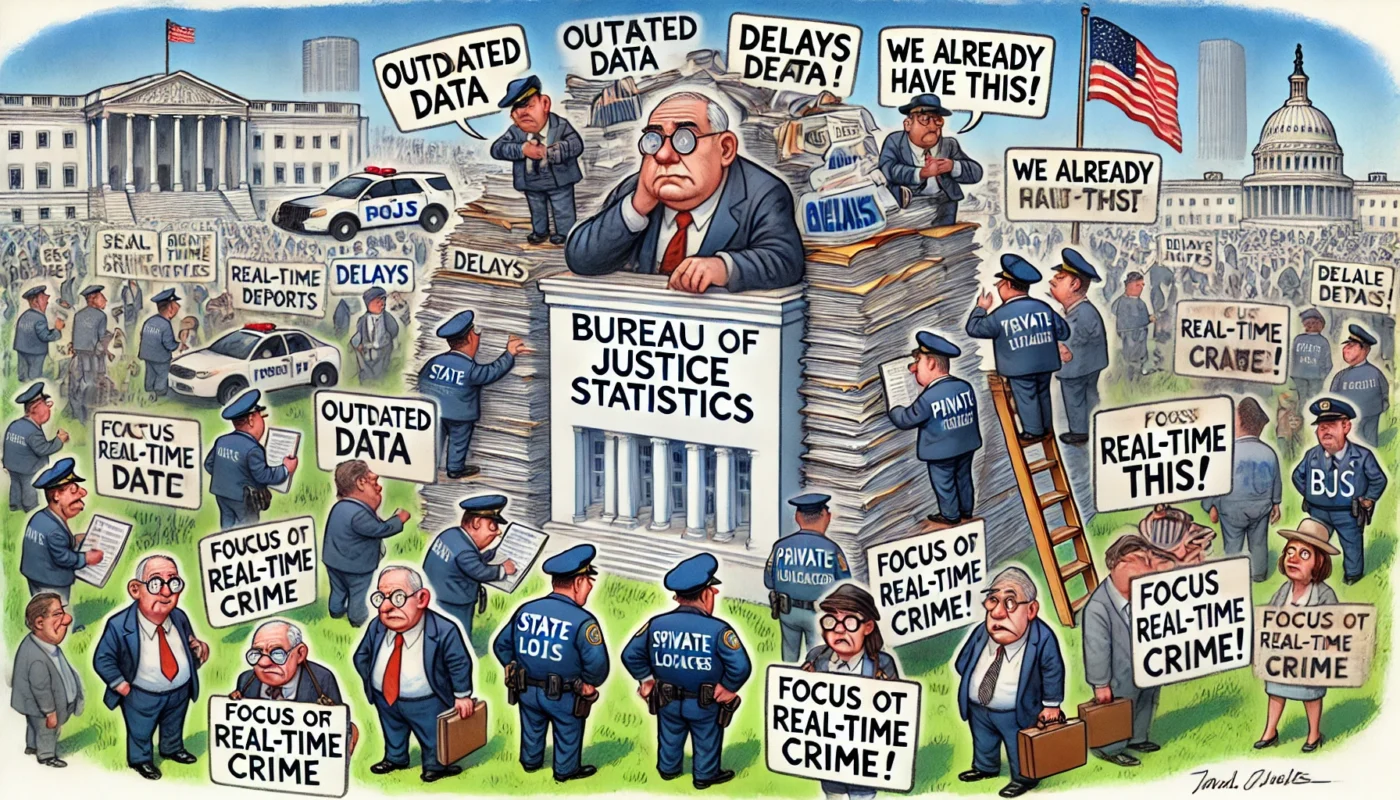
DOGE Analysis: Bureau of Justice Statistics
 by Alan Nafzger
 DOGE Analysis: Bureau of Justice Statistics (BJS)
The Bureau of Justice Statistics (BJS) is part of the U.S. Department of Justice and serves as a data-collection agency, publishing information on crime, criminal offenders, victims, and the operation of justice systems. While the BJS plays a crucial role in informing public policy and criminal justice reform, its efficiency, scope, and relevance within a limited-government framework deserve closer scrutiny.
The Bureau of Justice Statistics (BJS) publishes information on crime, criminal offenders, victims of crime, and the operation of justice systems.
Does It Fit the Constitution?
The BJS’s mission aligns with the federal government’s responsibility to ensure justice under the Constitution. However, the Constitution does not explicitly grant Congress the authority to collect and disseminate statistics on crime and justice, making the Bureau’s existence a matter of practical rather than constitutional necessity. From a limited-government perspective, collecting crime statistics may be better handled by states, local governments, or private organizations, especially since crime trends and justice issues often vary regionally.
Overreach, Bloat, and Expense
Although the BJS provides valuable data, it also faces challenges that hinder its effectiveness and raise concerns about federal overreach:
- Redundancy with State and Local Data Collection:
- Many states and local jurisdictions already maintain comprehensive crime statistics. The BJS often aggregates this data, duplicating existing efforts.
- Federal involvement in crime data collection risks imposing a one-size-fits-all approach that overlooks regional nuances.
- Delays in Reporting:
- BJS reports are often published months or years after data is collected, limiting their utility for real-time policy decisions.
- Outdated reporting systems and manual processes contribute to delays.
- Limited Public Accessibility:
- While BJS data is comprehensive, its presentation can be overly complex and inaccessible to the average citizen or small organizations.
- Potential Bias:
- Centralizing data collection under a federal agency risks politicizing crime statistics, reducing public trust in the objectivity of the data.
Could Non-Governmental Groups Do This Job?
Yes. Many of the BJS’s functions could be privatized or decentralized to improve efficiency and relevance:
- State and Local Governments:
- States and municipalities are better equipped to collect and analyze crime data that reflects their unique challenges and priorities.
- Regional data-sharing agreements could replace federal aggregation efforts.
- Universities and Research Institutions:
- Academic organizations with expertise in criminology and sociology could manage data collection and analysis, ensuring rigorous standards and transparency.
- Private Data Firms:
- Private-sector organizations like Gallup or Pew Research Center could collect and publish crime statistics with greater speed and flexibility.
- Public-Private Partnerships (PPPs):
- The federal government could partner with private firms or non-profits to streamline data collection and dissemination while reducing administrative overhead.
Streamlining Operations
If the BJS cannot be privatized or abolished, significant reforms could enhance its efficiency and impact:
Recommended Reforms:
- Modernize Data Collection:
- Adopt cloud-based systems and AI to automate data collection and analysis, reducing delays and errors.
- Establish real-time dashboards for law enforcement and policymakers.
- Consolidate Responsibilities:
- Limit the BJS’s scope to national trends and large-scale studies, allowing states and local governments to handle more granular data.
- Improve Public Accessibility:
- Simplify data visualization and create interactive tools for the public, media, and policymakers to explore crime trends.
- Focus on Key Issues:
- Prioritize data collection on pressing national issues, such as violent crime, recidivism, and systemic inequalities in the justice system.
- Introduce Performance Metrics:
- Require the BJS to evaluate the timeliness, accuracy, and usability of its reports to ensure accountability.
Best Option: Decentralize to State and Local Governments
Decentralizing crime data collection to state and local governments would align with limited-government principles while improving relevance and efficiency. Key benefits include:
- Cost Savings: Eliminating federal oversight reduces administrative costs and duplicative efforts.
- Localized Insights: States and municipalities can tailor data collection to their unique needs and challenges.
- Increased Innovation: Decentralization encourages diverse approaches to data analysis and reporting.
Second Best Option: Reform Within Federal Control
If decentralization is politically unfeasible, the BJS should streamline its operations:
- Leverage Technology: Modernize data collection and analysis to improve timeliness and accuracy.
- Collaborate with States: Work closely with state and local governments to reduce redundancy and share best practices.
- Simplify Reports: Make data more accessible and actionable for policymakers and the public.
This approach would improve the BJS’s efficiency but maintain federal involvement, which may still be seen as unnecessary overreach.
Worse Option: Expand BJS’s Role
Expanding the BJS’s scope or budget would likely exacerbate inefficiencies and increase concerns about federal overreach:
- Higher Costs: Additional programs and staff would inflate administrative expenses.
- Reduced Trust: Centralizing more authority under the BJS risks politicizing crime data.
- Mission Creep: Expanding beyond its core mission could dilute the Bureau’s effectiveness.
Reasons to Restructure or Abolish BJS Functions
- Constitutional Concerns: Crime data collection is not explicitly mandated as a federal responsibility.
- Redundancy: State and local governments already collect much of the same data.
- Limited Impact: The BJS’s reports are often delayed and lack actionable insights for real-time decision-making.
- Focus on Local Needs: Decentralizing data collection ensures more relevant and responsive crime analysis.
Conclusion
The Bureau of Justice Statistics provides valuable data on crime and the justice system, but its current structure is inefficient and overly centralized. The Best Option is to decentralize its functions to state and local governments, supported by private or academic partnerships. The Second Best Option is to reform the BJS while maintaining federal control, and the Worse Option of expanding its scope would increase costs and inefficiencies. By embracing decentralization and innovation, crime data collection can become more effective, timely, and aligned with the needs of diverse communities.
Website:
Phone number:
1-202-307-0765