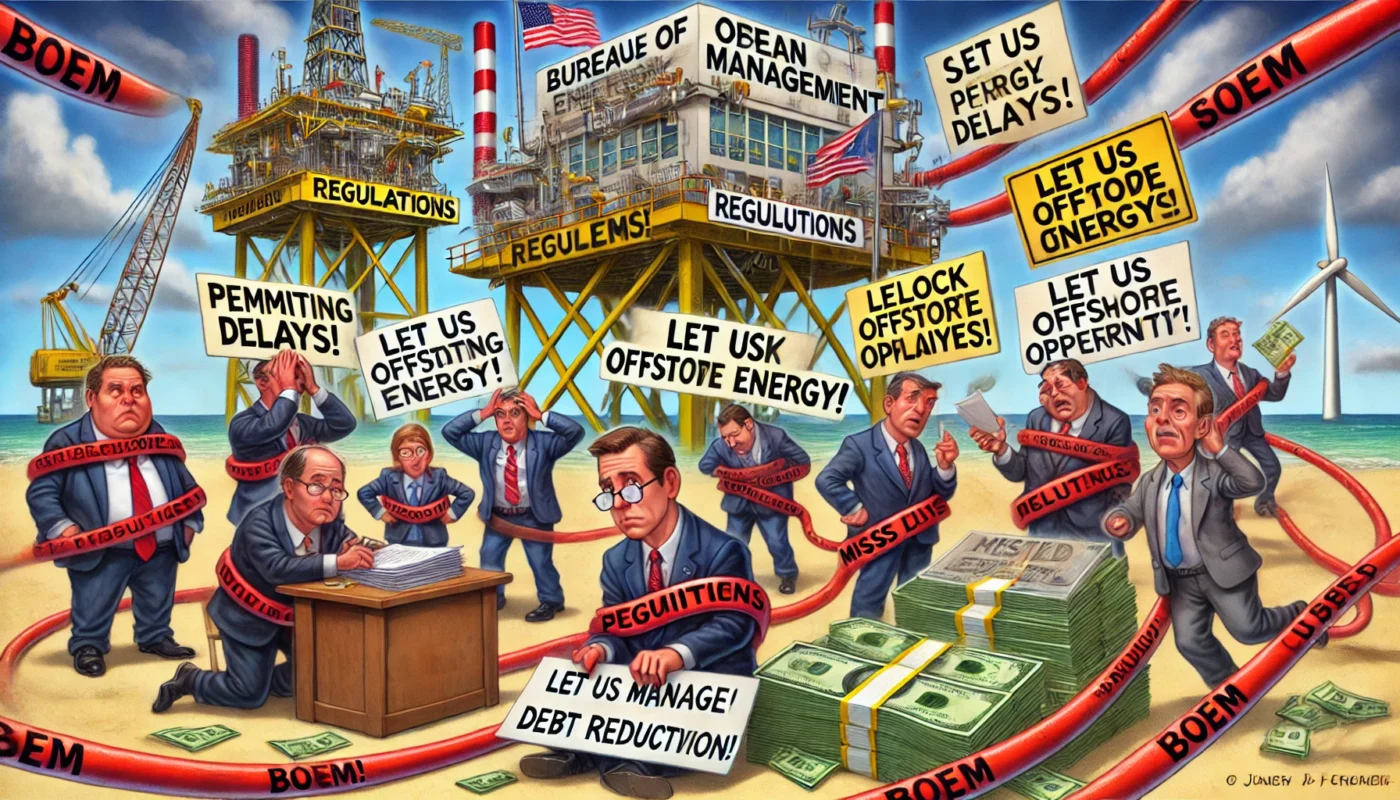
 by
by DOGE Analysis: Abolishing the Bureau of Ocean Energy Management (BOEM)
The Bureau of Ocean Energy Management (BOEM) is responsible for overseeing offshore energy resources, including oil, gas, and renewable energy projects, while promoting environmental protection and economic development. While its mission seems critical, the BOEM’s role overlaps with other agencies, its effectiveness is questionable, and its functions could be privatized or decentralized to reduce federal overreach.
This analysis examines whether the BOEM’s responsibilities align with constitutional limits, whether they could be managed more efficiently by private or state entities, and the implications of abolishing the agency.
The Bureau of Ocean Energy Management (BOEM) promotes energy independence, environmental protection, and economic development by managing offshore energy resources.
Does It Fit the Constitution?
Managing offshore resources falls under Congress’s authority to regulate commerce and manage federal property (Article IV, Section 3). However, the BOEM’s mission extends beyond resource management to include promoting energy independence and economic development—roles that are not explicitly granted to the federal government under the Constitution. From a limited-government perspective, energy management and economic development are better left to state governments and private companies.
Overreach, Bloat, and Expense
The BOEM’s operations reveal significant inefficiencies, overlaps, and areas where its functions could be streamlined or eliminated:
- Overlapping Responsibilities:
- BOEM’s functions overlap with those of the Bureau of Safety and Environmental Enforcement (BSEE) and other Department of the Interior agencies.
- This duplication creates inefficiencies and unnecessary administrative costs.
- Bureaucratic Inefficiencies:
- Long permitting processes for offshore projects delay development, hindering economic growth and energy production.
- The BOEM’s regulatory framework is often criticized for being cumbersome and inconsistent.
- Limited Impact:
- While the agency claims to promote energy independence, its regulations often stifle domestic energy production rather than facilitating it.
- Renewable energy initiatives, such as offshore wind, have faced delays and significant cost overruns under BOEM oversight.
- High Costs:
- BOEM’s budget exceeds $200 million annually, with much of this spent on administrative overhead rather than directly benefiting taxpayers.
Could Non-Governmental Groups Do This Job?
Yes, the BOEM’s functions could be decentralized or transferred to private and state entities:
- State Governments:
- Coastal states are better positioned to manage offshore energy resources within their jurisdictions, tailoring policies to local needs and priorities.
- States can collect royalties and lease revenues directly, eliminating federal intermediaries.
- Private Sector:
- Energy companies already handle exploration, extraction, and production; they could take on additional responsibilities for leasing and compliance under state oversight.
- Privatization would streamline processes and reduce delays caused by federal bureaucracy.
- Public-Private Partnerships (PPPs):
- Coastal states could partner with private companies to manage offshore resources while ensuring compliance with environmental and safety standards.
- Independent Environmental Oversight:
- Non-profits and independent third-party auditors could monitor environmental compliance, ensuring accountability without federal involvement.
Streamlining or Abolishing BOEM
If abolition is not immediately feasible, significant reforms could make BOEM’s operations more efficient and focused:
Recommended Reforms:
- Merge with Existing Agencies:
- Combine BOEM’s functions with the BSEE or the Department of Energy, reducing duplication and administrative overhead.
- Decentralize Authority:
- Transfer leasing and permitting responsibilities to coastal states, allowing them to manage resources more effectively.
- Privatize Leasing:
- Allow private entities to handle offshore leasing and bid processes under state or regional oversight.
- Reduce Regulatory Burden:
- Simplify permitting processes to encourage timely development of offshore energy resources.
Best Option: Abolish BOEM and Decentralize Functions
Abolishing the BOEM and decentralizing its functions would align with limited-government principles while reducing costs and inefficiencies. Key benefits include:
- Cost Savings: Eliminating BOEM reduces federal administrative expenses.
- Streamlined Development: States and private companies can manage offshore energy resources more efficiently.
- Increased Local Control: Coastal states gain direct control over resource management, aligning policies with regional priorities.
- Economic Growth: Privatization encourages competition and innovation, unlocking the full potential of offshore energy resources.
Second Best Option: Reform Within Federal Control
If abolition is politically unfeasible, reforming BOEM to streamline operations is a secondary option:
- Integrate Functions: Merge BOEM with other federal agencies to reduce redundancies.
- Simplify Permitting: Modernize processes to reduce delays in offshore energy development.
- Focus on Oversight: Limit BOEM’s role to environmental and safety compliance, leaving leasing and development to states or private entities.
Worse Option: Expand BOEM’s Role
Expanding BOEM’s responsibilities or budget would exacerbate inefficiencies and increase federal overreach. Potential consequences include:
- Higher Costs: Additional staffing and programs would inflate the agency’s budget.
- Slower Development: Expanding federal control would further delay offshore energy projects.
- Reduced Innovation: Greater regulation could stifle private-sector advancements in energy production and environmental protection.
Reasons to Abolish BOEM
- Constitutional Concerns: Offshore energy management and economic development are not core federal responsibilities.
- Duplication of Efforts: BOEM’s functions overlap with other federal and state agencies.
- Cost Inefficiency: The agency’s high administrative costs outweigh its contributions to energy independence.
- Stifled Innovation: Federal oversight delays projects and limits private-sector ingenuity.
- Empowers States: Decentralizing resource management to coastal states aligns with federalist principles and improves responsiveness.
Conclusion
The Bureau of Ocean Energy Management plays a role in managing offshore energy resources, but its operations are redundant, inefficient, and misaligned with limited-government principles. The Best Option is to abolish BOEM and decentralize its functions to coastal states and private entities. The Second Best Option is to reform the agency within its current framework, while the Worse Option of expanding its role would deepen inefficiencies and delays. By embracing decentralization and privatization, the federal government can reduce overreach, promote innovation, and empower states to manage their own resources effectively.
Phone number:
1-202-208-6474