 by
Denmark: A Reality Check on the Nordic Model
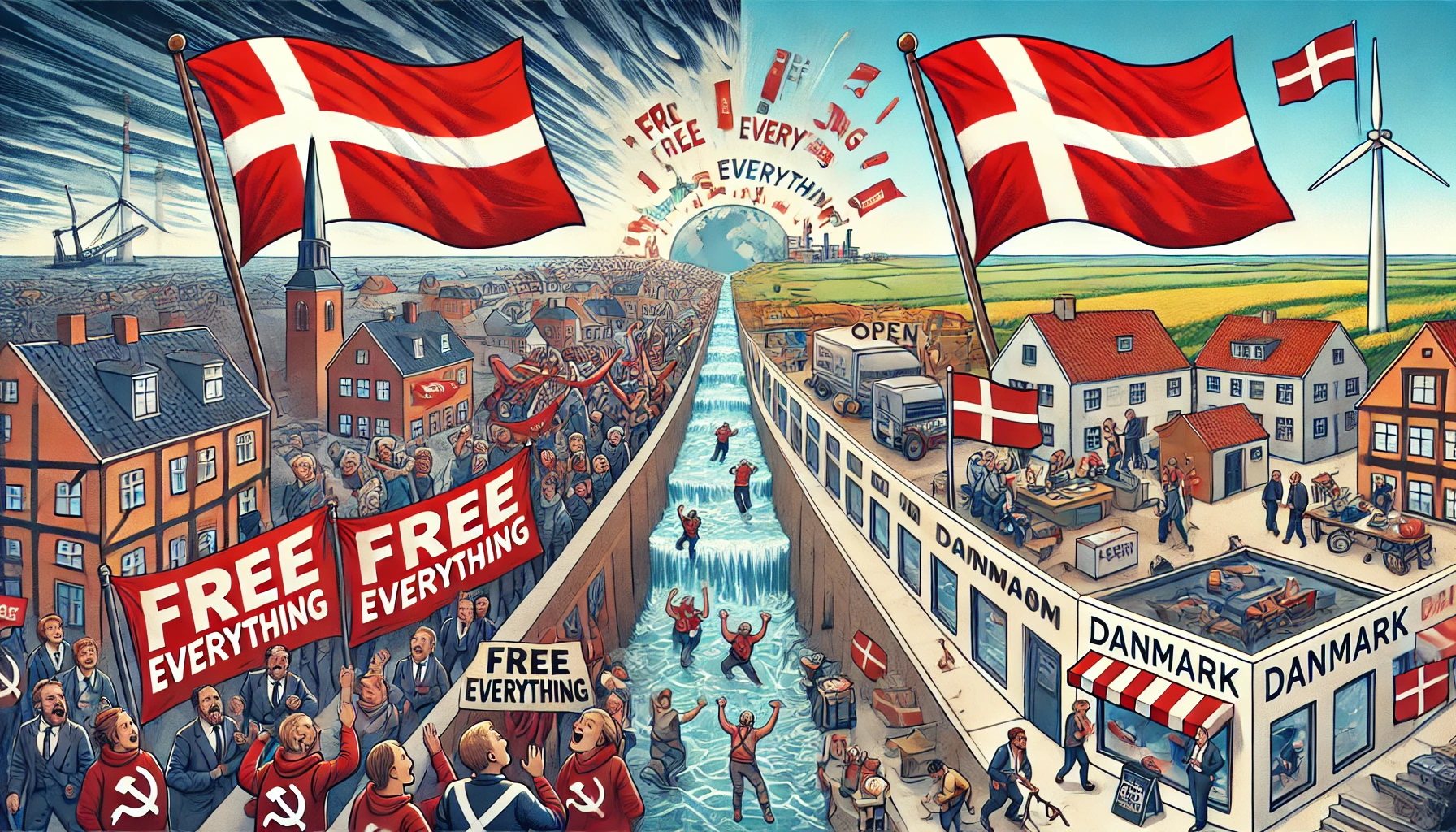
Democratic socialists frequently point to Denmark as the shining example of their policies in action, yet Danish leaders themselves are quick to refute these claims. Denmark’s welfare state, while generous, operates within a robust free-market economy, a distinction that undermines the narrative presented by advocates like Bernie Sanders.
Denmark’s Market Economy
In 2015, Danish Prime Minister Lars Løkke Rasmussen addressed the misconception directly at Harvard’s Kennedy School of Government:
“I know that some people in the U.S. associate the Nordic model with some sort of socialism. Denmark is far from a socialist planned economy. Denmark is a market economy.”
Even Danish economists have labeled Sanders’s regulatory proposals as “too leftist,” emphasizing that Denmark’s policies lean more centrist than socialist. On the 2018 Index of Economic Freedom, Denmark ranked twelfth globally, ahead of the United States at eighteenth.
The Cost of Generous Benefits
Denmark’s government covers nearly all healthcare and education costs, alongside extensive welfare programs such as job training and parental leave. However, these benefits come at a steep price:
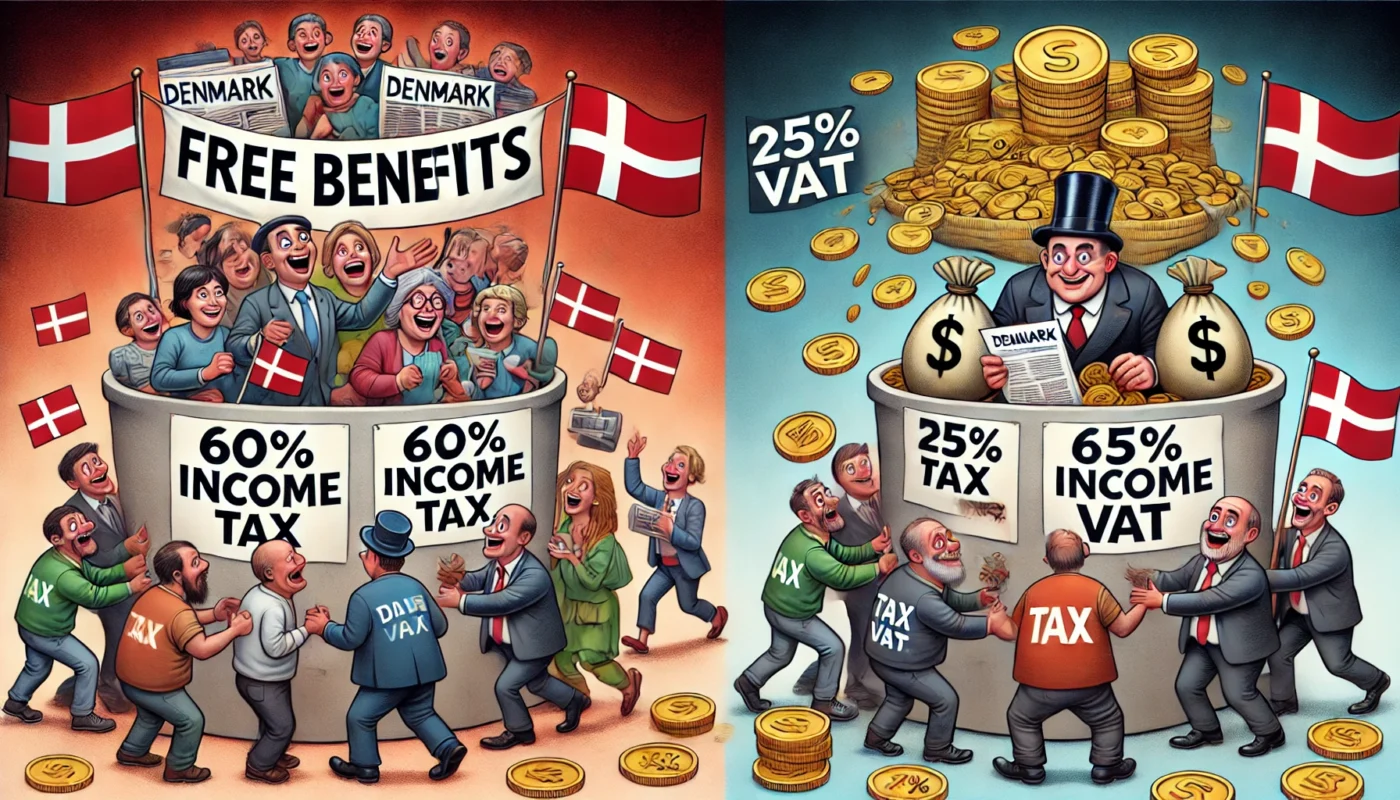
- Taxation: Denmark has some of the highest tax rates globally, with an average personal income tax of 60%. The top tax bracket begins at an income of just $55,000.
- Value-Added Taxes (VAT): A 25% VAT applies to purchases, further burdening consumers.
- Corporate and Miscellaneous Taxes: High corporate income taxes, health taxes, and even historically steep car taxes add to the strain.
This heavy taxation isn’t limited to the wealthy. Denmark’s middle class bears the brunt, as the nation lacks a large number of ultra-high-income earners.
Economic and Social Challenges
While the welfare system provides significant safety nets, it also creates disincentives to work. Anecdotes like “Lazy Robert,” who admitted to living off welfare checks for over a decade, highlight the unintended consequences. Moreover, municipal studies reveal that in 2013, only three of Denmark’s 98 municipalities had a majority of residents working.
The broader economic impact is troubling:
- Slow Growth: Between 2007 and 2017, Denmark’s annual growth rate rarely exceeded 2%, often falling below 1%.
- Aging Workforce: With a declining labor force, the system faces mounting pressure.
- Unsustainable Benefits: Denmark has begun scaling back welfare perks, including student stipends and unemployment benefits, to address budgetary constraints.
Reforms: A Shift Toward Free-Market Principles
Recognizing these challenges, Danish leaders have introduced reforms to incentivize work and reduce dependency:
- Tax Cuts: Recent policies reduced the top income tax rate to 44%, making it comparable to California’s top bracket.
- Benefit Reductions: Cuts to welfare programs aim to encourage self-reliance and reduce fiscal strain.
- Pro-Growth Policies: Danish Finance Minister Kristian Jensen described tax cuts as “a boon for hardworking Danes, who will be able to keep more of their earnings.”
The Real Lesson of Denmark
Denmark’s approach underscores that its welfare system is supported by a strong market economy, not socialism. While high taxes fund its programs, these are paired with a commitment to free-market principles and recent reforms aimed at promoting work and reducing government dependency.
Far from a socialist utopia, Denmark is moving closer to American-style economic policies. The narrative that the U.S. should “look more like Denmark” misses a critical point: Denmark is adapting its system to look more like the U.S.
SOURCES
- Denmark’s Prime Minister Clarifies: Denmark Is Not Socialist: In a 2015 speech at Harvard’s Kennedy School of Government, Danish Prime Minister Lars Løkke Rasmussen emphasized that Denmark operates a market economy, not a socialist planned economy.
- Denmark’s Economic Freedom Ranking: According to the 2018 Index of Economic Freedom by The Heritage Foundation, Denmark ranks 12th globally, indicating a high level of economic freedom.
- Denmark’s Tax Structure and Welfare System: Denmark’s extensive welfare benefits are funded through high taxation, including an average personal income tax rate of 60% and a 25% value-added tax on purchases.
- “The Myth of Scandinavian Socialism” – This article explains how Denmark and other Nordic countries embrace free-market capitalism alongside a large welfare state, challenging the perception that they are socialist economies.
- “Is Denmark Socialist? (Truth vs. Myth)” – This piece delves into the common misconceptions about Denmark’s economic system, clarifying that it is not a socialist state but rather a market economy with extensive social programs.
- “Denmark Is Not a Socialist Economic Nirvana” – An analysis highlighting Denmark’s free-market policies that have advanced economic freedom, countering the narrative that it is a socialist model.
- “Socialism and the Scandinavian Illusion” – This opinion piece discusses the misconception of Nordic countries, including Denmark, as socialist, emphasizing their market-based economies.
- “Is Denmark Socialist? Or What Is It Instead?” – An exploration of Denmark’s political and economic structure, explaining why it does not fit the socialist label.
- “The Failed Socialist Experiment of Capitalist Scandinavian Countries” – This blog post argues that the socialist experiments in Scandinavian countries were not successful and that their prosperity is due to embracing free-market reforms.
- “Denmark: Not As Socialist (Nor As Successful) As You Think” – An article challenging the perception of Denmark as a socialist success story, highlighting its capitalist foundations.
- “Is Denmark Socialist?” – A discussion on why Denmark should not be considered a socialist country, emphasizing its market economy.
- “Why Democratic Socialists Can’t Legitimately Claim Sweden, Denmark as Success Stories” – An analysis explaining why Nordic countries do not exemplify socialist success, focusing on their economic policies.
- “10 Facts You Need to Know About the ‘Nordic Socialism’ Myth” – This article debunks common myths about Nordic countries being socialist, providing insights into their actual economic systems.


Photovoltaik Lebach
Eins energie PV Anlage anmelden