 by
by Elon Musk and Vivek Ramaswamy as the New ‘Dollar-a-Year Men’
Reviving the WWII Spirit to Transform Government and Industry
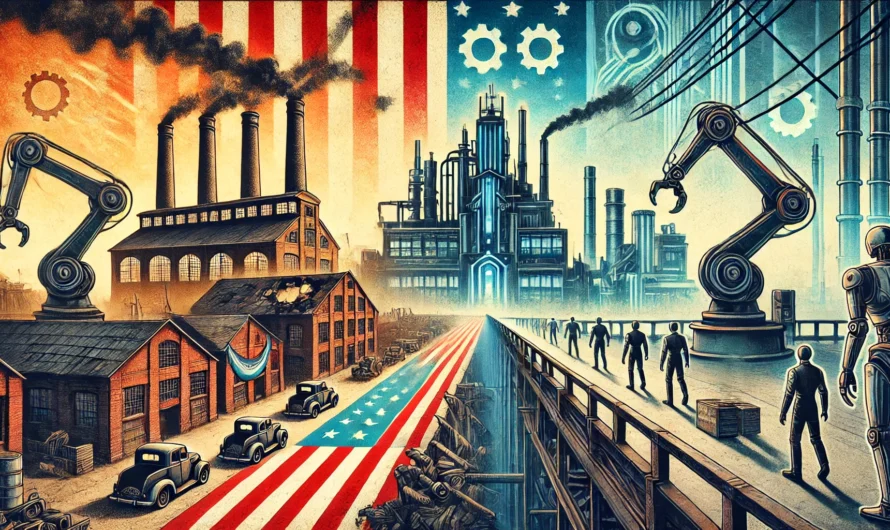
In 1940, a select group of industrialists—dubbed the “dollar-a-year men”—stepped away from their private ventures to help President Franklin D. Roosevelt mobilize the American economy for World War II. These executives worked for a token salary of one dollar a year, channeling their expertise into building the most formidable military-industrial complex in history. Today, as Donald Trump’s incoming administration proposes the Department of Government Efficiency (DOGE), the lessons of these wartime leaders could inspire a new era of public-private collaboration.
With visionaries like Elon Musk and Vivek Ramaswamy at the helm, DOGE could revolutionize government operations, emulate the WWII spirit of innovation, and establish a legacy that extends far beyond regulatory efficiency.
The WWII Blueprint for Efficiency
When Roosevelt tapped William Knudsen, president of General Motors, to lead industrial mobilization, the United States was woefully unprepared for the global conflict ahead. Knudsen and other executives from the automotive, steel, and electronics industries applied private-sector innovation to government challenges. In less than two years, America transformed from a nation unprepared for war to a powerhouse capable of producing eight aircraft carriers a month, 50 merchant ships a day, and a warplane every five minutes.
By the end of the war, the U.S. was responsible for producing two-thirds of all Allied war materiel. This unprecedented achievement wasn’t just about quantity—it was about strategic decision-making and embracing innovation. The “arsenal of democracy” was built by focusing on three principles that are as relevant today as they were in the 1940s: seek out the most productive, focus on results rather than process, and incentivize innovation.
Principle 1: Seek Out the Most Productive
Knudsen recruited the most capable minds from industries with vast engineering expertise, turning companies like Ford and General Electric into hubs of wartime innovation. Ford, for instance, produced entire B-24 bombers on assembly lines, while DuPont contributed to the Manhattan Project, developing the plutonium for the atomic bomb.
Today, the equivalent lies in companies like SpaceX, Tesla, and the Magnificent Seven tech firms (Amazon, Apple, Google, Meta, Microsoft, Nvidia, and Tesla). These companies are already at the forefront of artificial intelligence, robotics, and advanced manufacturing. Musk’s SpaceX, for example, has proven that private industry can outpace government agencies like NASA in cost-effectively achieving technological milestones.
By leveraging these productive entities, DOGE could apply the same ingenuity to defense, infrastructure, and administrative efficiency, creating a new “arsenal” of solutions for the challenges of the 21st century.
Principle 2: Focus on Results, Not Process
Bureaucratic inertia often prevents bold action. While the private sector prioritizes outcomes, government agencies tend to focus on compliance and risk aversion. This disconnect has created inefficiencies, such as the delays and cost overruns in infrastructure projects or the mismanagement of COVID-19 response efforts.
The dollar-a-year men of WWII circumvented red tape by concentrating on what needed to be done, not on how it fit within existing protocols. Musk and Ramaswamy, known for their entrepreneurial tenacity, could apply the same philosophy to DOGE.
For example, SpaceX achieved its rapid development of reusable rockets by iterating quickly, tolerating failures, and improving designs based on real-world results. This focus on efficiency and risk-balanced decision-making could be a model for government initiatives, from streamlining federal procurement to revolutionizing how agencies approach regulatory reform.
Principle 3: Incentivize Innovation
The WWII effort thrived on technological breakthroughs, from radar to the atomic bomb. Yet today’s government often views innovation with skepticism, as disruptive technologies like AI and quantum computing challenge established norms.
Musk and Ramaswamy have demonstrated the power of incentivizing breakthroughs. Musk’s ventures—from Tesla’s dominance in electric vehicles to Neuralink’s advances in brain-machine interfaces—show how financial rewards and public recognition drive innovation. Ramaswamy’s work in biotech and finance has similarly highlighted how incentives unlock potential in stagnant industries.
DOGE could adopt policies that reward government employees and contractors for finding cost-saving measures or developing technologies that improve efficiency. Programs akin to DARPA could focus on quantum computing, advanced materials, and renewable energy, ensuring that the U.S. government remains a global leader in innovation.
Reviving the Defense Industrial Base
One area where the dollar-a-year men’s model is desperately needed is in the defense industrial base. Overregulation and neglect have left America’s defense manufacturing sector struggling to keep up with emerging threats. A modern arsenal of democracy is essential not only for national security but also for economic growth.
Private-sector partnerships could restore America’s manufacturing dominance, with companies like Tesla and SpaceX leading efforts to develop advanced drones, hypersonic weapons, and autonomous systems. By integrating cutting-edge technologies into defense production, the U.S. could ensure its military remains unmatched while creating high-skilled jobs.
Leadership for a New Era
Leadership is critical for the success of any large-scale transformation. Just as Knudsen and his contemporaries guided America’s wartime effort, Musk and Ramaswamy could provide the visionary leadership DOGE needs. Their ability to challenge conventional thinking, embrace risk, and deliver results aligns perfectly with the mission of transforming government into a more efficient, innovative institution.
President Trump, too, has a role to play as the architect of this vision. His emphasis on “America First” and his willingness to challenge entrenched interests provide the political will necessary to drive change. Together, this trio could redefine what is possible in governance, leaving a legacy comparable to Roosevelt’s wartime mobilization.
Conclusion
The dollar-a-year men of WWII proved that private-sector expertise could achieve extraordinary results when aligned with national priorities. As the incoming administration prepares to implement DOGE, Elon Musk and Vivek Ramaswamy have the potential to emulate this model, bringing competitive innovation to the public sector.
By seeking out the most productive, focusing on results, and incentivizing innovation, DOGE can transform the federal government into a lean, efficient machine capable of tackling the challenges of the 21st century. Just as the arsenal of democracy secured victory in WWII, a new partnership between government and industry could secure America’s prosperity and leadership for generations to come.

10 Ways to Improve the Department of Government Efficiency (DOGE)
Elon Musk and Vivek Ramaswamy
- Integrate AI and Automation
Utilize cutting-edge artificial intelligence tools to streamline bureaucratic processes, enhance decision-making, and eliminate redundancies across government agencies. - Benchmark Against Private Sector Standards
Use metrics from successful companies, such as Tesla’s operational efficiency or SpaceX’s cost-effective engineering, to establish performance benchmarks for government programs. - Incentivize Innovation Among Federal Employees
Create reward systems for employees who develop cost-saving measures, propose innovative solutions, or improve government efficiency in measurable ways. - Expand Public-Private Partnerships
Leverage the expertise of private sector leaders like Musk and Ramaswamy to identify and implement strategies that reduce waste and drive productivity in government. - Focus on Outcome-Oriented Governance
Shift from process-driven to results-driven approaches, ensuring that all initiatives prioritize tangible benefits for the public over bureaucratic compliance. - Embrace Data-Driven Decision Making
Require all DOGE initiatives to be backed by real-time data analytics, ensuring policies are grounded in evidence and measurable impact. - Streamline Regulatory Frameworks
Conduct a comprehensive review of outdated regulations, removing barriers to innovation and enabling faster implementation of new initiatives. - Foster a Culture of Disruption
Encourage agencies to adopt an entrepreneurial mindset, viewing challenges as opportunities for innovation rather than obstacles. - Develop Agile Infrastructure Projects
Apply Musk’s rapid iteration model to infrastructure and defense projects, enabling quicker development cycles and adaptive solutions. - Create a Federal Sandbox for Testing New Ideas
Establish a controlled environment where new policies, technologies, or processes can be piloted and refined before full-scale implementation.
These strategies could position DOGE as a transformative force in government, aligning public-sector operations with the dynamism and innovation of the private sector.
Originally posted 2017-08-12 22:45:57.