 by
by The Rising Global Tide: How Free Markets Transform Lives
Global Trade & Economic Growth
This remarkable transformation is particularly noteworthy given Hong Kong’s lack of natural resources, especially when compared to resource-rich nations like Venezuela, which continue to face economic challenges despite abundant oil reserves.
Economic Growth: Lifting All Boats
Despite experiencing levels of inequality higher than those in the United States, Hong Kong has significantly improved living standards across all socioeconomic groups. The poorest residents now earn substantially more than the GDP per capita of 1960, illustrating how expanding the economic “pie” can benefit everyone. Free-market policies that incentivize innovation, risk-taking, and entrepreneurship have been instrumental in this wealth creation and shared prosperity.
The Global Impact of Free-Market Capitalism
Hong Kong’s economic ascent is not an isolated case. For over two centuries, free-market capitalism has played a pivotal role in lifting people out of poverty and spreading prosperity worldwide. However, recent global challenges have impacted poverty reduction efforts. Between 2020 and 2023, an estimated 165 million people fell into poverty, highlighting the need for resilient economic policies.
Insights from Economic History
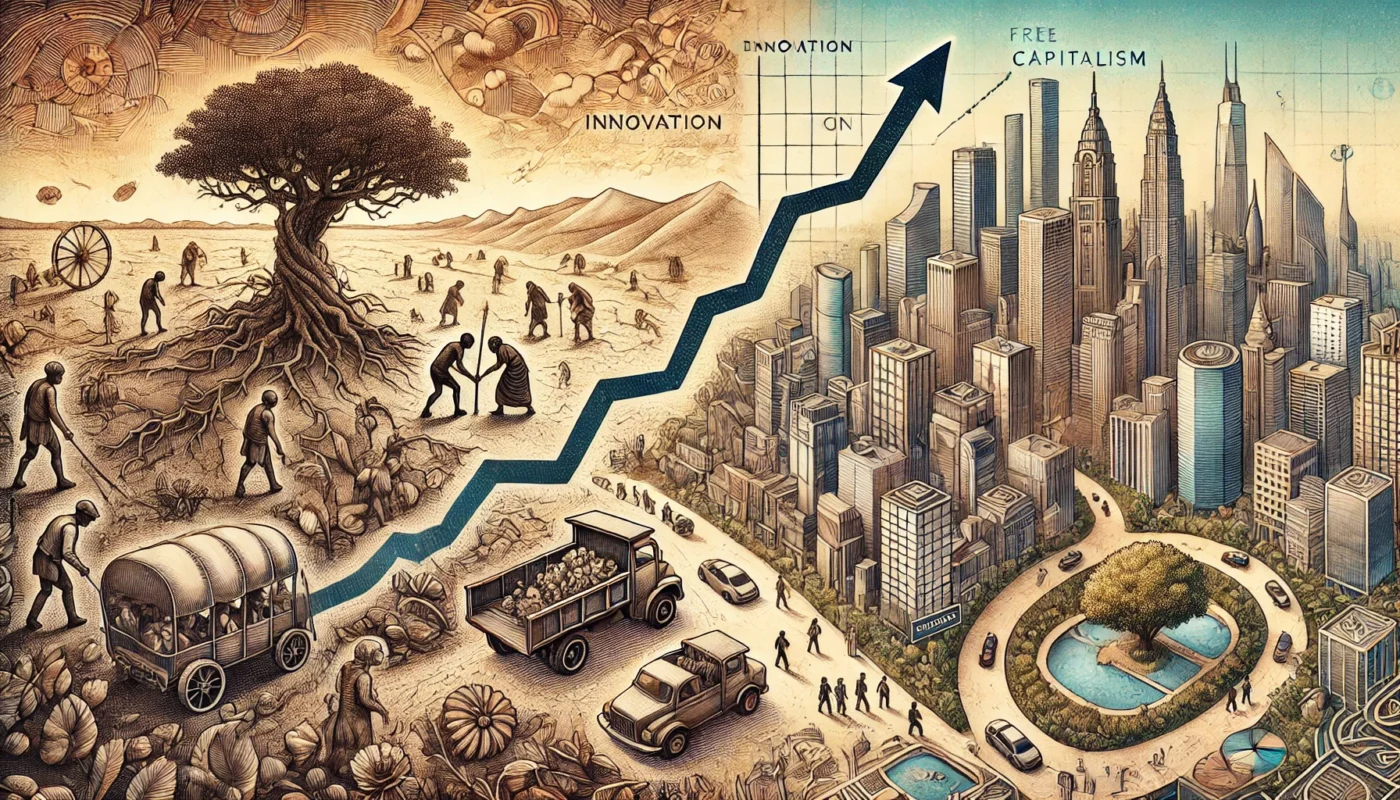
The late British economist Angus Maddison dedicated his career to analyzing global economic growth and development. His extensive research, continued by The Maddison Project, offers valuable insights into economic performance over centuries. Visual representations of Maddison’s data reveal a significant upturn in GDP per capita starting in the 18th century, coinciding with the rise of industrialization and free-market principles. This trend underscores the transformative power of capitalism in driving economic growth.
The Role of Incentives in Prosperity
The rapid economic development observed in regions like Hong Kong underscores the importance of appropriate incentives. When innovators and entrepreneurs operate in environments that reward creativity and effort, the resulting economic growth can lead to widespread societal benefits. Conversely, policies that hinder wealth creation may impede progress and limit opportunities for advancement.
Capitalism’s Role in Poverty Alleviation
Free-market capitalism has been a driving force in reducing poverty globally. However, recent data indicates that global poverty rates have experienced fluctuations, emphasizing the need for sustained economic growth and effective policy implementation to continue alleviating poverty.
Addressing Inequality in Growing Economies
While inequality remains a concern in capitalist systems, economic growth has the potential to improve living standards even for the least advantaged. Hong Kong’s experience demonstrates that a rising economic tide can lift all boats, provided that policies are in place to ensure inclusive growth.
The Significance of Economic Growth Trends
The historical data on GDP per capita illustrates a prolonged period of economic stability, followed by a sharp increase beginning in the 18th century. This shift aligns with the advent of industrialization and the adoption of capitalist economies, highlighting the profound impact of free-market principles on global prosperity.
Conclusion: Embracing Economic Growth
The economic trajectory of Hong Kong, along with global historical trends, underscores the potential of free-market capitalism to drive prosperity and improve living standards. While challenges such as inequality and recent increases in poverty rates persist, the evidence suggests that fostering environments conducive to innovation and entrepreneurship remains a viable path toward economic development and poverty alleviation.
SOURCES
- Macrotrends: Hong Kong GDP Per Capita 1960-2024
This resource provides historical data on Hong Kong’s GDP per capita, illustrating its economic growth over the decades. - Statista: Hong Kong – per capita GDP 1980-2029
This page offers statistical insights into Hong Kong’s GDP per capita from 1980, with forecasts up to 2029, highlighting economic trends and projections. - FRED Economic Data: Constant GDP per capita for Hong Kong SAR, China
Provided by the Federal Reserve Bank of St. Louis, this dataset presents constant GDP per capita figures for Hong Kong, adjusted for inflation. - World Bank Data: GDP per capita (current US$) – Hong Kong SAR, China
This World Bank indicator tracks Hong Kong’s GDP per capita in current U.S. dollars, offering a comprehensive view of its economic performance. - Trading Economics: Hong Kong GDP per capita
This platform provides up-to-date figures on Hong Kong’s GDP per capita, along with historical data and forecasts. - TheGlobalEconomy.com: Hong Kong – GDP per capita, current dollars
This page offers data on Hong Kong’s GDP per capita in current U.S. dollars, comparing it with global averages and historical figures.