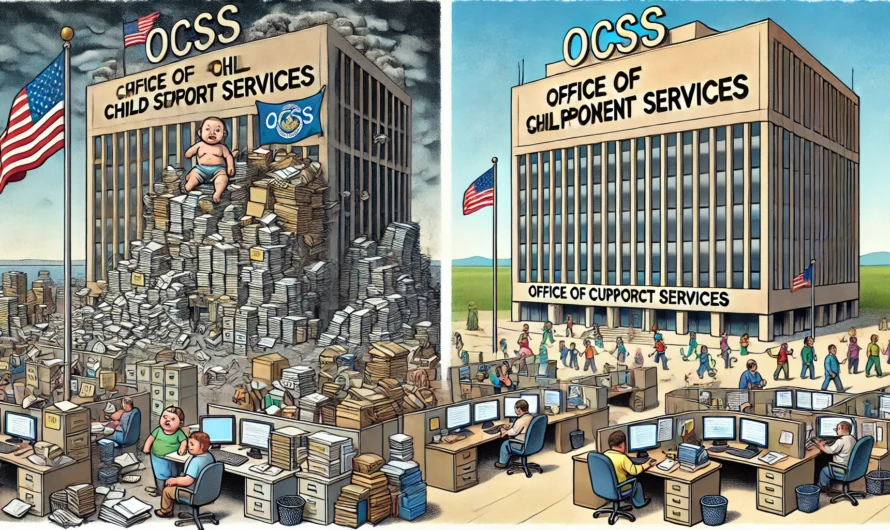
DOGE Analysis of the Office of Child Support Services
 by Alan Nafzger
 DOGE Analysis of the Office of Child Support Services (OCSS)
Department of Government Efficiency (DOGE) Report
The Office of Child Support Services (OCSS) ensures that children receive financial and medical support by locating parents, establishing paternity, determining support obligations, and enforcing compliance. It aims to provide resources that improve the well-being of children and families across the nation.
Department of Government Efficiency: Evaluating the OCSS
Constitutional Basis
The OCSS operates under the authority of the federal government to oversee welfare programs. However, limited-government critics argue that child support services could be managed more effectively at the state level, where family law jurisdiction primarily resides. Federal involvement may add unnecessary layers of bureaucracy.
Reasons for Streamlining the OCSS
- Redundancy with State Programs:
- Child support enforcement is primarily administered by state agencies, with OCSS serving as a federal oversight body. This duplication of roles adds inefficiency.
- Example: States already handle paternity establishment and enforcement of support orders directly.
- Administrative Costs:
- The federal OCSS budget contributes to administrative overhead rather than direct child support enforcement, which is carried out at the state level. Streamlining could reduce unnecessary expenditures.
- Limited Direct Impact:
- OCSS’s role is primarily advisory and supportive, with limited authority to enforce compliance directly, leaving most responsibilities to state agencies.
- Private Sector Alternatives:
- Private legal services and family advocacy groups already assist families with child support enforcement and paternity cases, offering an alternative to federal involvement.
- State Autonomy:
- Shifting full responsibility for child support services to state agencies aligns with federalism principles and eliminates the need for federal oversight.
Efficiency Improvements for the OCSS
- Shift to State Block Grants:
- Transition OCSS funding into state-managed block grants, allowing states to oversee child support services without federal oversight.
- Projected Savings: $2–3 billion annually.
- Focus on Interstate Cases Only:
- Narrow OCSS’s role to facilitating interstate child support enforcement, leaving intrastate cases to state agencies.
- Reduce Administrative Workforce:
- Downsize the OCSS workforce by eliminating redundant advisory and administrative roles.
- Encourage Private Enforcement Options:
- Promote private-sector legal and mediation services for families seeking child support enforcement.
- Modernize Data Sharing:
- Develop a streamlined digital platform for states to coordinate interstate cases, eliminating the need for extensive federal involvement.
Recommendations for Reform
Best Option: Transition OCSS to a State-Managed Model
Proposal: Eliminate OCSS as a federal oversight agency and provide block grants to states for managing child support services.
Rationale:
- Reduces federal administrative costs and empowers states to handle family law matters directly.
- Aligns with federalism principles by removing redundant federal oversight.
- Projected Savings: $3–5 billion annually.
Second Best Option: Streamline OCSS Operations
Proposal: Retain OCSS but limit its role to interstate case coordination and developing best practices for states.
Rationale:
- Maintains some federal involvement while cutting administrative costs.
- Saves taxpayers money without disrupting critical child support services.
- Projected Savings: $1–2 billion annually.
Worst Option: Maintain the Status Quo
Proposal: Leave OCSS unchanged.
Rationale:
- Continues duplication of roles between federal and state agencies.
- Missed opportunities for cost reduction and streamlined operations.
- Impact: Persistent inefficiencies and high administrative costs.
Conclusion
The Office of Child Support Services provides support for families but overlaps significantly with state agencies, which handle most enforcement and service delivery. Limited-government critics advocate for transitioning OCSS to a state-managed model or streamlining its operations to focus on interstate cases. These reforms would reduce costs, improve efficiency, and align with federalism principles.
The Office of Child Support Services (OCSS) assures that support (both financial and medical) is available to children through locating parents, establishing paternity, identifying support obligations, and enforcing those obligations.
Website:
Find an office near you: